CM Bhupendra Patel: Ahmedabad Gets ₹2,719 Cr Urban Fund Push
Synopsis
Gujarat Chief Minister Bhupendra Patel announced on 17 July 2026 that Ahmedabad has won approval for six urban infrastructure projects worth ₹2,719.80 crore under the Centre's Urban Challenge Fund, covering sewerage modernisation, smart water management, a sludge-to-energy plant, and integrated transit systems for AMTS, BRTS and Metro.
Key Takeaways
Six projects worth ₹2,719.80 crore approved for Ahmedabad under the Urban Challenge Fund .
Central assistance of ₹679.95 crore will be matched by an equal contribution from the Government of Gujarat .
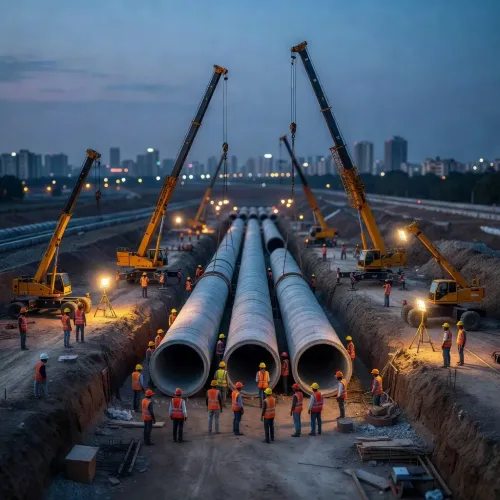
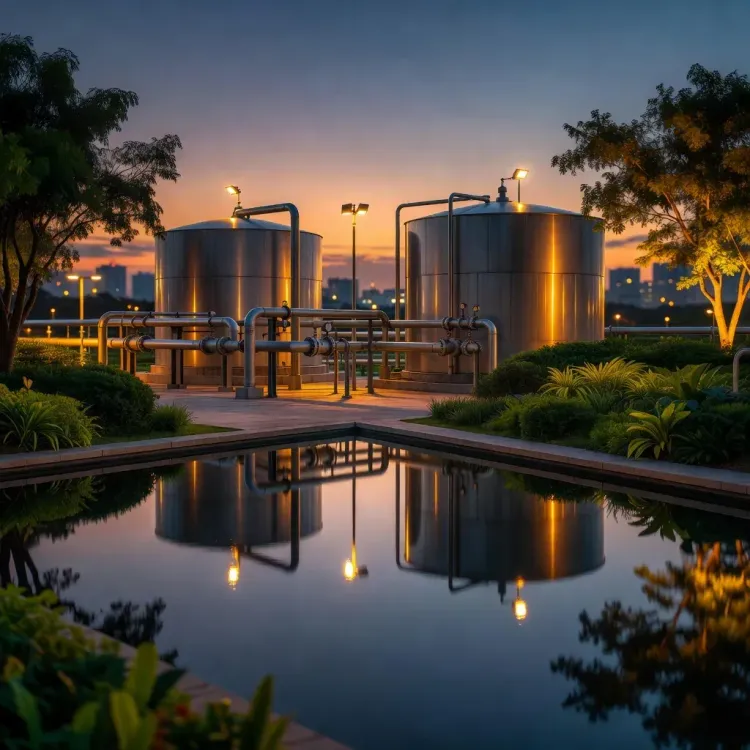
Projects cover sewerage network modernisation, intelligent water management, and a sludge-to-green-energy facility.
Advanced transit management and automated fare collection will integrate AMTS , BRTS , and Metro under a common mobility solution.
Infrastructure upgrades are framed as part of Ahmedabad's preparations to host the 2030 Commonwealth Games .
Ahmedabad was among the first cities selected under the Smart Cities Mission in 2015 , building on a decade of Central urban investment.
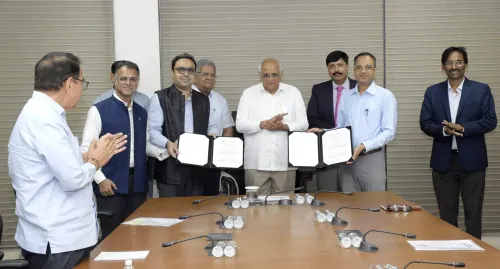
Gujarat Chief Minister Bhupendra Patel announced on Friday, 17 July 2026 that Ahmedabad has secured approval for six urban infrastructure projects worth ₹2,719.80 crore under the Central government's Urban Challenge Fund, with ₹679.95 crore in direct Central assistance and matching support from the Government of Gujarat.
Context
Posting on X, CM Patel described the projects as covering a wide spectrum of urban services: modernisation of Ahmedabad's sewerage network, intelligent water management, an integrated sludge-to-green-energy facility, and advanced transit management and automated fare collection systems for AMTS, BRTS, and Metro. He credited the approvals to Prime Minister Narendra Modi's 'transformative Urban Challenge Fund,' expressing 'heartfelt gratitude' to the Prime Minister and the Government of India.
The announcement links the infrastructure push directly to Ahmedabad's preparations to host the 2030 Commonwealth Games, framing the six projects as investments that will 'strengthen the city's world-class urban infrastructure and enhance the quality of life for every citizen.'
Policy Backdrop
The Urban Challenge Fund follows a Central government pattern — established more prominently since 2015 — of tying urban grants to measurable outcomes in water, sanitation, and mobility, while requiring state governments to match Central contributions. Ahmedabad was among the first 20 cities selected under the Smart Cities Mission in 2015, and has previously drawn funding under the AMRUT scheme for sewerage and water supply upgrades.
Ahmedabad's BRTS, operational since 2009, was one of India's earliest full-scale bus rapid transit systems. The new projects layer real-time digital monitoring and a common mobility solution — integrating AMTS, BRTS, and Metro fares — onto that existing network, representing a technology upgrade rather than greenfield construction.
The sludge-to-green-energy component signals a newer trend in Indian urban infrastructure: converting wastewater treatment by-products into biogas, reducing both disposal costs and carbon footprint.
Stakeholders and Impact
The most immediate beneficiaries are Ahmedabad's residents and daily public transport users. Reduced sewer overflows and leakages directly address a long-standing civic complaint in dense urban wards, while seamless fare collection across three transit modes is expected to lower commute friction for lakhs of daily riders.
The green-energy facility adds an environmental dividend: biogas generated from sludge can offset power costs at treatment plants, a model that several larger Indian cities have piloted with measurable results. The Government of Gujarat's matching contribution — roughly equal to the Central share — underscores the state's financial commitment to the programme.
With the 2030 Commonwealth Games serving as a soft deadline, contractors and urban local bodies face a compressed window to deliver visible infrastructure improvements that will be scrutinised by an international audience.
What's Next
The immediate milestones will be the phased tendering of all six projects and the mobilisation of contractors over the next 18 to 24 months. Progress on the sewerage and water management components — which typically require the longest lead times — will be a key indicator of whether the broader timeline holds.
A formal, internationally confirmed announcement of Ahmedabad's candidature or selection for the 2030 Commonwealth Games would further accelerate political and administrative pressure to complete the upgrades on schedule. Ahmedabad is positioning itself as a benchmark for technology-driven, sustainable urban development in India — and the execution of these six projects will be the clearest test of that ambition.
Point of View
719.80 crore approval is a significant political win for CM Bhupendra Patel ahead of what would be a high-profile international event, allowing him to present tangible Central support as evidence of the BJP's urban governance dividend. The funding structure — Central grant plus state match — mirrors the template used in AMRUT and Smart Cities Mission, signalling continuity rather than a radical new approach, but the technology layer (real-time monitoring, integrated fare systems, sludge-to-energy) reflects a maturation of India's urban infrastructure ambition. The 2030 Commonwealth Games reference is politically useful but carries risk: if the Games candidature does not materialise formally, the infrastructure rationale shifts entirely to civic utility, which is a harder sell for accelerated timelines. Ahmedabad's trajectory since 2015 suggests the city has the institutional capacity to absorb large Central allocations, but the compressed delivery window will test both the municipal administration and the state's project management machinery.
NationPress
17 Jul 2026
Frequently Asked Questions
What is the Urban Challenge Fund in India?
The Urban Challenge Fund is a Central government scheme that provides grants for integrated urban infrastructure and technology projects in Indian cities, requiring state governments to contribute matching funds alongside the Central share.
How much money has Ahmedabad received under the Urban Challenge Fund?
Ahmedabad has received approval for projects worth ₹2,719.80 crore , of which ₹679.95 crore comes as direct Central assistance under the Urban Challenge Fund, with the Government of Gujarat providing matching support.
What are the six urban projects approved for Ahmedabad?
The six projects cover sewerage network modernisation, intelligent water management, an integrated sludge-to-green-energy facility, advanced transit management, and automated fare collection systems for AMTS, BRTS, and Metro — all with real-time digital monitoring.
Is Ahmedabad hosting the 2030 Commonwealth Games?
CM Bhupendra Patel's post references Ahmedabad's preparations to host the 2030 Commonwealth Games, but a formal international confirmation of the city's selection had not been verified as of the available research.
How will the Ahmedabad Metro BRTS AMTS fare integration work?
The approved projects include a common mobility solution that will link AMTS, BRTS, and Metro under a single automated fare collection system, allowing commuters to use seamless ticketing across all three modes of public transport in Ahmedabad.