Dr. Jitendra Singh joins Swachh Bharat drive in Chandigarh
Synopsis
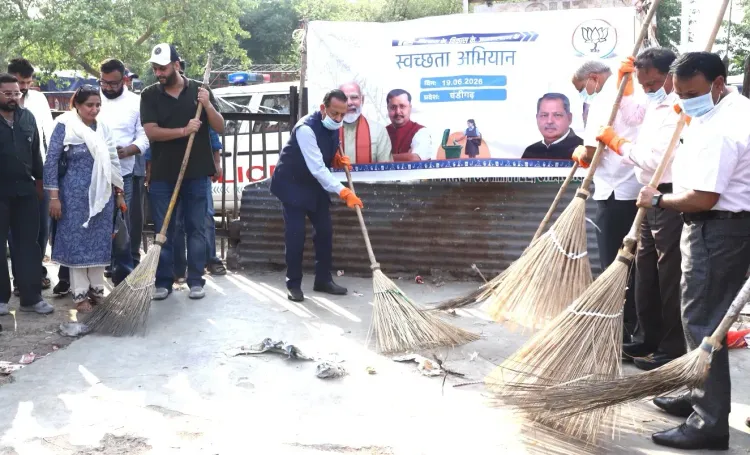
Union Minister Dr. Jitendra Singh joined a Swachhata Abhiyan drive at Chandigarh's Sector-26 vegetable market on 19 June 2026, marking 12 years of the Modi government and reaffirming the Swachh Bharat Mission as a national civic responsibility.
Key Takeaways
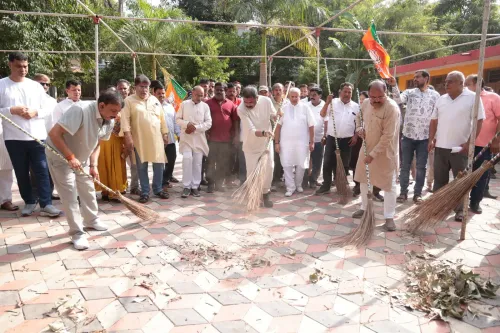
Jitendra Singh participated in a cleanliness drive at Sector-26 Sabzi Mandi, Chandigarh on 19 June 2026 .
The event was organised to mark 12 years of the Narendra Modi -led government under the theme of trust, development, and public welfare ( #12YearsOfSeva ).
The minister described the Swachh Bharat Mission as a 'national responsibility' built on public participation, not merely a government scheme.
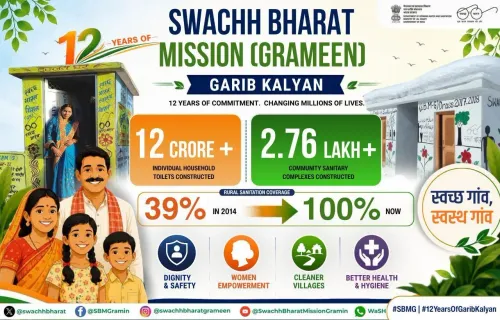
The Swachh Bharat Mission was originally launched by PM Modi on 2 October 2014 and has since expanded into Swachh Bharat Mission-Urban 2.0 .
Chandigarh , joint capital of Punjab and Haryana, is a recurring high-performer in national Swachh Survekshan rankings.
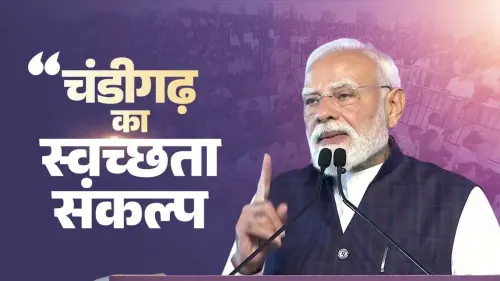
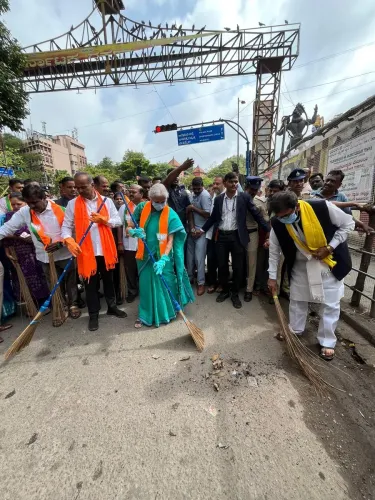
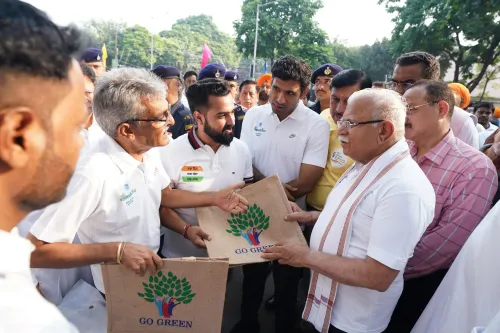
Union Science and Technology Minister Dr. Jitendra Singh participated in a cleanliness drive at Sector-26 Sabzi Mandi, Chandigarh, on Friday, 19 June 2026, as part of a Swachhata Abhiyan organised to mark 12 years of the Narendra Modi-led government's completion in office under the theme of trust, development, and public welfare.
Context
Posting on X under the hashtag #12YearsOfSeva, Dr. Singh wrote in Hindi: 'Swachh Bharat ka sankalp keval ek abhiyan nahin, balki janabhaagidaari se viksit hone wala ek rashtriya daayitva hai' — translating to: 'The resolve of a Clean India is not merely a campaign, but a national responsibility that grows through public participation.' The minister described his participation in the Sector-26 vegetable market cleanliness drive as a privilege and framed it as an expression of the broader Swachh Bharat mission.
Policy Backdrop
The Swachh Bharat Mission was launched by Prime Minister Narendra Modi on 2 October 2014 as a nationwide jan andolan — a people's movement — aimed at achieving open-defecation-free status and improving solid waste management across urban and rural India. Over the years, the mission has evolved into Swachh Bharat Mission-Urban 2.0, which focuses on making cities garbage-free and sustaining sanitation gains. Ministerial participation in on-ground cleanliness drives has been a recurring feature of the campaign, designed to signal that sanitation is a governance priority rather than a bureaucratic exercise.
Chandigarh, a Union Territory that serves as the joint capital of Punjab and Haryana, has consistently featured in national Swachh Survekshan rankings, making it a symbolically significant venue for such demonstrations. Sector-26, home to one of the city's busiest wholesale vegetable markets, represents the kind of high-footfall urban space that sanitation drives typically target.
Stakeholders and Impact
The immediate beneficiaries of sustained cleanliness drives in markets such as Sector-26 Sabzi Mandi are urban residents, daily-wage vendors, and municipal sanitation workers who operate in high-density commercial zones. Municipal bodies in Chandigarh are responsible for translating such ministerial participation into longer-term maintenance and waste-management infrastructure. Citizen-participation models promoted under Swachh Bharat have also influenced how urban local bodies measure and report cleanliness outcomes in annual Swachh Survekshan assessments.
The event's framing around 12 years of the Modi government — described in the post as years of 'vishwas, vikas aur jankalyan' (trust, development, and public welfare) — positions the cleanliness drive as part of a broader political and administrative milestone, linking a welfare campaign to a governing anniversary.
What's Next
The central government is expected to continue rolling out similar Swachhata drives across constituencies as part of the anniversary-linked outreach. The next round of Swachh Survekshan rankings will be a key indicator of whether ground-level drives in cities like Chandigarh translate into measurable improvements in urban sanitation indices. Progress under Swachh Bharat Mission-Urban 2.0 — particularly on waste processing and public toilet infrastructure — will determine the mission's next phase of targets and funding allocations.
Point of View
Ensuring maximum visibility with minimal coordination friction. The framing of sanitation as a 'national responsibility' rather than a government scheme also reflects the administration's consistent attempt to shift ownership of welfare outcomes from the state to the citizen.
NationPress
19 Sept 2026
Frequently Asked Questions
What is the Swachh Bharat Mission and when was it launched?
The Swachh Bharat Mission is India's flagship national cleanliness and sanitation programme, launched by Prime Minister Narendra Modi on 2 October 2014 as a jan andolan to achieve open-defecation-free status and better waste management. It has since evolved into Swachh Bharat Mission-Urban 2.0.
Why did Dr. Jitendra Singh participate in a cleanliness drive in Chandigarh?
Dr. Jitendra Singh joined the Swachhata Abhiyan at Sector-26 Sabzi Mandi in Chandigarh on 19 June 2026 as part of events marking 12 years of the Narendra Modi government, using the occasion to reinforce the Swachh Bharat Mission's message of citizen-led cleanliness.
What is Swachh Survekshan and how does Chandigarh perform?
Swachh Survekshan is the Government of India's annual urban cleanliness survey that ranks cities on sanitation, waste management, and citizen feedback. Chandigarh has consistently ranked among the better-performing cities in the survey.
What is #12YearsOfSeva?
#12YearsOfSeva is a hashtag used by BJP leaders and government ministers to mark the completion of 12 years of the Narendra Modi-led government, celebrating its record on governance, development, and public welfare programmes.
What is Swachh Bharat Mission-Urban 2.0?
Swachh Bharat Mission-Urban 2.0 is the second phase of the urban cleanliness mission, focused on making all cities garbage-free, ensuring 100 per cent scientific solid waste processing, and sustaining open-defecation-free outcomes achieved in the first phase.