NaMo Bharat adds 20 trips on Delhi-Meerut corridor as AQI hits 397
Synopsis
With Delhi's AQI crashing to 397 and the entire NaMo Bharat corridor blanketed in 'very poor' air, the NCRTC is putting 20 extra trains on the Delhi-Meerut route from 4 November — a direct nudge to swap private cars for rapid rail during the region's worst pollution stretch of the year.
Key Takeaways
NCRTC will run 20 additional NaMo Bharat trips on the Delhi-Meerut corridor from 4 November 2026 .
Delhi's AQI fell to 397 on Tuesday, placing it firmly in the 'very poor' category.
Cities along the corridor — including Ghaziabad and Meerut — also recorded 'very poor' air quality.
Services will run the full stretch from Sarai Kale Khan (Delhi) to Modipuram (Meerut), with seamless interchange at major stations.
The NaMo Bharat Connect app now offers live parking tracking at stations to help passengers plan trips.
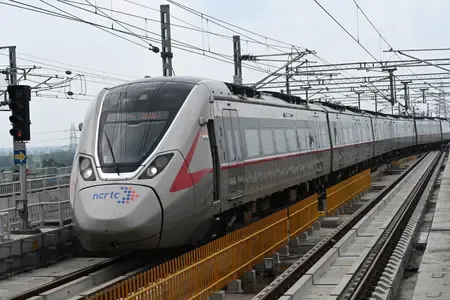
The National Capital Region Transport Corporation (NCRTC) has announced 20 additional NaMo Bharat train trips on the Delhi-Meerut corridor starting 4 November 2026 (Wednesday), as Delhi's AQI plunged to a alarming 397 — firmly in the 'very poor' category — prompting authorities to push commuters toward public transport. The expanded services will run the full length of the corridor, from Sarai Kale Khan in Delhi to Modipuram in Meerut.
Why NCRTC Is Acting Now
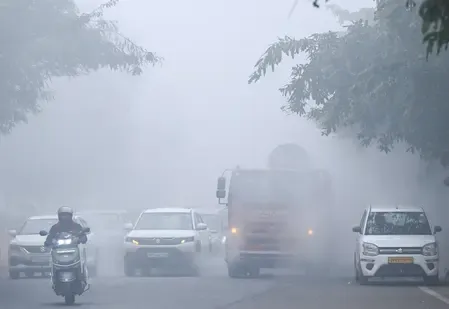
Air quality across the Delhi-NCR region has deteriorated sharply over the past several days. Delhi's AQI touched 397 on Tuesday, while neighbouring cities along the corridor — including Ghaziabad and Meerut — also recorded readings in the 'very poor' band. The NCRTC's decision is a direct response to this pollution surge, aiming to reduce the volume of private vehicles on roads and ease emissions pressure across the region.
How the Additional Services Will Work
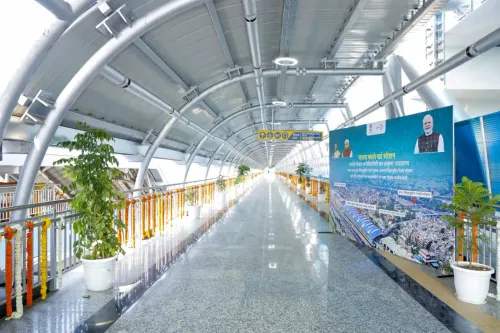
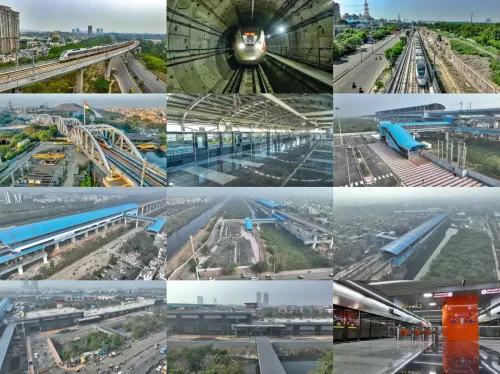
The 20 extra trips will cover the entire NaMo Bharat corridor, connecting key interchange stations such as Sarai Kale Khan, Anand Vihar, New Ashok Nagar, and Ghaziabad. At these stations, passengers can transition seamlessly between NaMo Bharat trains, the Delhi Metro, Indian Railways, interstate bus terminals, and city bus services — making the network a genuine multi-modal alternative to private commuting.
Parking and Tech Support for Passengers
To further encourage the shift, parking facilities at NaMo Bharat stations allow commuters arriving by private vehicle to park and continue their journey by train. The 'NaMo Bharat Connect' app has also introduced a live parking tracking feature, enabling passengers to check real-time parking availability at any station before even booking their ticket. This reduces journey uncertainty and helps plan trips more effectively.
The Bigger Picture: Pollution and Public Transport
This is not an isolated operational tweak — it is part of a broader pattern of emergency public transport augmentation that Delhi-NCR authorities activate each winter as stubble burning, vehicle emissions, and unfavourable meteorology combine to spike pollution levels. The NCRTC said in a statement that the initiative aims to 'promote a sustainable public transport system across the entire NCR.' Notably, similar measures were deployed in previous years, underlining that the region continues to rely on reactive responses rather than structural, year-round modal shifts. The coming days will test whether the additional frequency meaningfully draws commuters away from private vehicles during the critical pollution season.
Point of View
But it highlights a structural problem: Delhi-NCR's pollution emergency playbook has barely changed in years. Each winter, authorities react with transport augmentation rather than front-loading public transit capacity before the smog season peaks. The real question is whether ridership on the additional NaMo Bharat services will be enough to measurably dent vehicle emissions — or whether the corridor's current reach, limited to specific nodes along the Delhi-Meerut axis, simply cannot absorb the diffuse private-vehicle traffic that drives NCR pollution. A live parking app is welcome, but it is a marginal gain against a problem that requires year-round behavioural shift and denser network coverage.
NationPress
3 Nov 2026
Frequently Asked Questions
Why is NCRTC running extra NaMo Bharat trains from 4 November?
NCRTC is operating 20 additional NaMo Bharat trips from 4 November 2026 because Delhi's AQI dropped to 397 — 'very poor' — and cities along the corridor including Ghaziabad and Meerut also recorded hazardous air quality. The move is designed to encourage commuters to switch from private vehicles to public transport and help reduce road-traffic emissions.
Which stations does the expanded NaMo Bharat service cover?
The additional trips run the full Delhi-Meerut NaMo Bharat corridor, from Sarai Kale Khan in Delhi to Modipuram in Meerut. Key interchange stations include Anand Vihar, New Ashok Nagar, and Ghaziabad, where passengers can connect to Delhi Metro, Indian Railways, interstate buses, and city bus services.
What is the live parking feature on the NaMo Bharat Connect app?
The NaMo Bharat Connect app's live parking tracking feature lets passengers check real-time parking availability at any NaMo Bharat station before booking their ticket. This helps commuters who drive to a station plan their journey with certainty about whether a parking spot will be available.
How bad is Delhi's air quality right now?
Delhi's AQI stood at 397 on Tuesday, 4 November 2026, placing it in the 'very poor' band. Neighbouring cities along the NaMo Bharat corridor — Ghaziabad and Meerut — are also in the 'very poor' category, reflecting a region-wide deterioration driven by seasonal factors.
How does this help reduce pollution in Delhi-NCR?
By increasing train frequency, NCRTC aims to shift more commuters from private cars and two-wheelers to NaMo Bharat rapid rail, directly reducing vehicular emissions on the Delhi-Meerut highway belt. Park-and-ride facilities at NaMo Bharat stations further allow drivers to leave their vehicles and complete their journey by train.