Namo Bharat rapid rail crosses 4.5 crore rides in 3 years on Delhi-Meerut corridor
Synopsis
Three years in, Namo Bharat has moved 4.5 crore passengers on the Delhi–Meerut corridor — and with two new corridors awaiting approval and two more in the DPR stage, India's first regional rapid rail is quietly reshaping how the National Capital Region commutes.
Key Takeaways
Namo Bharat has recorded over 4.5 crore passenger journeys since its launch in October 2023 .
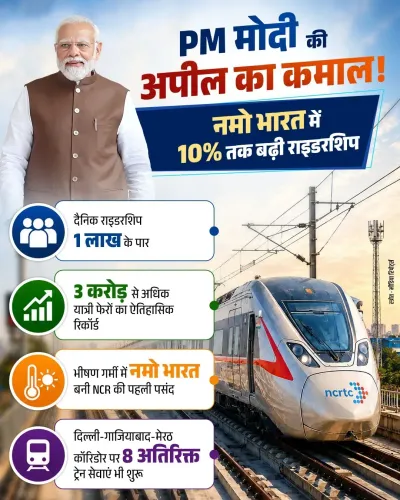
The system currently carries more than 1.1 lakh commuters daily on the 82-km Delhi–Ghaziabad–Meerut corridor.
Peak single-day ridership reached approximately 1.68 lakh passengers — an all-time high.
A 110 MW captive solar power plant and the Solar on Track initiative underpin the corridor's sustainability goals.
Corridors Delhi–Panipat–Karnal and Delhi–Gurugram–Behror are reportedly awaiting government approval, while Ghaziabad–Jewar and Noida–Faridabad–Gurgaon are at DPR stage.
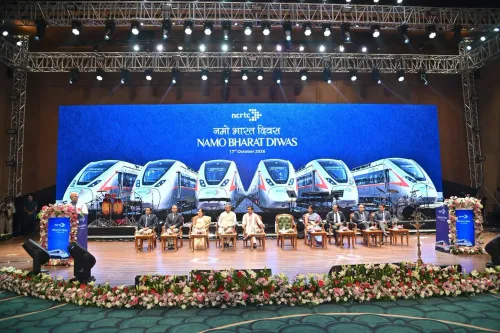
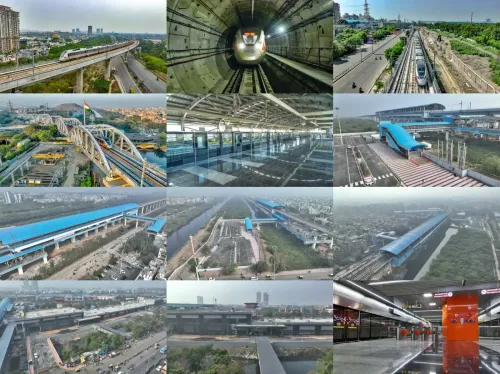
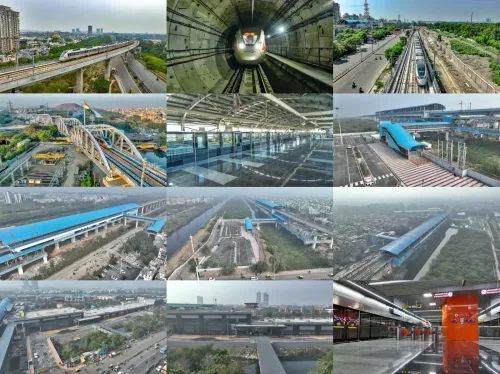
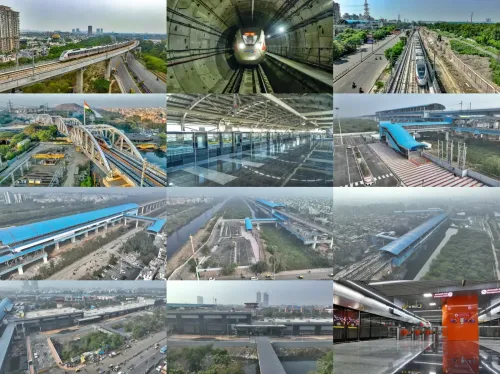
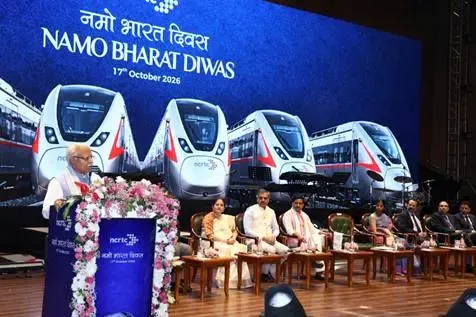
The Namo Bharat rapid rail transit system on the 82-km Delhi–Ghaziabad–Meerut corridor has surpassed 4.5 crore passenger journeys since Prime Minister Narendra Modi inaugurated it in October 2023, Union Minister of Housing and Urban Affairs Manohar Lal Khattar announced on Sunday, 18 October 2026. The milestone was revealed at the Namo Bharat Diwas 2026 celebration, marking three full years of operations on India's first regional rapid rail corridor.
Key Ridership Milestones
The system now serves over 1.1 lakh commuters every day and has recorded a peak single-day ridership of approximately 1.68 lakh passengers — its highest since launch. Khattar noted that the growing numbers reflect commuter confidence in the corridor's safety, frequency, and reliability. 'This achievement reflects the growing trust of the people in modern, safe and seamless transportation,' the minister said at the event.
What the System Has Delivered
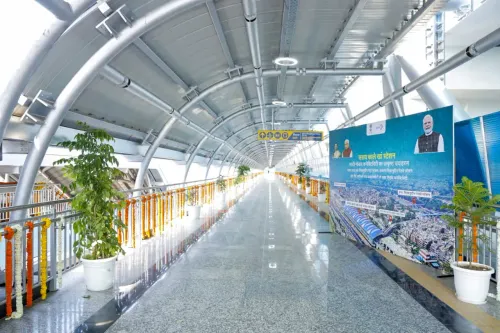
Operated by the National Capital Region Transport Corporation (NCRTC), Namo Bharat has repositioned regional commuting between Delhi, Ghaziabad, and Meerut — bringing workplaces, universities, and economic hubs within closer reach for lakhs of daily users. NCRTC Managing Director Shalabh Goel described the three-year journey as 'a testament to the power of modern public transport to bring people closer to opportunities and contribute to a more connected, accessible and sustainable region.' The system has also invested in multimodal and first- and last-mile connectivity to ease the overall commute experience.
Green Infrastructure Push
Sustainability has been a defining strand of the project. NCRTC highlighted two flagship green initiatives at the celebration: the Solar on Track programme, which installs solar panels along the rail infrastructure, and the development of a 110 MW captive solar power plant aimed at driving both environmental and financial sustainability for the corridor over the long term.
Expansion Corridors in the Pipeline
Two additional priority corridors — Delhi–Panipat–Karnal and Delhi–Gurugram–Behror — are reportedly awaiting government approval. Two further corridors, Ghaziabad–Jewar and Noida–Faridabad–Gurgaon, are currently at the Detailed Project Report (DPR) stage. If sanctioned on schedule, these additions would dramatically extend the rapid rail network's footprint across the National Capital Region (NCR). The Annual NCRTC Awards ceremony, held as part of the celebrations, felicitated employees for outstanding performance during the year.
With network expansion in active planning and ridership trending upward, Namo Bharat appears poised to deepen its role as the backbone of regional mobility across the NCR in the years ahead.
Point of View
But the more consequential number is the daily average — at 1.1 lakh, the corridor is still well below its designed capacity, raising questions about whether the system has fully cracked first- and last-mile connectivity in a sprawling NCR geography. The pipeline of four additional corridors signals political commitment, but each requires capital, land, and execution muscle that past urban rail projects have struggled to mobilise on time. India's rapid rail ambition will be judged less by three-year celebrations and more by whether the expansion corridors deliver on their DPR timelines — a record that remains mixed across urban transit in India.
NationPress
18 Oct 2026
Frequently Asked Questions
How many passengers has Namo Bharat carried since its launch?
Namo Bharat has recorded over 4.5 crore passenger journeys since Prime Minister Narendra Modi inaugurated the Delhi–Ghaziabad–Meerut corridor in October 2023. The system currently serves more than 1.1 lakh commuters daily.
What is the highest single-day ridership recorded by Namo Bharat?
The Namo Bharat rapid rail has recorded its highest-ever single-day ridership of approximately 1.68 lakh passengers, according to NCRTC. This peak underscores growing commuter adoption on the 82-km corridor.
Which new Namo Bharat corridors are being planned?
Two priority corridors — Delhi–Panipat–Karnal and Delhi–Gurugram–Behror — are reportedly awaiting government approval. Two further corridors, Ghaziabad–Jewar and Noida–Faridabad–Gurgaon, are currently at the Detailed Project Report (DPR) stage.
What sustainability initiatives has NCRTC introduced for Namo Bharat?
NCRTC has launched the Solar on Track programme and is developing a 110 MW captive solar power plant to support the environmental and financial sustainability of the Namo Bharat system. These measures aim to reduce the corridor's carbon footprint and operating costs.
Who oversees the Namo Bharat rapid rail system?
The National Capital Region Transport Corporation (NCRTC) operates the Namo Bharat rapid rail system. Its Managing Director, Shalabh Goel, described the project's growth as a 'testament to the power of modern public transport' at the Namo Bharat Diwas 2026 event.