Khattar hails Namo Bharat Rapid Rail's 4.5 Crore Rides
Synopsis
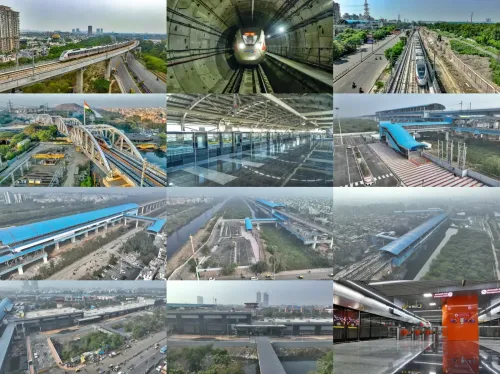
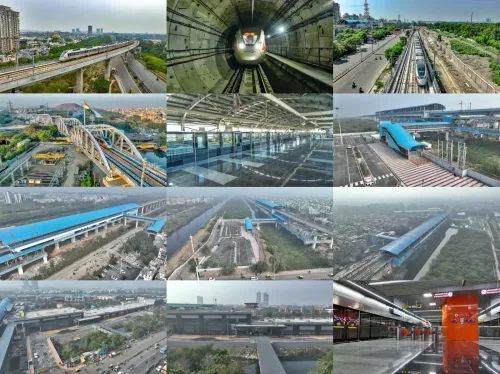
Union Minister Manohar Lal Khattar has celebrated the Namo Bharat Rapid Rail crossing 4.5 crore passenger trips on the 82-km Delhi–Ghaziabad–Meerut corridor, inaugurated by PM Modi in October 2023, calling it proof of growing public trust in modern regional transit.
Key Takeaways
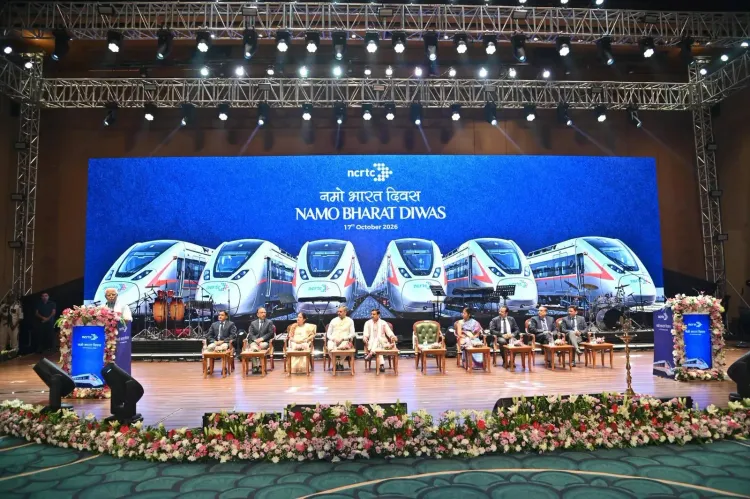
Union Minister Manohar Lal Khattar posted on 17 October 2026 celebrating the Namo Bharat Rapid Rail milestone.
The Delhi–Ghaziabad–Meerut corridor spans 82 kilometres and was inaugurated by PM Narendra Modi on 20 October 2023 .
The corridor has recorded 4.5 crore (45 million) passenger trips since launch, according to the minister's post.
NCRTC (National Capital Region Transport Corporation), incorporated in 2013, is the implementing agency for India's RRTS network.
Khattar explicitly praised NCRTC's engineers, technical experts, and workers — not just political leadership — for delivering the project.
The minister framed rapid transit as an economic-development tool, arguing it connects people to new opportunities beyond simply reducing travel time.
Forty-five million journeys on a single corridor — that is the number Union Minister Manohar Lal Khattar placed on the record on 17 October 2026, celebrating the ridership milestone clocked by the Namo Bharat Rapid Rail on the Delhi–Ghaziabad–Meerut corridor since its inauguration nearly three years ago.
From a cold launch to 4.5 crore rides: what the numbers say
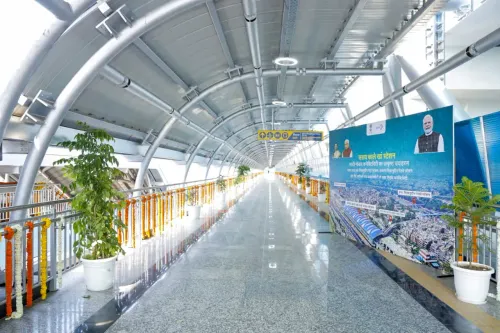
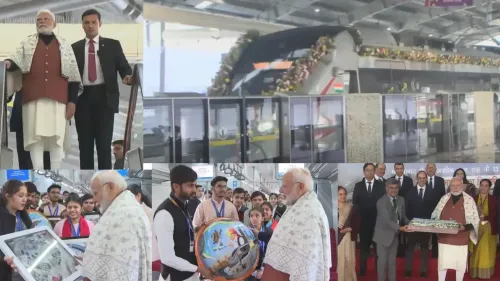
Prime Minister Narendra Modi flagged off the first section of the 82-kilometre Delhi–Ghaziabad–Meerut corridor on 20 October 2023, marking India's first operational Regional Rapid Transit System (RRTS) route. Khattar, posting in Hindi, described 'Namo Bharat' as more than a brand name — 'राष्ट्र प्रथम के संकल्प, समर्पण, संस्कृति और संस्कारों की प्रेरणा' ('an inspiration rooted in the resolve, dedication, culture and values of Nation First'). The ridership figure of 4.5 crore passenger trips is the headline claim in the post; it has not been independently verified from operational data available before the post date.
The minister framed the milestone not as a transit statistic but as a trust signal: evidence that commuters in the National Capital Region are actively choosing modern, high-speed regional rail over road alternatives. That shift, if sustained, has direct implications for congestion on one of India's most choked arterial networks.
NCRTC: the agency that built it
Behind the milestone stands the National Capital Region Transport Corporation (NCRTC), incorporated in 2013 specifically to plan and execute RRTS corridors across the NCR. Khattar singled out NCRTC's 'officers, engineers, technical experts, employees and workers' for praise, describing their contribution as defined by dedication and commitment. It is a pointed acknowledgement — large infrastructure projects in India routinely credit political leadership; crediting the implementing workforce publicly is less common.
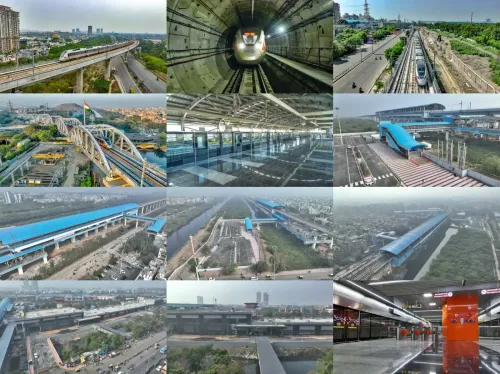
The Namo Bharat trains are purpose-built for regional rapid transit: higher speeds than urban metro systems, longer inter-station distances, and a design philosophy aimed at stitching satellite cities into a functional economic zone rather than just extending a city's footprint.
Connectivity as economic policy, not just transport
Khattar made an explicit policy argument in his post: 'Better transport does not merely reduce the distance between cities — it connects people to new opportunities and accelerates regional development and economic progress.' That framing positions the Namo Bharat corridor as an economic-development instrument, not simply a commuter convenience. The logic tracks with urban-economics research on how rapid transit corridors shift employment catchment areas and raise land productivity along their routes.
The broader RRTS vision includes corridors beyond Delhi–Meerut — the Delhi–Alwar route is among those in planning or construction stages — meaning the Delhi–Meerut ridership data now serves as a live proof-of-concept for the entire programme's viability.
Three years in, the question is no longer whether Indians will ride a rapid regional train. They already have — 45 million times. The question is how fast the next corridor follows.
Point of View
A strong ridership number on the Delhi–Meerut route doubles as a public-confidence builder for the broader programme. By foregrounding the 'Nation First' philosophy embedded in the Namo Bharat brand, the minister also reinforces a BJP governance narrative that ties infrastructure delivery to cultural and ideological values. The explicit salute to NCRTC's workforce is a softer but deliberate signal — one that humanises a large state project and builds institutional goodwill. Analysts watching India's urban mobility agenda will note that the corridor's ridership trajectory, if verified, would be among the fastest ramp-ups for any new rail system in South Asia.
NationPress
17 Oct 2026
Frequently Asked Questions
What is Namo Bharat Rapid Rail?
Namo Bharat is the brand name for India's Regional Rapid Transit System (RRTS) trains, designed for high-speed regional connectivity between cities. The first operational corridor runs 82 kilometres between Delhi, Ghaziabad, and Meerut in the National Capital Region.
When was the Delhi–Meerut Namo Bharat corridor inaugurated?
Prime Minister Narendra Modi inaugurated the first section of the Delhi–Ghaziabad–Meerut Namo Bharat corridor on 20 October 2023 .
How many passengers have travelled on the Namo Bharat Rapid Rail?
According to a post by Union Minister Manohar Lal Khattar dated 17 October 2026 , the corridor has recorded more than 4.5 crore (45 million) passenger trips since its launch.
What is NCRTC and what is its role?
The National Capital Region Transport Corporation (NCRTC) was incorporated in 2013 to plan and execute RRTS corridors in the NCR. It is the implementing agency responsible for building and operating the Namo Bharat Rapid Rail network.
What other RRTS corridors are planned after Delhi–Meerut?
Other corridors under the RRTS programme include the Delhi–Alwar route, among others. The Delhi–Meerut corridor's ridership performance is expected to influence the pace of approvals and construction for these future lines.