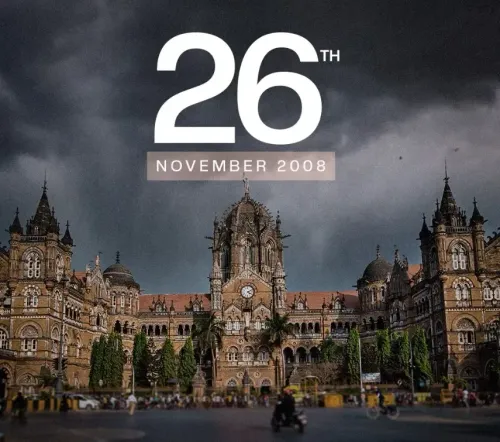
26/11 anniversary: Argentina envoy Caucino backs India on terror
Synopsis
On 26/11's 18th anniversary, Argentina's envoy did more than offer condolences. Mariano Agustin Caucino said governments must stop states that harbour terrorists, a remark in line with India's long-standing position. He cited Argentina's own 1992 and 1994 attacks and pointed to trade of almost USD 7 billion.
Key Takeaways
Argentina's Ambassador Mariano Agustin Caucino expressed solidarity with 26/11 victims' families on 26 November 2026 .
He rejected terrorism in all its forms and urged governments to stop states from harbouring terror.
The 2008 Mumbai attacks by 10 Lashkar-e-Taiba terrorists killed 166 people and injured around 300 .
Caucino recalled the attacks in Argentina on the Israeli Embassy (1992) and the Jewish Community Centre (1994) .
India is now Argentina's sixth largest partner , with bilateral trade of almost USD 7 billion .
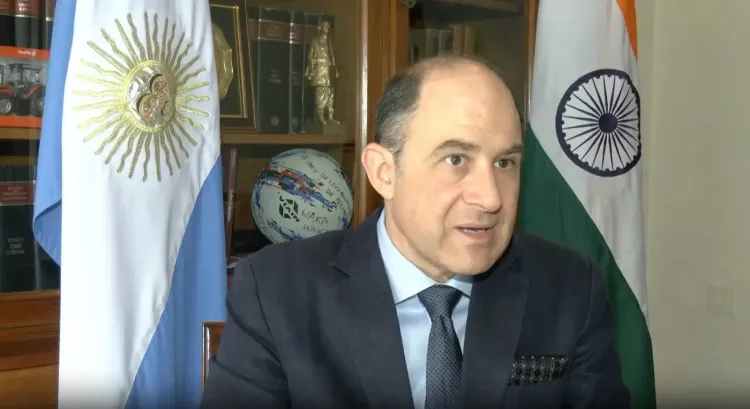
Argentina's Ambassador to India, Mariano Agustin Caucino, on Thursday, 26 November 2026, expressed his country's solidarity with the families of those killed in the 2008 26/11 Mumbai terror attack and rejected terrorism in all its forms. Speaking in New Delhi on the 18th anniversary of the attack, the diplomat said Argentina supports India's fight against terrorism and urged the international community to act together against it.
In an interview, Caucino said India has been suffering because of terrorism. He added that Argentina, which faced two deadly attacks in the 1990s, understands that experience firsthand.
Solidarity on the 26/11 Anniversary
Caucino opened his remarks with a message to the victims' families and to the Indian government.
“First of all, our solidarity with the Indian people, Indian government, for the remembrance of this terrible attack. Our thoughts are with those people who lost loved ones. And, of course, rejection of terrorism in all its forms. We know what terrorism is. And Argentina is always supporting life and against terror,” he said.
He described terrorism as a threat that keeps changing its methods to catch states off guard. He also made a pointed reference to countries that shelter terror networks.
“Terrorism evolves in the way that it is always changing the way it acts and it is always changing in order to surprise societies and states and governments. But, governments have to work together in order to prevent and to combat terrorism and to impede that some other states, part of the international system, harbour this type of situation,” Caucino said.
Recalling the Mumbai Siege
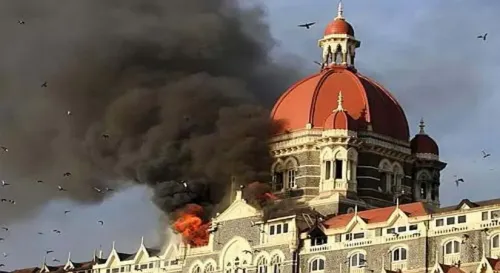
The 26/11 attacks were carried out by 10 terrorists linked to the Pakistan-based Lashkar-e-Taiba. The attacks began on the night of 26 November 2008 and continued until 29 November. The attackers struck several sites across Mumbai, including Chhatrapati Shivaji Terminus railway station, Leopold Cafe, two hospitals, Nariman House, and the Taj Mahal Palace and Oberoi-Trident hotels.
The four-day siege killed 166 people and injured around 300. Security forces killed nine of the 10 attackers. Ajmal Amir Kasab was captured alive, sentenced to death in 2010 and executed in 2012.
Argentina's Own Experience of Terror
Caucino drew a parallel with Argentina's history. He recalled the attack on the Israeli Embassy in 1992 and the bombing of the Jewish Community Centre building in 1994.
“We know what India is suffering on an almost daily basis. Argentina also suffered two terrorist attacks in the '90's. We lost more than 100 people in one attack against the Israeli Embassy in 1992. There was also an attack on the Jewish Community Centre building in 1994. So, we know firsthand what that means and that's why we are always supporting India in this fight,” he added.
His remarks come as several foreign missions in New Delhi mark the anniversary. Over the years, the attack has become a reference point in India's diplomatic push against cross-border terrorism.
India-Argentina Ties on an Upward Path
The envoy also spoke about bilateral relations. He said ties are moving in a positive direction, driven largely by economic cooperation.
“Fortunately, it's on a very good path. We are reaching a level of interaction in terms of the economy field. Today, India has become our sixth largest partner. Our economic relationship between the two countries has reached almost USD 7 billion,” Caucino said.
He described the Indian and South American economies as highly complementary. He noted that Argentina and India are “becoming really strategic partners as we signed a few years ago.”
With trade reportedly rising every year and both sides stressing counter-terrorism cooperation, the partnership is likely to gain more diplomatic attention in the months ahead.
Point of View
But Caucino's reference to states that 'harbour' terrorism is less so. It echoes India's long-standing case against Pakistan, and it comes from a Latin American partner, a region that has rarely spoken up on South Asian security. India should treat this as useful diplomatic support, especially as it seeks wider backing in global forums against cross-border terror. The more lasting story may be trade: almost USD 7 billion and rising suggests Argentina is becoming a strategic partner, not just a sympathetic one.
NationPress
26 Nov 2026
Frequently Asked Questions
What did Argentina's ambassador say on the 26/11 anniversary?
Argentina's Ambassador Mariano Agustin Caucino expressed solidarity with the families of 26/11 victims and rejected terrorism in all its forms. He also said governments must work together to stop states from harbouring terrorism.
How many people died in the 26/11 Mumbai attacks?
The 26/11 attacks killed 166 people and injured around 300. The siege by 10 Lashkar-e-Taiba terrorists lasted from 26 to 29 November 2008.
Which terror attacks did Argentina suffer?
Argentina was hit by an attack on the Israeli Embassy in 1992 and an attack on the Jewish Community Centre building in 1994. Caucino said these experiences are why Argentina supports India's fight against terrorism.
What is the current state of India-Argentina trade?
Bilateral trade between India and Argentina has reached almost USD 7 billion, according to Caucino. He said India is now Argentina's sixth largest partner and that trade is growing every year.
What happened to Ajmal Kasab?
Ajmal Amir Kasab was the only 26/11 attacker captured alive. He was sentenced to death in 2010 and executed in 2012.