Army Chief General Upendra Dwivedi Offers Prayers at Shree Jagannath Temple in Puri
Synopsis
In a heartfelt visit to Puri, Army Chief General Upendra Dwivedi sought divine blessings at the Shree Jagannath Temple, emphasizing the importance of spiritual support for the Indian Army. His annual commitment to this sacred site highlights the intertwining of faith and duty.
Key Takeaways
General Upendra Dwivedi visited the Shree Jagannath Temple with family.
He sought divine blessings for the Indian Army.
The temple is a significant Hindu shrine located in Puri, Odisha.
It symbolizes a blend of spirituality and military duty.
The architecture of the temple is a notable example of ancient Indian design.
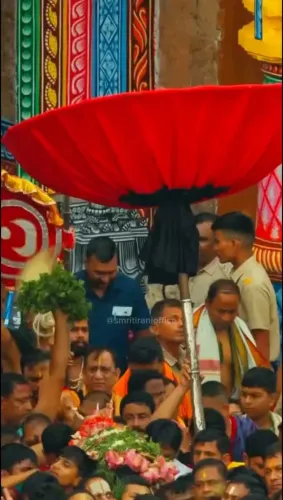
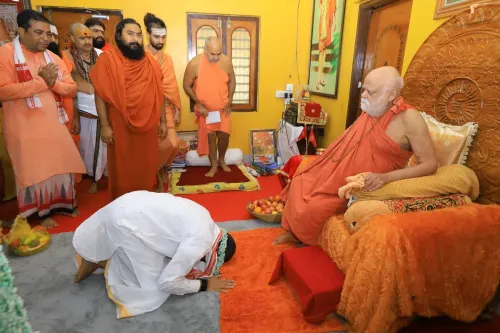
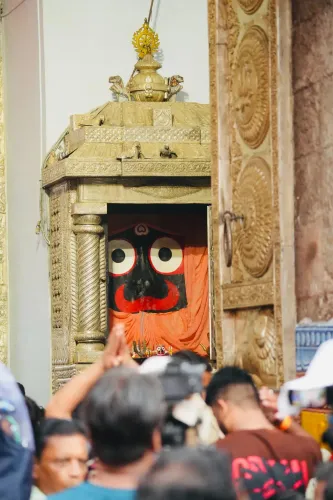
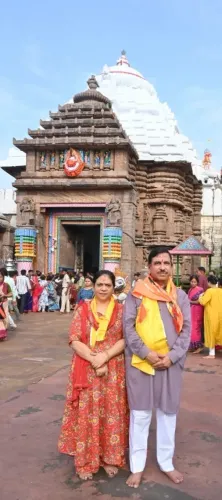
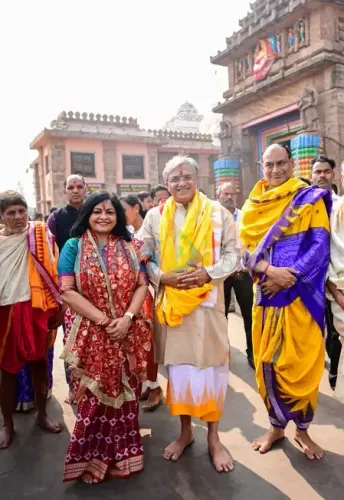
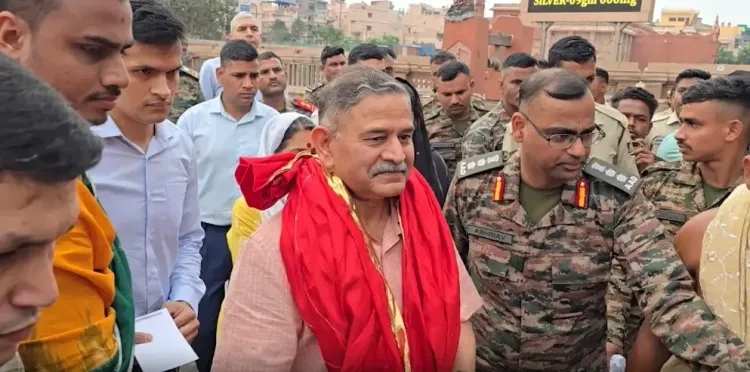
Puri, March 28 (NationPress) On Saturday, Army Chief General Upendra Dwivedi, accompanied by his family, visited the Shree Jagannath Temple in Puri to offer his prayers and seek divine blessings. Upon arrival, they performed rituals and had the opportunity for darshan of Lord Jagannath.
In a statement to the media, the Army Chief remarked, “I came to Puri today to receive the blessings of Lord Jagannath. My primary intention was to seek divine support for the Indian Army, ensuring that His grace remains with our armed forces and their families in the future. It filled my heart with joy to offer my prayers today, and I strongly believe that with the Lord’s blessings, the Indian Army will continue to grow stronger, reach new heights, and serve the nation with unparalleled excellence.”
“I also wish to extend my sincere gratitude to the sacred city of Puri. May the blessings of the Lord perpetually reside upon this holy site. The devotion and respect with which the Lord is worshipped here is a source of immense pride for our nation. Being present here evokes a profound sense of peace and spiritual purity. I aim to visit this holy site annually, bow at the Lord’s feet, and continue to seek His blessings,” he added.
Odisha is renowned as the land of Lord Jagannath. The Jagannath Temple is a significant Hindu shrine dedicated to Lord Jagannath, an incarnation of Lord Vishnu. It is situated in Puri, Odisha, on India's eastern coast.
Constructed in the 12th century AD, the temple has been the heart of the Jagannath cult and attracts pilgrims from all over the globe year-round. The spiritual mystique surrounding Lord Jagannath often surpasses the architectural splendor of this magnificent structure. Built on a raised platform, the temple is a stunning example of ancient Indian architecture.
The temple complex has seen numerous expansions until the 16th century. Unlike many other temples in the area, its carvings predominantly depict various gods and goddesses. The entire complex is surrounded by two concentric walls known as the Kuruma Bheda (inner wall) and the Meghnad Pachira (outer wall).
The main temple is uniquely constructed to ensure that no shadow of the temple falls on the ground at any time of the day.
Point of View
General Upendra Dwivedi's visit to the Shree Jagannath Temple illustrates a blend of spirituality and duty. His emphasis on seeking blessings for the Indian Army reflects a longstanding tradition of leaders turning to faith for guidance. This event not only highlights the cultural heritage of Odisha but also reinforces the importance of spiritual support for our armed forces.
NationPress
7 Oct 2026
Frequently Asked Questions
What is the significance of the Jagannath Temple?
The Jagannath Temple is a major Hindu shrine dedicated to Lord Jagannath, revered as a form of Lord Vishnu, located in Puri, Odisha. It symbolizes devotion and attracts pilgrims globally.
Why did General Upendra Dwivedi visit the temple?
General Dwivedi visited the temple to seek divine blessings for the Indian Army and to express gratitude towards the sacred city of Puri.
What is the historical background of the Jagannath Temple?
Constructed in the 12th century AD, the Jagannath Temple has been a central site for the Jagannath cult and showcases remarkable ancient Indian architecture.
How does the temple's architecture stand out?
The temple is built on a raised platform and is designed in a way that no shadow falls on the ground at any time, showcasing its unique architectural brilliance.
What did the Army Chief express about his visit?
General Dwivedi expressed joy in offering prayers and emphasized the importance of divine blessings for the strength and excellence of the Indian Army.