Northern Army chief Lt Gen Pratik Sharma reviews Poonch ops readiness
Synopsis
Northern Command chief Lt Gen Pratik Sharma's visit to Poonch's forward posts on 17 August was not routine — Poonch remains one of the LoC's most volatile sectors, with a history of ambushes and infiltration bids. A top commander personally reviewing ground readiness here signals that the Army is keeping its highest attention on a district that has repeatedly tested its counter-terrorism resolve.
Key Takeaways
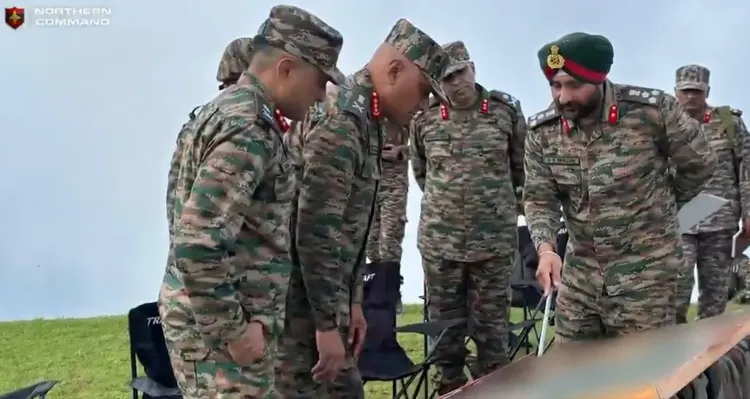
Lt Gen Pratik Sharma , GOC-in-C Northern Command , visited forward locations in Poonch, J&K on 17 August .
He was briefed on the security situation, operational readiness, and terrain challenges along the Line of Control (LoC) .
The Army Commander stressed the need for vigilance, inter-unit synergy, and innovative approaches to emerging threats.
Northern Command oversees the LoC with Pakistan, the LAC with China, and counter-terrorism operations in J&K and Ladakh .
Key formations include the XIV Corps (Leh) , XV Corps (Srinagar) , XVI Corps (Nagrota) , and the Rashtriya Rifles raised in 1990 .
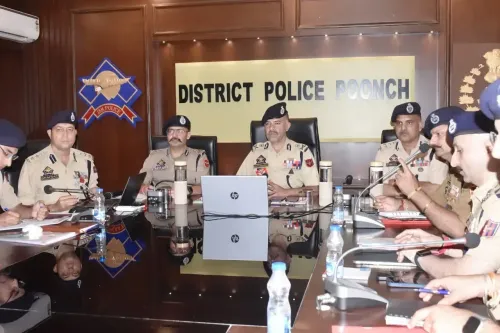
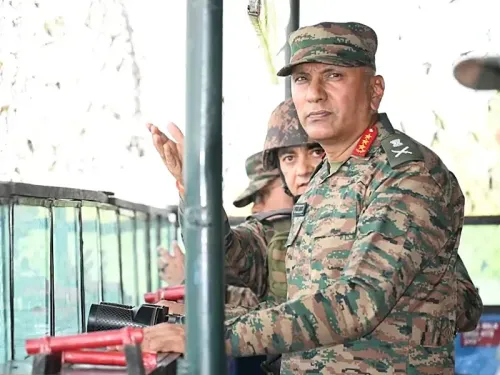
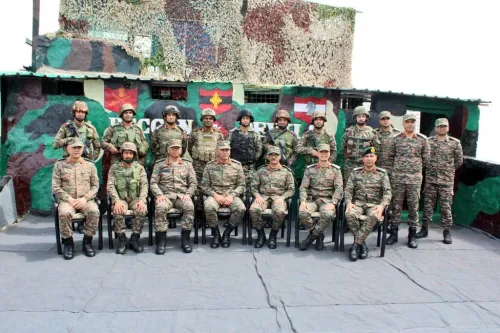
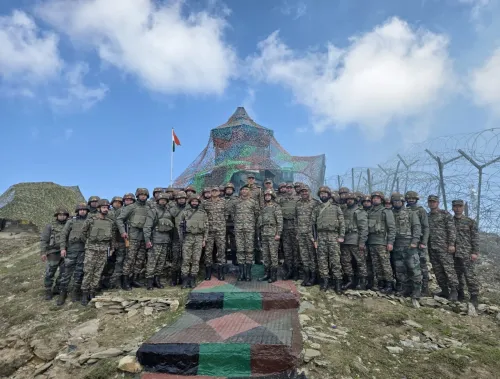
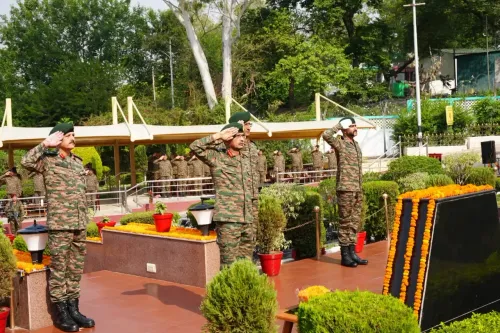
Lieutenant General Pratik Sharma, General Officer Commanding-in-Chief of the Udhampur-headquartered Northern Command, on Monday, 17 August visited forward locations in Poonch district, Jammu and Kashmir, to assess the operational preparedness of troops deployed in the sector. The visit underscores the Army's sustained focus on border vigilance along one of the most tactically sensitive stretches of the Line of Control (LoC) with Pakistan.
What the Army Commander Reviewed
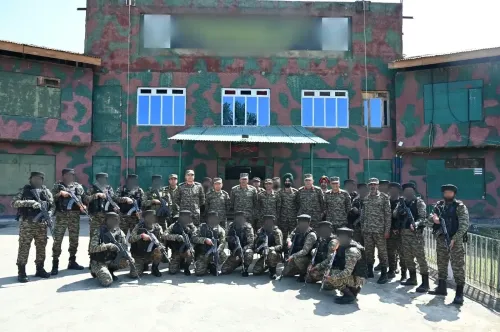
During the visit, Lt Gen Sharma was briefed on the prevailing security situation, operational readiness, and the specific challenges posed by the rugged terrain of Poonch. He interacted directly with troops serving in forward areas, acknowledging their resilience in maintaining mission-readiness under demanding terrain and weather conditions.
According to the Northern Command's official post on social media platform X, the Army Commander 'emphasised the need to remain vigilant, foster synergy and continue adopting innovative approaches to effectively meet emerging security challenges.'
Northern Command's Strategic Mandate
The Northern Command is responsible for defending India's northern frontiers, managing deployments along both the LoC with Pakistan and the Line of Actual Control (LAC) with China, and directing counter-terrorism and internal security operations across the region. Its area of responsibility spans the LoC in Jammu and Kashmir and the LAC in Ladakh, including year-round operations on the Siachen Glacier.
Counter-infiltration duties — stopping terrorist infiltration attempts across the borders — and counter-insurgency operations within Jammu and Kashmir form a core part of the Command's mandate.
Key Formations Under Northern Command
The Command's operational structure comprises three corps. The XIV Corps (Fire and Fury Corps), based in Leh, oversees Ladakh and the LAC with China. The XV Corps (Chinar Corps), headquartered in Srinagar, manages the Kashmir Valley and counter-terrorism operations. The XVI Corps (White Knight Corps), based in Nagrota, guards the Jammu region up to the Pir Panjal range.
Additionally, the Rashtriya Rifles (RR) — a dedicated counter-terrorism force raised in 1990 and manned by Army personnel on deputation — operates in Jammu and Kashmir under the Armed Forces (Jammu and Kashmir) Special Powers Act, 1990 (AFSPA), maintaining public order across the region.
Significance of the Poonch Sector
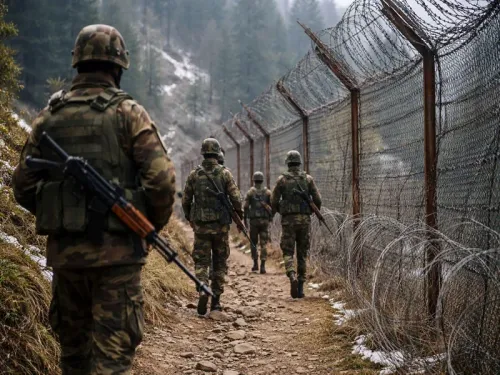
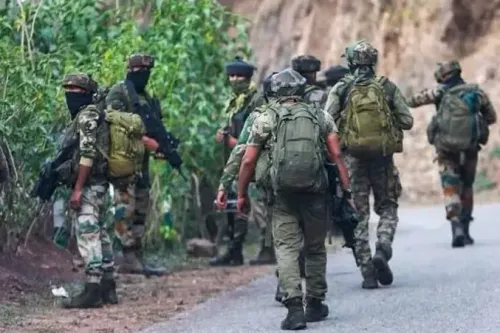
Poonch has historically been among the most active sectors along the LoC, with frequent infiltration attempts and, in recent years, a series of ambushes targeting security forces in the district's forests and ridgelines. A senior commander's visit to forward posts in this sector signals continued institutional attention to ground-level readiness. Notably, such reviews typically follow periods of heightened threat perception or operational activity in the area.
The visit is part of the Army's ongoing cycle of command inspections aimed at sustaining combat effectiveness in high-altitude and rugged terrain, where troop morale and logistics remain as critical as tactical preparedness.
Point of View
And the Army's public communication around such reviews is itself a signal of institutional intent. What the Northern Command did not say is as telling as what it did: no specific threat was cited, suggesting this is calibrated reassurance rather than crisis response. The broader question is whether periodic reviews translate into structural improvements in counter-infiltration tactics, particularly given the terrain's known advantages for adversarial actors. The emphasis on 'innovative approaches' is notable — it hints at doctrinal evolution, but without specifics, it is difficult to assess whether that represents genuine adaptation or standard operational language.
NationPress
2 Oct 2026
Frequently Asked Questions
Why did Lt Gen Pratik Sharma visit Poonch on 17 August?
Lt Gen Pratik Sharma, the Northern Command chief, visited Poonch to review the operational preparedness of troops deployed at forward locations along the Line of Control. He was briefed on the security situation, readiness levels, and the challenges of deployment in rugged terrain.
What is the Northern Command responsible for?
The Northern Command, headquartered in Udhampur, is responsible for defending India's northern borders, managing deployments along the LoC with Pakistan and the LAC with China, and directing counter-terrorism and internal security operations in Jammu and Kashmir and Ladakh, including year-round operations on the Siachen Glacier.
Which Army corps fall under the Northern Command?
The Northern Command comprises three corps: the XIV Corps (Fire and Fury Corps) in Leh covering Ladakh and the LAC, the XV Corps (Chinar Corps) in Srinagar covering the Kashmir Valley, and the XVI Corps (White Knight Corps) in Nagrota covering the Jammu region. The Rashtriya Rifles, a counter-terrorism force, also operates under its umbrella.
What is the Rashtriya Rifles and what role does it play in J&K?
The Rashtriya Rifles is a dedicated counter-terrorism force raised in 1990, manned by Army personnel on deputation. It operates in Jammu and Kashmir under AFSPA, conducting internal security and counter-insurgency operations to maintain public order.
Why is Poonch considered a sensitive sector along the LoC?
Poonch has historically recorded frequent infiltration attempts and has seen a series of ambushes targeting security forces in its dense forests and ridgelines, making it one of the most operationally active districts along the Line of Control with Pakistan.