Northern Army Commander reviews J&K security in Srinagar meeting
Synopsis
Indian Army's Northern Command chief Lieutenant General Pratik Sharma convened a high-level security review in Srinagar, spotlighting inter-agency coordination and real-time intelligence sharing — a pointed signal of operational focus in Jammu and Kashmir as the region's security calculus remains closely watched.
Key Takeaways
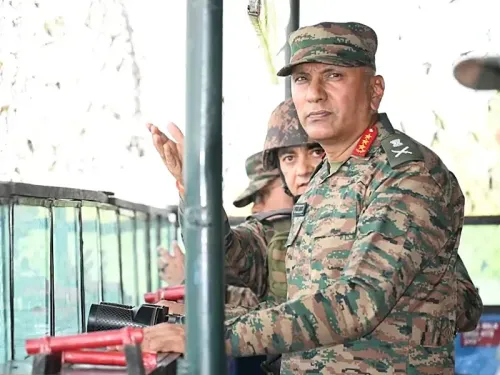
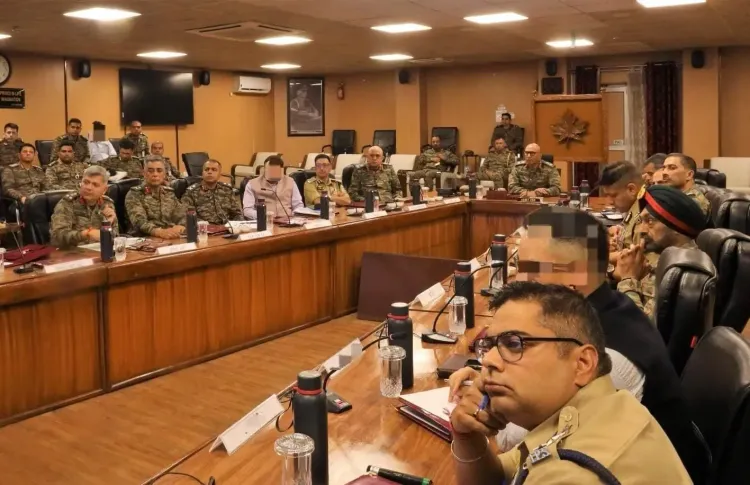
Lieutenant General Pratik Sharma , GOC-in-C of Northern Command , chaired a comprehensive security review in Srinagar on 4 October 2026 .
The meeting assessed the prevailing security situation, operational preparedness, and coordination mechanisms in Jammu and Kashmir .
Sharma reiterated the need for enhanced inter-agency synergy, real-time intelligence sharing, and integrated coordination for joint operations.
Northern Command controls four Corps — XIV (Leh) , XV (Srinagar) , I (Mathura) , and XVI (Nagrota) — with HQ at Udhampur .
The Command was re-raised in 1972 specifically to oversee India's northern borders with Pakistan and China.
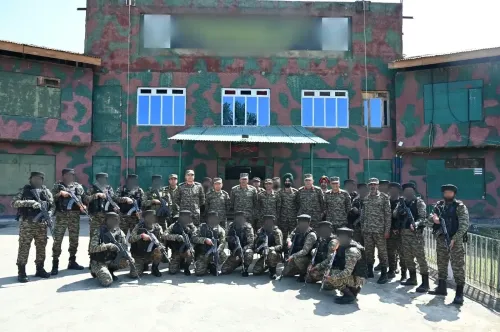
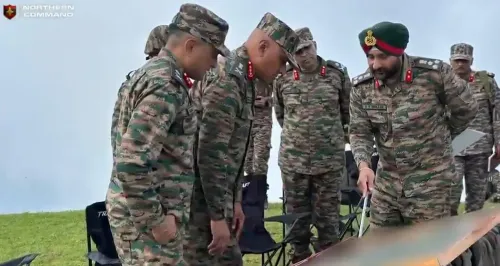
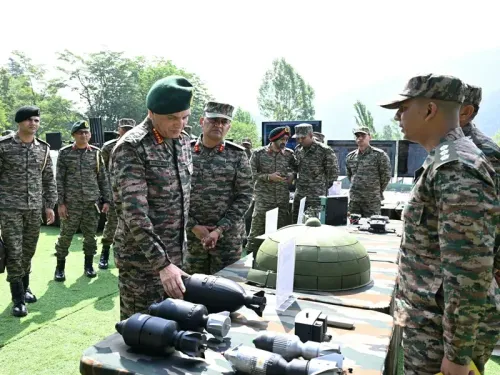
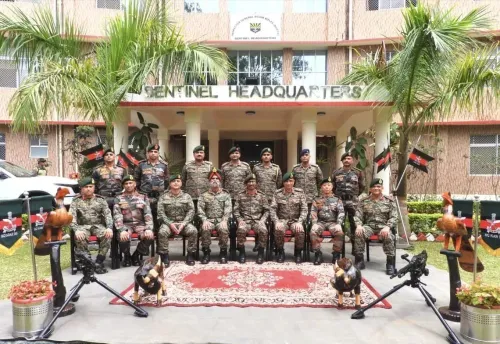
Lieutenant General Pratik Sharma, General Officer Commanding-in-Chief (GOC-in-C) of the Indian Army's Northern Command, headquartered at Udhampur, chaired a comprehensive security review and coordination meeting in Srinagar, Jammu and Kashmir, on 4 October 2026. The meeting brought together key stakeholders to assess the prevailing security environment, operational preparedness, and existing coordination mechanisms across the region.
What Was Reviewed
According to a post shared by the Northern Command on social media platform X, the meeting covered inputs on the 'prevailing security situation, operational preparedness and coordination mechanisms.' Senior military and inter-agency officials were present, reflecting the multi-tiered nature of security management in Jammu and Kashmir.
Key Emphasis: Inter-Agency Synergy
Lieutenant General Sharma reportedly reiterated the need for enhanced inter-agency synergy, real-time intelligence sharing, and integrated coordination. The stated objectives include strengthening operational readiness, facilitating rapid response, and improving the effectiveness of joint operations. This emphasis on seamless coordination between agencies signals continued focus on pre-emptive security management in the region.
About Northern Command
The Northern Command is one of the Indian Army's principal operational formations. Originally constituted as the Northern Army of the British Indian Army in 1908, it was disbanded at Independence in 1947 and re-raised in 1972 to specifically oversee operations along India's northern borders with Pakistan and China. Lieutenant General P.S. Bhagat was appointed its first GOC-in-C in June 1972, with his tenure focused on strengthening defences and improving troop welfare.
At present, the Command controls four Corps: XIV Corps (Leh), XV Corps (Srinagar), I Corps (Mathura), and XVI Corps (Nagrota). Its headquarters remains at Udhampur in Jammu and Kashmir.
Historical Context
The Northern Command has undergone several structural transformations since its formation. In 1942, it was redesignated as the North Western Army during World War II to guard the North West Frontier, overseeing the Kohat, Peshawar, Rawalpindi, Baluchistan, and Waziristan districts. Post-Independence, the Indian government revived the Command in 1972 as a dedicated formation for the northern strategic theatre — a role it continues to fulfil today.
What to Watch
Security review meetings of this scale in Srinagar typically precede or follow periods of heightened operational activity along the Line of Control (LoC) or in the Kashmir Valley hinterland. With the review emphasising real-time intelligence and rapid response frameworks, further operational directives from Northern Command are likely in the weeks ahead.
Point of View
Possibly in response to evolving cross-border dynamics. What mainstream coverage tends to miss is that such coordination meetings also serve a political signalling function: reaffirming civil-military alignment in J&K at a time when the Union Territory's administrative transition remains incomplete. The historical resilience of Northern Command — disbanded and re-raised, redesignated across wars — underscores that its present posture is shaped as much by institutional memory as by current threat assessment.
NationPress
4 Oct 2026
Frequently Asked Questions
What happened at the Northern Command security review in Srinagar?
Lieutenant General Pratik Sharma, GOC-in-C of the Indian Army's Northern Command, chaired a comprehensive security review and coordination meeting in Srinagar on 4 October 2026. The meeting assessed the prevailing security situation, operational preparedness, and coordination mechanisms, with key stakeholders in attendance.
What did Lieutenant General Pratik Sharma emphasise at the meeting?
Sharma reiterated the need for enhanced inter-agency synergy, real-time intelligence sharing, and integrated coordination. The stated aim is to strengthen operational readiness, enable rapid response, and improve the effectiveness of joint operations in Jammu and Kashmir.
What is the Indian Army's Northern Command?
Northern Command is a principal operational formation of the Indian Army, headquartered at Udhampur in Jammu and Kashmir. It was re-raised in 1972 to oversee India's northern borders with Pakistan and China, and currently controls four Corps: XIV Corps (Leh), XV Corps (Srinagar), I Corps (Mathura), and XVI Corps (Nagrota).
Who is the current commander of Northern Command?
Lieutenant General Pratik Sharma is the current General Officer Commanding-in-Chief of the Indian Army's Northern Command, based at Udhampur, Jammu and Kashmir.
Why does Northern Command hold security review meetings in Srinagar?
Srinagar serves as the headquarters of XV Corps and is a critical operational hub in Jammu and Kashmir. High-level review meetings are convened to align security agencies, update threat assessments, and reinforce coordination frameworks across the region's complex multi-agency security architecture.