Operation Sindoor: Army Chief Discusses Timely Strike Delays for Namaz Respect
Synopsis
General Upendra Dwivedi reveals the Indian Army's decision to postpone a strike during Operation Sindoor, emphasizing respect for 'namaz' at a terrorist camp. This illustrates the balance between military actions and humanitarian considerations, showcasing the ethical dimensions of leadership in conflict.
Key Takeaways
Respect for religious practices is essential, even in military operations.
Leadership in the Army integrates ethical decisions with tactical strategies.
Gender inclusivity is a priority, with personal influences shaping workplace norms.
Academic performance is less significant than adaptability and motivation.
Spirituality plays a role in navigating ethical dilemmas in counter-terrorism.
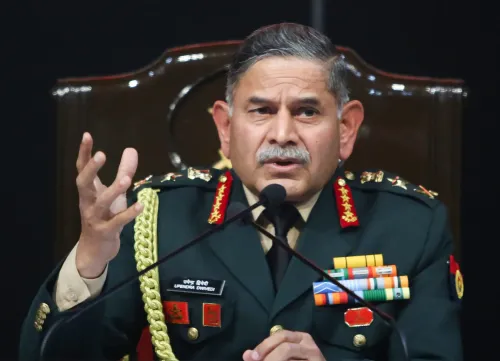
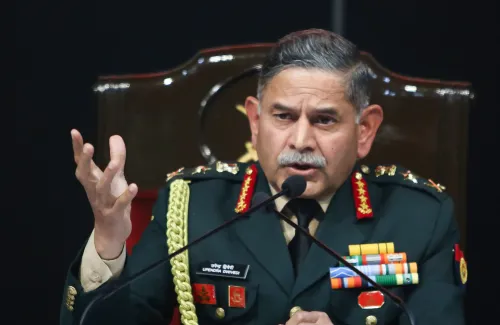
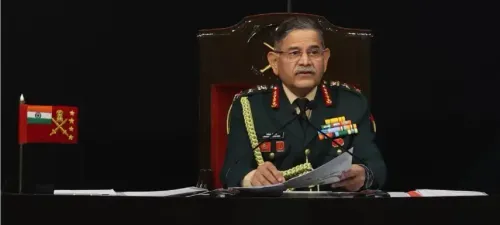
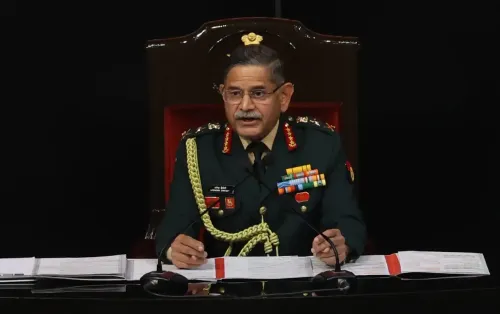
New Delhi, April 10 (NationPress) General Upendra Dwivedi, the Chief of Army Staff, has disclosed that the Indian Army intentionally postponed a planned strike during Operation Sindoor to avoid interrupting 'namaz' at a terrorist camp. This decision highlights a deliberate attempt to align military goals with humanitarian values.
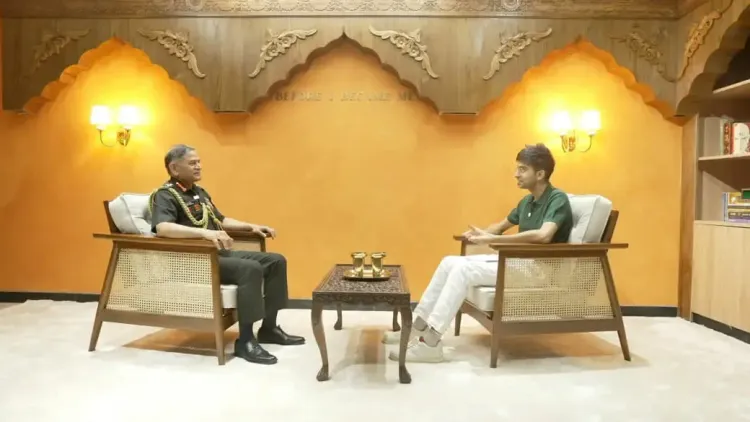
In a discussion on the podcast “Before I Became Me” hosted by Rishabh Shah, General Dwivedi explained that the operation allowed for flexible scheduling, but commanders opted for restraint upon realizing that prayers were being conducted at the target site.
“Our target destruction was set for around two or four o'clock, but we ensured not to proceed at that time when people were engaged in 'namaz' at the terrorist camp. We decided to respect their prayers because ultimately, we all share one creator. Therefore, we selected a time when we knew it was appropriate,” General Dwivedi stated.
His comments provide a rare insight into the decision-making process during Operation Sindoor, suggesting that planning involved not just tactical precision but also sensitivity to religious practices, even amidst conflict.
This perspective reflects a leadership style that intertwines ethical decision-making with military strategy.
General Dwivedi further articulated that such choices are not random but are rooted in a comprehensive value system that guides the military in complex situations.
He also touched on personal influences shaping his leadership philosophy, particularly the impact of his daughters on his views regarding hierarchy and gender roles within the Army.
On the topic of women's integration into the Army, he noted that his daughters offer guidance on various matters, including workplace norms.
“We are progressing toward integrating women into the Army. Social change and workplace standards are crucial topics, and I value their insights. I incorporate their recommendations where necessary,” he remarked.
He credited his daughters for helping him determine how to approach these changes effectively.
“They have taught me the importance of connecting with individuals. You can't always maintain a high status,” he added, mentioning how their views have influenced his push for more gender-neutral working norms in the Army.
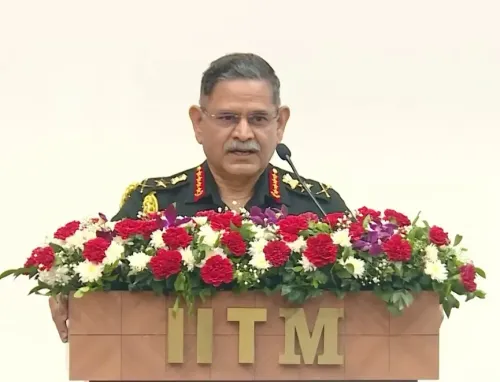
During an open discussion about his upbringing and military career, General Dwivedi emphasized the importance of adaptability and intrinsic motivation over mere academic performance.
He reflected on how his time at Sainik School, Rewa, and the National Defence Academy (NDA) molded his leadership approach and commitment to national service.
“Attitude and flexibility are more crucial than ability; grades merely indicate academic potential, not character,” General Dwivedi remarked.
He acknowledged that while he may not have consistently topped his class, his priority was on grasping subjects and preparing for life beyond academics.
On the significance of spirituality in maintaining composure during critical operations, he shared that he often refers to the Bhagavad Gita and other spiritual texts to navigate the ethical challenges associated with counter-terrorism efforts.
Point of View
General Dwivedi's approach during Operation Sindoor underscores a refreshing commitment to ethical considerations. His emphasis on respecting religious practices amidst conflict is a testament to a leadership style that values humanity alongside duty. This perspective invites a broader discussion on the role of ethics in military operations.
NationPress
10 Sept 2026
Frequently Asked Questions
What was Operation Sindoor?
Operation Sindoor was a military operation conducted by the Indian Army aimed at addressing terrorist activities in specific camps.
Why did the Army delay the strike during Operation Sindoor?
The Army delayed the strike to avoid disrupting 'namaz' at a terrorist camp, reflecting a conscious effort to balance military objectives with humanitarian respect.
Who is General Upendra Dwivedi?
General Upendra Dwivedi is the Chief of Army Staff of the Indian Army, responsible for leading and managing military operations.
How does General Dwivedi view the integration of women into the Army?
General Dwivedi supports the induction of women into the Army and seeks input from his daughters to shape workplace norms and social changes.
What influences General Dwivedi's leadership style?
General Dwivedi's leadership style is influenced by his personal experiences, ethical considerations, and the insights from his daughters.