Pakistani drone shot down in Jammu's Khour border area by Gorkha Rifles
Synopsis
Indian Army troops shot down a suspected Pakistani drone over Chakla village in Jammu's Khour border area on 31 July — the latest in a documented pattern of ISI-linked UAV operations ferrying weapons, narcotics, and IEDs across the LoC and International Border into Jammu and Kashmir.
Key Takeaways
Troops of Gorkha Rifles shot down a suspected Pakistani drone over Chakla village, Khour in Jammu district on 31 July .
The recovered UAV has been secured for investigation into its origin, purpose, and technical details .
Cross-border drones are reportedly used by ISI , Lashkar-e-Taiba , and Jaish-e-Mohammed to drop weapons, cash, and narcotics into India.
Intercepted payloads have included M4 carbine rifles , AK-47s , Chinese grenades , and thousands of ammunition rounds.
Drones are also used for narco-terrorism funding in border districts including Samba , Kathua , and Rajouri .
Tactical UAVs including Turkish Asisguard Songar armed drones have been previously documented in the region.
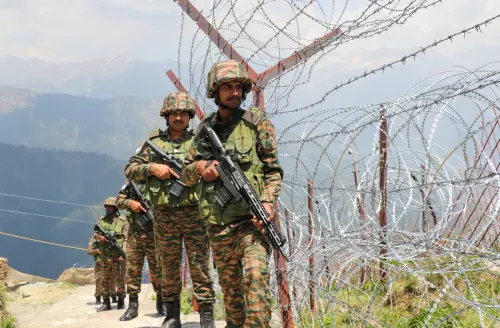
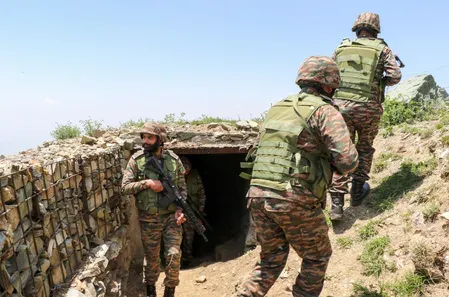
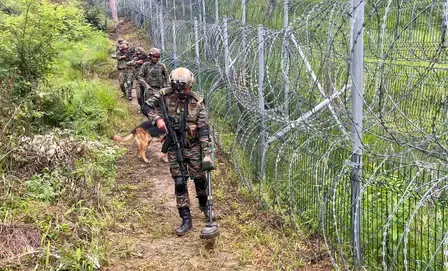
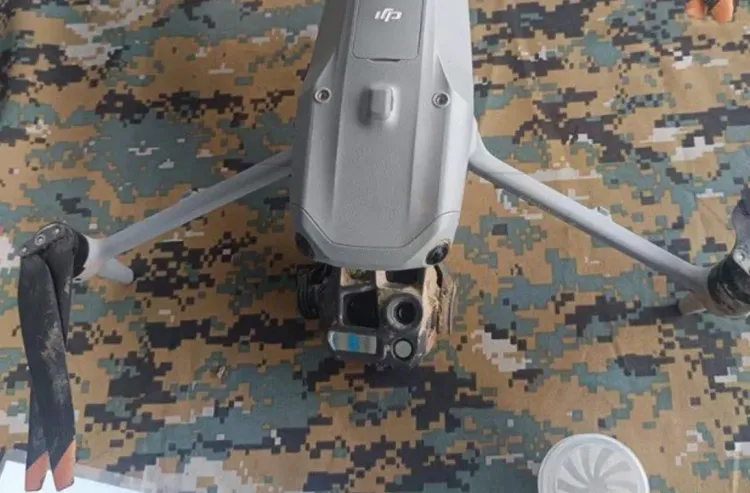
The Indian Army on Friday, 31 July shot down a suspected Pakistani drone in the Khour border area of Jammu district, Jammu and Kashmir, recovering the uncrewed aerial vehicle (UAV) for forensic examination. Troops of the Gorkha Rifles opened fire after spotting the drone hovering over Chakla village, which falls under the jurisdiction of Police Station Khour.
How the Drone Was Brought Down
According to officials, the UAV was observed conducting aerial activity over Chakla village before Gorkha Rifles personnel engaged and neutralised it. 'On noticing the uncrewed aerial vehicle, troops of Gorkha Rifles opened fire, bringing down the drone. The army and the area successfully recovered the drone, which has been secured for further examination,' officials stated. Security forces have launched an investigation to determine the drone's origin, purpose, and technical specifications.
The Broader Drone Threat on the LoC and IB
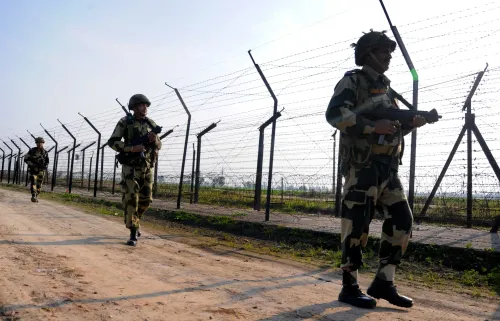
The incident is part of a documented and escalating pattern of cross-border drone activity along both the Line of Control (LoC) and the International Border (IB). According to security officials, handlers of terror outfits — operating with the alleged assistance of Pakistani forces and Pakistan's Inter-Services Intelligence (ISI) — routinely deploy UAVs to ferry weapons, cash, and narcotics into Indian territory. Intercepted payloads have reportedly included US-made M4 carbine rifles, AK-47s, Chinese grenades, pistols, and thousands of rounds of ammunition.
The payloads, once dropped, are reportedly collected by Over Ground Workers (OGWs) affiliated with terror outfits and subsequently passed on to active terrorists for use in subversive operations inside Jammu and Kashmir.
Types of UAVs Used by Terror Networks
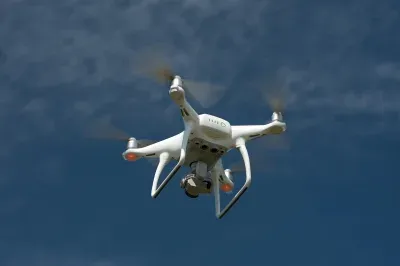
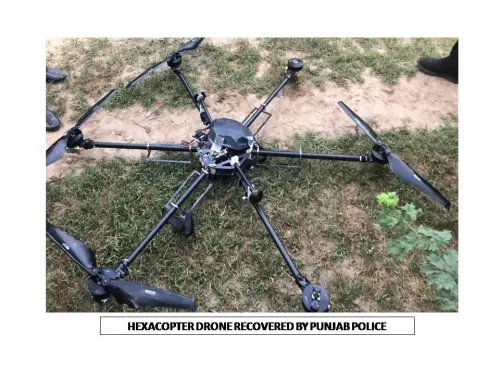
Security forces have recovered a range of drone types across previous operations. The most frequently intercepted are commercial Chinese quadcopters and hexacopters, typically modified with custom payload-dropping mechanisms. Larger hexacopters and octacopters — multi-rotor systems with heavier chassis — are used specifically for bulkier payloads such as assault rifles, ammunition, and sophisticated improvised explosive devices (IEDs). Notably, specialised tactical systems including Turkish Asisguard Songar armed drones and tube-launched or fixed-wing military surveillance UAVs have also been documented, pointing to what officials describe as a level of technical sophistication linked to Pakistani military expertise.
Narco-Terrorism and Surveillance Dimensions
Beyond weapons smuggling, drones are also being used for narco-terrorism funding. Commercial-grade narcotics — primarily heroin — are reportedly dropped into border districts including Samba, Kathua, and Rajouri, where local handlers sell the drugs to fund terror modules and recruitment. Outfits such as Lashkar-e-Taiba (LeT) and Jaish-e-Mohammed (JeM) are additionally reported to deploy spy quadcopters for real-time surveillance of Indian troop deployments, assisting guides in planning infiltration routes. This strategy is designed to bypass the heavily fortified LoC and IB while leaving minimal direct cross-border infiltration footprints.
The recovered drone from Khour will undergo technical analysis, with findings expected to inform ongoing counter-drone operations across the border districts of Jammu and Kashmir.
Point of View
But the pattern it represents is anything but routine. The documented shift from crude quadcopters to tactical systems like the Asisguard Songar suggests an adversary that is iterating faster than India's counter-drone doctrine. The narco-terrorism dimension — where heroin drops in Samba and Kathua directly fund recruitment — deserves more policy urgency than it currently receives. Shooting down individual drones is necessary; it is not sufficient.
NationPress
15 Sept 2026
Frequently Asked Questions
Where was the Pakistani drone shot down in Jammu?
The drone was shot down over Chakla village in the Khour border area of Jammu district, Jammu and Kashmir, on 31 July. The area falls under the jurisdiction of Police Station Khour.
Which army unit shot down the drone?
Troops of the Gorkha Rifles spotted the UAV hovering over Chakla village and opened fire, bringing it down. The drone was subsequently recovered and secured for further examination.
Why are Pakistani drones being used along the LoC and International Border?
According to security officials, ISI-linked handlers and terror outfits use drones to smuggle weapons, explosives, narcotics, and funding into Jammu and Kashmir, bypassing the heavily fortified LoC and International Border while avoiding direct infiltration footprints.
What kinds of weapons have been found in drone drops near the border?
Intercepted payloads have reportedly included US-made M4 carbine rifles, AK-47s, Chinese grenades, pistols, and thousands of rounds of ammunition, along with sophisticated IEDs equipped with pressure fuses.
How are drones linked to narco-terrorism in Jammu and Kashmir?
Drones are reportedly used to drop commercial-grade narcotics, primarily heroin, into border districts such as Samba, Kathua, and Rajouri. Local handlers sell the drugs to fund terror modules and recruitment, according to security officials.