Indian Army Boosts Surveillance Amid Rising Drone Incursions from Pakistan
Synopsis
The Indian Army is enhancing monitoring efforts along the India-Pakistan border due to increased drone sightings and suspicious objects. This move aims to counteract Pakistan's attempts to breach security measures in Jammu and Kashmir.
Key Takeaways
Increased Surveillance: The Indian Army is boosting surveillance along the border due to rising drone activities.
Suspicious Objects: Police have intercepted objects resembling aircraft, raising security concerns.
Ongoing Threat: Intelligence estimates indicate over 1,000 terrorists are waiting at launch pads.
Strategic Diversions: Pakistan is attempting to distract Indian security to facilitate infiltrations.
Robust Security: Indian forces are effectively countering incursions and maintaining border security.
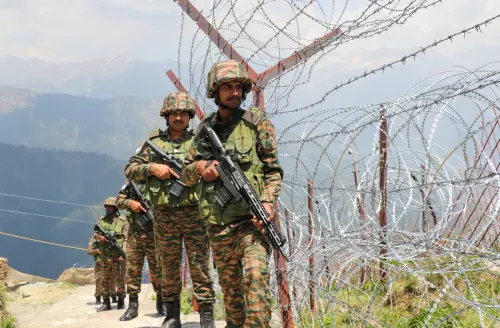
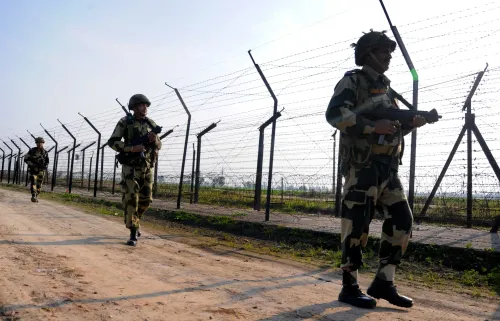
New Delhi, March 3 (NationPress) The Indian Army has ramped up its vigilance and monitoring efforts along the India-Pakistan border in Jammu and Kashmir due to a significant increase in drone sightings. This intensified scrutiny follows recent attempts by Pakistan to deploy more drones and aircraft-like balloons into Jammu and Kashmir.
The Jammu and Kashmir police recently intercepted and confiscated a balloon resembling an aircraft, which bore the insignia of Pakistan International Airlines (PIA).
Initial investigations revealed that the object lacked any electrical or electronic devices. Authorities are currently delving deeper into the case, and the investigation is still active, as confirmed by an official.
An official from the Intelligence Bureau stated that while the object posed no immediate threat, it should not be dismissed as an isolated incident. This situation arises as the Indian Army has successfully countered several drone incursions from Pakistan along the Line of Control (LoC).
Most of these incursions have been reported in the Poonch district of Jammu and Kashmir. Recently, the Army has observed multiple attempts by Pakistan to send drones into Indian territory.
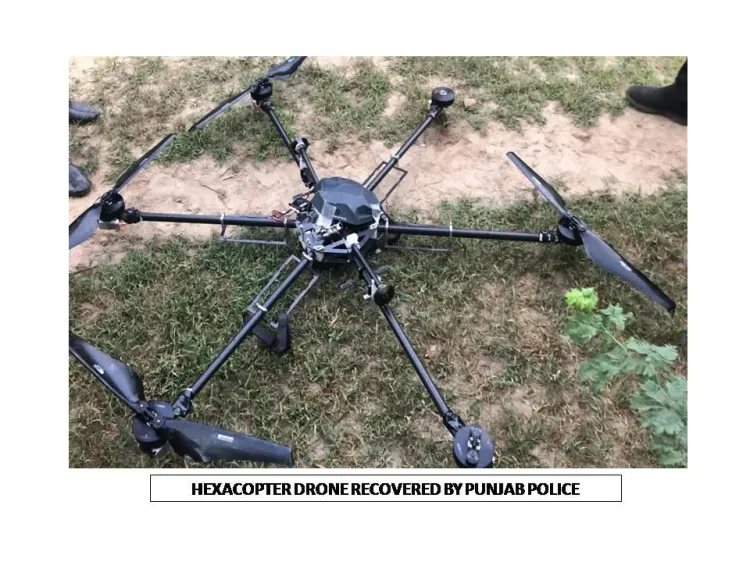
Last month, two quadcopters attempted to infiltrate Indian airspace in the Poonch sector, prompting the Army to undertake rapid drone countermeasures.
Officials believe these occurrences are not isolated events. One official noted that, unlike previous attempts, these drones have not primarily aimed to smuggle narcotics or weapons; instead, their purpose appears to be surveillance.
This strategy seems to be a calculated maneuver by Pakistan to keep Indian security agencies occupied, thereby distracting them from activating launch pads in Pakistan Occupied Kashmir (PoK) for potential infiltrations.
Since 'Operation Sindoor', there have been no successful terrorist infiltrations into India. Intelligence estimates suggest that over 1,000 terrorists affiliated with groups like Lashkar-e-Taiba and Jaish-e-Mohammad are stationed at launch pads, awaiting an opportunity.
Despite numerous attempts to breach the border, all such efforts have been thwarted, leading to a growing sense of desperation among these terror factions.
Intelligence agencies warn that Pakistan is likely to increase the number of suspicious objects entering India. Currently, these entries are limited, but a dramatic rise is anticipated.
Pakistan aims to keep security agencies occupied for an extended period before strategically pushing multiple terrorists into Jammu and Kashmir.
The ISI is under pressure to revitalize operations in Jammu and Kashmir, influenced by groups like Lashkar-e-Taiba and Jaish-e-Mohammad.
In the past, the Pakistan Army would engage in firing to divert the attention of Indian forces. However, an official noted that Pakistan is struggling to overcome the robust security systems present at the border. The security forces operate on multiple levels, designed to counter intrusions, gunfire, and prevent infiltration simultaneously.
Thus, Pakistan is likely to devise various tactics to distract security measures and attempt to facilitate infiltration.
Point of View
The Indian Army's proactive measures highlight the persistent security threats posed by drone incursions. The ongoing investigations into suspicious objects represent a crucial effort to safeguard national security and maintain stability in Jammu and Kashmir.
NationPress
29 Sept 2026
Frequently Asked Questions
What prompted the Indian Army to increase surveillance?
The Indian Army intensified its surveillance due to a significant rise in drone sightings and suspicious objects along the India-Pakistan border.
What was discovered by the Jammu and Kashmir police?
The police seized a balloon resembling an aircraft, which bore the insignia of Pakistan International Airlines.
What is the current situation with terrorist infiltration attempts?
Since 'Operation Sindoor', there have been no successful infiltrations of terrorists into India, despite ongoing attempts by various terror factions.
What are the implications of these drone sightings?
These incidents are perceived as distractions by Pakistan to engage Indian security forces while attempting to activate launch pads for potential infiltrations.
How is Pakistan responding to the security measures at the border?
Pakistan is likely to implement various tactics to divert attention and facilitate infiltration, as they struggle to overcome robust Indian security systems.