Census 2027: Arunachal Governor Leads Self-Enumeration Drive
Synopsis
Arunachal Pradesh Governor Lt Gen K.T. Parnaik completed Census 2027 self-enumeration at Lok Bhavan on April 24, calling it a civic duty critical to development planning. With India's last Census dating back to 2011, the 2027 count — after a 16-year gap — carries massive implications for resource allocation, welfare delivery, and political representation.
Key Takeaways
Governor Lt Gen K.T.
Parnaik (Retd) completed his Census 2027 self-enumeration at Lok Bhavan, Itanagar , on April 24, 2026 .
The online self-enumeration window under House Listing Operations runs from April 16 to April 30, 2026 .
House Listing fieldwork by Census enumerators will follow from May 1 to May 30, 2026 .
Chief Minister Pema Khandu and Deputy CM Chowna Mein participated in the exercise on April 16 from Itanagar and Namsai respectively.
Census 2027 is India's first population count in over 16 years , as the 2021 Census was delayed by the COVID-19 pandemic .
The Directorate of Census Operations, Shillong , led by Director Biswajit Pegu , is overseeing the enumeration process in Arunachal Pradesh.
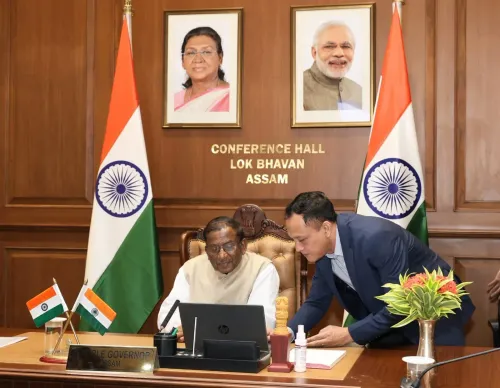
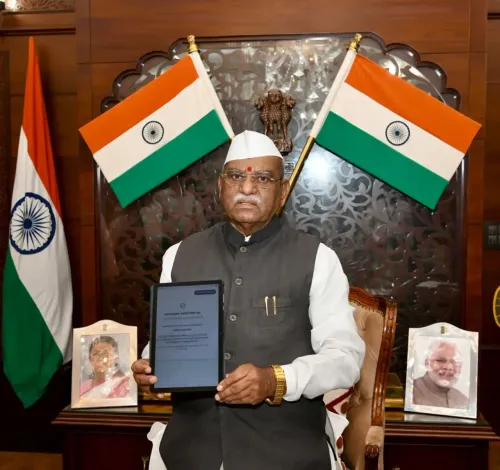
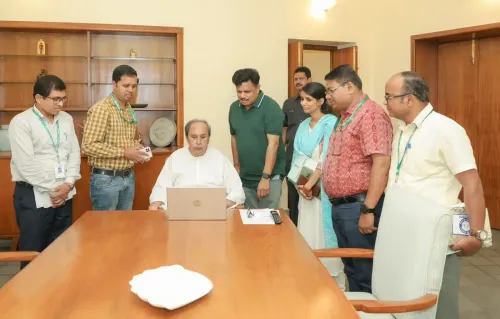
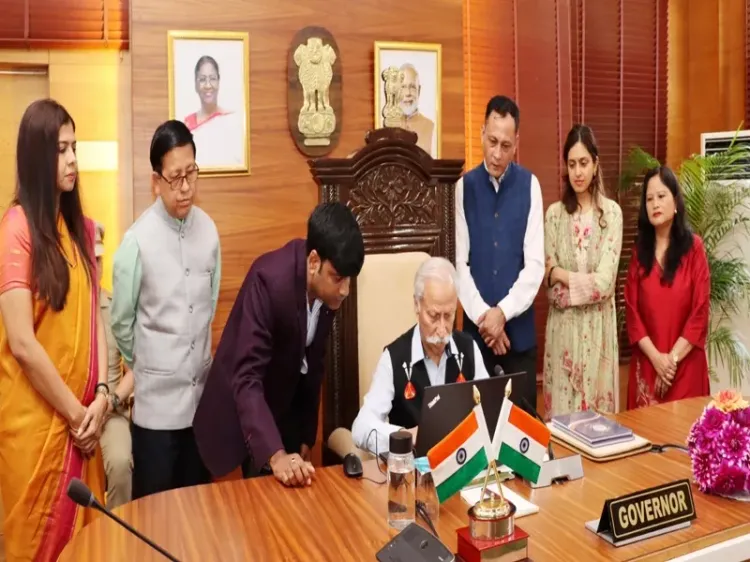
Itanagar, April 24: Arunachal Pradesh Governor Lt Gen K.T. Parnaik (Retd) completed his Census 2027 self-enumeration at Lok Bhavan, Itanagar, on Friday, April 24, becoming one of the state's most prominent figures to lead by example in India's landmark population count exercise. The Governor underscored that accurate census data is foundational to effective development planning, resource allocation, and the realisation of the Viksit Bharat vision.
Governor's Message on Self-Enumeration
While engaging with the enumeration team at Lok Bhavan, Governor Parnaik stressed that self-enumeration is not merely a bureaucratic formality but a meaningful act of civic participation. He stated that it enables citizens to directly shape how their families, communities, and regions are represented in national data.
The Governor emphasised that Census data serves as the backbone for planning critical infrastructure — including schools, hospitals, and roads — as well as welfare schemes and broader development policies. He called on citizens to approach the exercise with sincerity and awareness, describing it as a vital civic responsibility that transcends statistics.
He further noted that credible census figures play a decisive role in assessing regional needs, ensuring equitable distribution of government resources, and reinforcing principles of good governance across India's northeastern states.
Census 2027 Timeline and Process
A delegation from the Directorate of Census Operations, Shillong, led by Director Biswajit Pegu, along with officials from the Department of Economics & Statistics led by Anu Singh, Secretary-cum-State Nodal Officer, Census-27, briefed the Governor on the operational modalities of the Census process.
The officials confirmed that the self-enumeration phase under House Listing Operations, which commenced on April 16, 2026, will remain open until April 30, 2026. During this window, citizens across India can complete the enumeration process online through the designated portal.
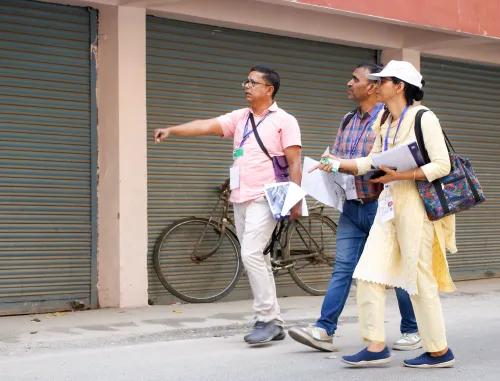
Following this digital phase, House Listing fieldwork is scheduled from May 1 to May 30, 2026, during which trained Census enumerators will conduct door-to-door visits to collect household data from those who have not self-enumerated online.
State Leadership Sets the Tone
Chief Minister Pema Khandu and Deputy Chief Minister Chowna Mein had already participated in the self-enumeration exercise on April 16 — from Itanagar and Namsai, respectively — signalling a coordinated top-down push by the state government to maximise public participation.
Deputy Chief Minister Mein had earlier described Census 2027 as a nationally significant exercise that directly strengthens public service delivery by providing policymakers with reliable and comprehensive demographic data.
Why Census 2027 Matters for India's Northeast
India's last Census was conducted in 2011, making the upcoming 2027 Census the first in over 16 years — an extraordinary gap caused by the COVID-19 pandemic and subsequent administrative delays. This prolonged absence of updated data has had tangible consequences: welfare scheme beneficiary lists, parliamentary delimitation, and infrastructure budgets have all been operating on outdated population figures.
For states like Arunachal Pradesh, which has a diverse tribal population spread across remote and difficult terrain, accurate enumeration is especially critical. Undercounting in such regions can lead to systematic under-allocation of central funds, inadequate school and hospital infrastructure, and skewed political representation.
Notably, the northeastern states have historically faced challenges in achieving full Census coverage due to geographical barriers, insurgency-affected zones, and seasonal inaccessibility. The introduction of online self-enumeration in Census 2027 is a significant technological leap aimed at bridging this gap — though digital access and literacy in remote tribal areas remain a concern that civil society groups have flagged.
What Happens Next
With the self-enumeration window open until April 30, 2026, citizens are being urged to complete the process promptly to reduce the burden on field enumerators and ensure data accuracy. The Governor's public participation is expected to amplify outreach efforts across the state.
As Census 2027 progresses into its fieldwork phase in May 2026, the quality and completeness of data collected will have long-term implications for India's 16th Finance Commission deliberations, parliamentary seat delimitation, and the targeted delivery of flagship welfare programmes under the Union Budget. All eyes will be on participation rates in underserved regions as the national count unfolds.
Point of View
Parliamentary delimitation, and Finance Commission allocations have all been running on 2011 data, effectively making a sixth of India's population growth invisible to policymakers. The Governor of Arunachal Pradesh leading the self-enumeration drive is symbolically significant, but the harder challenge lies in reaching the state's remote tribal communities where digital access is limited. The real test of Census 2027 won't be in Raj Bhavans and Chief Ministers' offices — it will be in the villages no enumerator has ever reached.
NationPress
16 Sept 2026
Frequently Asked Questions
What is Census 2027 self-enumeration and how can I participate?
Census 2027 self-enumeration allows Indian citizens to fill in their household data online without waiting for a field enumerator to visit. The online self-enumeration window under House Listing Operations is open from April 16 to April 30, 2026, through the official Census portal.
Why did Arunachal Pradesh Governor participate in Census 2027 self-enumeration?
Governor Lt Gen K.T. Parnaik (Retd) completed his self-enumeration at Lok Bhavan on April 24, 2026, to set a public example and encourage citizens to participate in the national exercise. He stressed that census data is essential for planning schools, hospitals, roads, and welfare schemes.
When was India's last Census conducted before 2027?
India's last Census was conducted in 2011, making Census 2027 the first population count in over 16 years. The 2021 Census was delayed due to the COVID-19 pandemic and subsequent administrative postponements.
What is the Census 2027 House Listing Operations schedule?
The self-enumeration phase runs from April 16 to April 30, 2026, allowing citizens to register online. This will be followed by door-to-door House Listing fieldwork by Census enumerators from May 1 to May 30, 2026.
Why is Census data important for development in Arunachal Pradesh?
Accurate Census data determines how central government funds, welfare schemes, and infrastructure investments are allocated to states and districts. For Arunachal Pradesh, with its remote tribal communities and difficult terrain, undercounting can lead to systematic under-funding of schools, hospitals, and public services.