Arunachal CM Pema Khandu: 19,000 MW hydropower projects in pipeline, ₹15,000 crore equity at stake
Synopsis
Arunachal Pradesh CM Pema Khandu has put a number on the state's hydropower ambition — 19,000 MW in the pipeline and ₹15,000 crore in state equity — while drawing a clear line on the controversial Siang Upper Multipurpose Project: no construction call until the PFR, SIA, and EIA are complete. The Lower Subansiri's 2,000 MW commission next year is the first real test of whether the revenue promise holds.
Key Takeaways
Arunachal Pradesh CM Pema Khandu confirmed roughly 19,000 MW of hydropower projects are at various stages of development in the state.
The state will retain a 12 per cent free-power share; the Centre has agreed to facilitate a 26 per cent equity share for Arunachal Pradesh.
State equity contribution across the pipeline is estimated at approximately ₹15,000 crore , backed by central support.
The Lower Subansiri project ( 2,000 MW ) is expected to be fully commissioned next year .
On the Siang Upper Multipurpose Project (SUMP) , Khandu said the immediate step is completion of the Preliminary Feasibility Report (PFR) — no construction decision will precede legal and technical processes including SIA and EIA .
The state budget has grown from ₹12,500 crore in 2015 to nearly ₹40,000 crore presently.
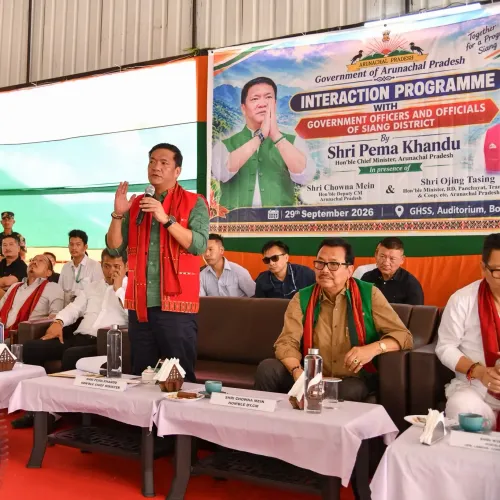
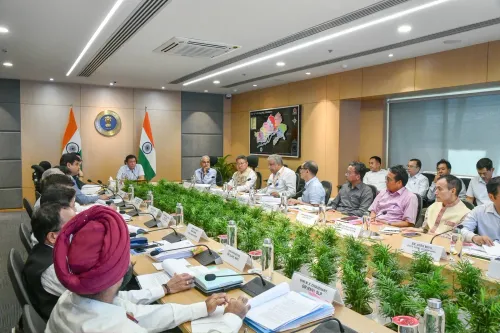
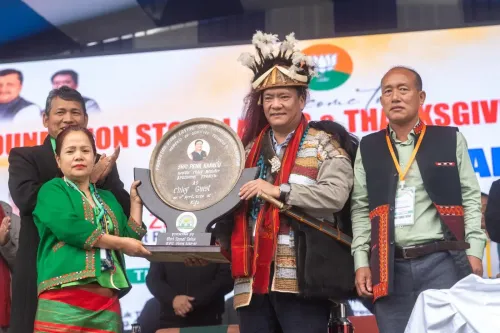
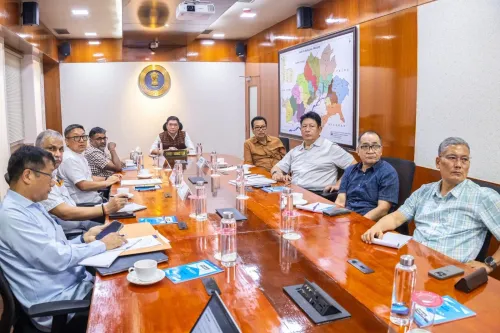
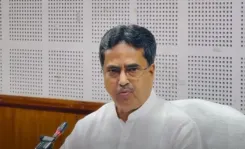
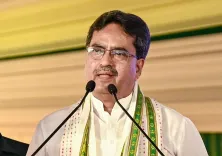
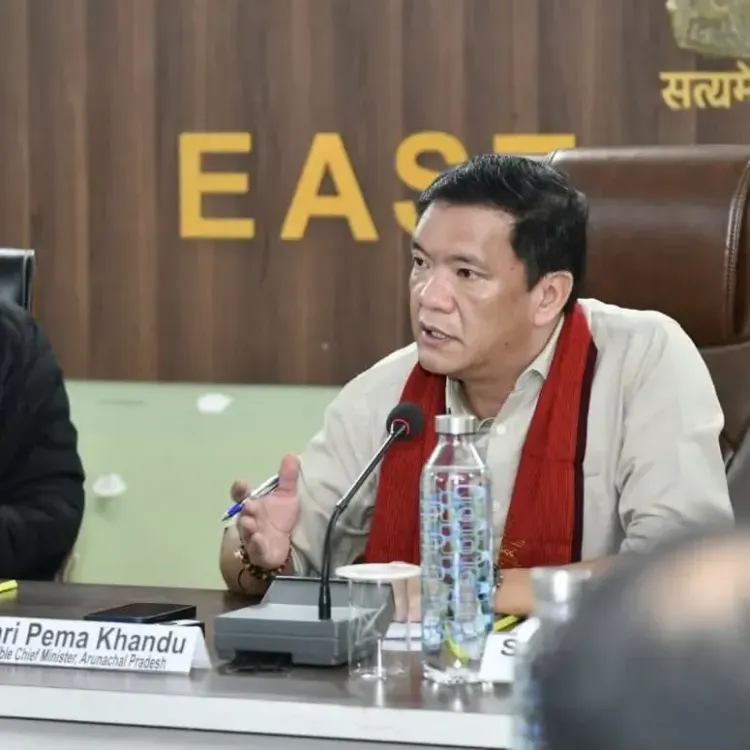
Arunachal Pradesh Chief Minister Pema Khandu on Tuesday, 6 October declared hydropower the state's single largest opportunity for large-scale investment, citing roughly 19,000 MW of projects currently at various stages of development. Speaking at an official function in Itanagar, Khandu outlined both the financial framework underpinning these projects and the government's cautious, process-bound approach to the contentious Siang Upper Multipurpose Project (SUMP).
Financial Framework for Hydropower Development
Khandu confirmed that Arunachal Pradesh would continue to receive a 12 per cent free-power share from hydropower projects developed in the state. Beyond that, the Government of India has agreed to facilitate a 26 per cent equity share for the state in these projects — a significant revenue and ownership stake. The Chief Minister noted that the state's equity contribution across the 19,000 MW pipeline could amount to approximately ₹15,000 crore, which the Centre has agreed to support financially.
He pointed to the Lower Subansiri project, with an installed capacity of 2,000 MW, as a near-term milestone. The project is expected to be fully commissioned next year, after which it will begin delivering both free-power allocations and equity-linked returns to the state exchequer.
State Budget Growth as Economic Context
Khandu placed the hydropower push within a broader economic trajectory, noting that Arunachal Pradesh's state budget had grown from approximately ₹12,500 crore in 2015 to nearly ₹40,000 crore at present — more than a threefold increase in roughly a decade. He argued that expanding investment and building state-owned resource revenues through hydropower would further reinforce this fiscal momentum and reduce dependence on central transfers.
SUMP: Process First, Decision Later
On the Siang Upper Multipurpose Project, Khandu was emphatic that no final construction decision would precede the mandated technical and legal processes. The immediate requirement, he said, is completion of the Preliminary Feasibility Report (PFR). Following that, a full suite of assessments — including a Social Impact Assessment (SIA) and an Environmental Impact Assessment (EIA) — would be conducted in accordance with law.
Notably, Khandu reframed the project's primary purpose, stating it should not currently be viewed merely as a hydropower initiative. Its principal rationale, according to him, is the creation of a mechanism to manage potential water-related risks and regulate downstream water flows — particularly given documented concerns about sudden upstream water releases and recurring floods in the Siang belt.
'Until and unless we are satisfied, this project cannot go ahead,' Khandu said, underlining the need for informed public participation rather than what he characterised as misinformation circulating around the project.
Transparency and Community Consultation Commitments
The Chief Minister said state government offices would remain open to delegations seeking discussions on SUMP and invited representatives to make formal presentations and seek clarifications. He also announced that the government would endeavour to disseminate project information in the Adi language through social media channels — a step aimed at reaching communities in areas most likely to be affected.
Khandu also underscored SUMP's national and strategic dimension, noting that Arunachal Pradesh's position along international borders gives the project implications that extend well beyond the state. Technical experts, he said, must examine all hydrological, environmental, and social concerns during the feasibility and subsequent assessment stages. With the PFR still pending, the earliest formal milestones on SUMP remain months away.
Point of View
000 crore equity commitment from the Centre is the headline number that matters most here — it converts Arunachal Pradesh from a passive royalty recipient into a part-owner of its own hydro assets, which is a structurally different proposition. Yet the pipeline's credibility depends entirely on commissioning pace: the Lower Subansiri project has been in development for well over two decades, and its long-delayed finish will be the first proof of concept. On SUMP, Khandu's insistence on PFR-first is procedurally correct, but the reframing of the project as a flood-management mechanism rather than a power project is also a political signal — it pre-empts opposition by shifting the public-interest argument. Whether the SIA and EIA processes, when they come, are genuinely participatory or box-ticking exercises will determine whether that political framing holds.
NationPress
7 Oct 2026
Frequently Asked Questions
What is the scale of Arunachal Pradesh's hydropower development pipeline?
Arunachal Pradesh has approximately 19,000 MW of hydropower projects at various stages of development, as confirmed by Chief Minister Pema Khandu on 6 October 2026. The state's equity contribution across this pipeline is estimated at around ₹15,000 crore, which the Centre has agreed to support.
What financial benefits will Arunachal Pradesh receive from hydropower projects?
The state will receive a 12 per cent share of free power from hydropower projects. Additionally, the Government of India has agreed to facilitate a 26 per cent equity share for Arunachal Pradesh, giving it direct ownership stakes and equity-linked returns alongside power royalties.
When will the Lower Subansiri hydropower project be commissioned?
The Lower Subansiri project, with a capacity of 2,000 MW, is expected to be fully commissioned next year, according to Chief Minister Pema Khandu. Once operational, it will begin delivering free-power allocations and equity returns to the state.
What is the current status of the Siang Upper Multipurpose Project (SUMP)?
SUMP is at the pre-feasibility stage. Chief Minister Khandu has stated that the immediate requirement is completion of the Preliminary Feasibility Report (PFR), after which a Social Impact Assessment (SIA) and Environmental Impact Assessment (EIA) must be conducted before any construction decision is made.
Why is the Siang Upper Multipurpose Project considered a national project?
Khandu described SUMP as a project with strategic national implications, citing Arunachal Pradesh's location along international borders. He also framed its primary purpose as managing water-flow risks and addressing recurring floods in the Siang belt, rather than hydropower generation alone.