Are the Aravalli mining figures being misrepresented by Ashok Gehlot?
Synopsis
Former Rajasthan CM Ashok Gehlot raises alarms over mining in the Aravalli region, questioning the data presented by Union Minister Bhupender Yadav. He demands transparency and warns of environmental implications, urging the government to clarify its stance on protecting the Aravallis for future generations.
Key Takeaways
Ashok Gehlot questions the accuracy of mining statistics in the Aravalli region.
Concerns raised about environmental impacts and agricultural effects.
Gehlot highlights amendments to the MMDR Act affecting state autonomy.
The need for government clarity on protecting the Aravallis .
Mining impacts extend beyond the immediate sites.
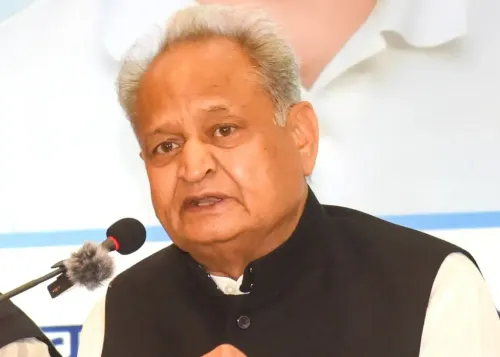
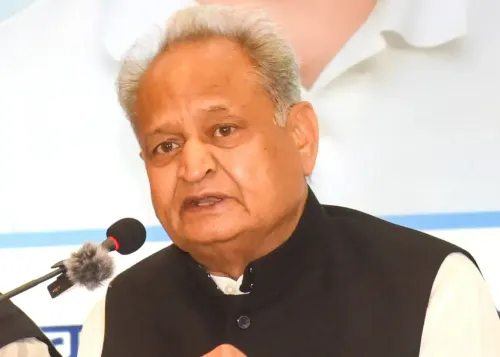
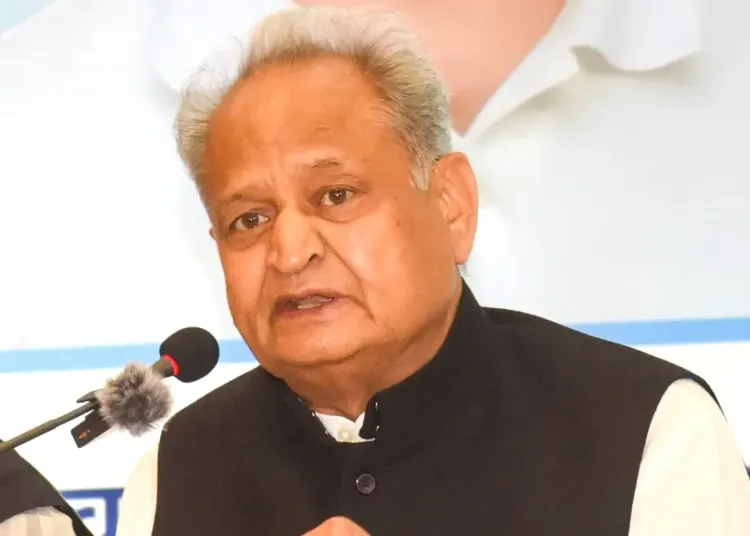
Jaipur, Dec 23 (NationPress) Former Chief Minister of Rajasthan, Ashok Gehlot, raised alarms on Tuesday regarding the statement made by Union Minister Bhupender Yadav, which indicated that only 0.19 percent of fresh mining activities would be allowed in the Aravalli region. Gehlot contended that these statistics may not accurately depict the actual situation and urged for increased transparency.
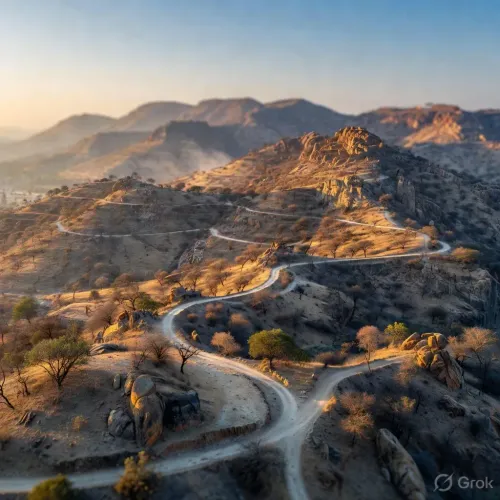
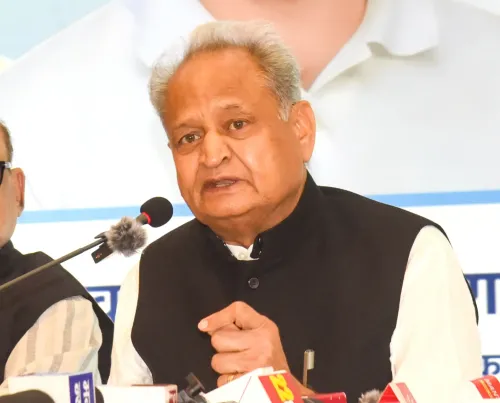
He mentioned that the Union government’s assertion that mining would be confined to 0.19 percent of the total 1.44 lakh sq km area is potentially misleading, as this area comprises 34 districts with cities, villages, agricultural lands, and plains, in addition to the hills. “The actual Aravalli hill range is not that extensive. Mining operations will occur solely on the hills,” Gehlot emphasized.
Although 0.19 percent may seem minor in relation to the overall area, Gehlot pointed out that it equates to 273.6 sq km, or roughly 68,000 acres. He explained that if small mining leases of one hectare (2.5 acres) each are issued, it could lead to the legal authorization of about 27,200 mines. Gehlot warned that the repercussions of mining extend beyond the sites, as roads, dumping areas, crushers, and dust could adversely impact fertile land, agriculture, and the surrounding ecosystem.
Gehlot also highlighted two amendments to the Mines and Minerals (Development and Regulation) Act (MMDR), which he believes raise concerns about the autonomy of states. He indicated that the MMDR Amendment 2021 permits the Centre to auction mineral blocks if a state does not do so within a specified timeframe, while the MMDR Amendment 2023 grants the Centre authority over minerals categorized as “critical,” such as lithium, copper, and zinc. “In the Aravallis, copper and zinc are found deep underground,” he remarked, adding that private companies might soon receive exploration licenses for extensive mining.
He further expressed worries regarding the alterations in the definitions of minor and major minerals, modifications to protected area boundaries, and the diminishing role of the Central Empowered Committee (CEC). Gehlot referenced the Sariska Protected Area as an instance where changes were attempted in just three days.
“Our argument remains that this is not merely about 0.19 percent. The broader concern is the future of the Aravallis, the environment in Rajasthan, agriculture, and the well-being of future generations. The government needs to clarify whether it aims to safeguard the Aravallis or promote mining activities there,” Gehlot concluded.
Point of View
The concerns raised by Ashok Gehlot reflect the ongoing tension between development and environmental preservation. While mining can provide economic benefits, it is crucial to balance these with the ecological health of the Aravalli region. The need for transparent governance in such matters cannot be overstated, ensuring that both the environment and local communities are protected.
NationPress
5 Oct 2026
Frequently Asked Questions
What is the Aravalli region?
The Aravalli region is a mountain range in India that runs across the states of Rajasthan, Haryana, and Gujarat, known for its ecological significance and biodiversity.
What are the implications of mining in the Aravalli?
Mining in the Aravalli can lead to environmental degradation, loss of biodiversity, and adverse impacts on agriculture and local communities.
Who is Ashok Gehlot?
Ashok Gehlot is a prominent Indian politician who has served as the Chief Minister of Rajasthan and is a senior leader in the Indian National Congress party.
What is the MMDR Act?
The Mines and Minerals (Development and Regulation) Act governs the regulation of mining activities in India, outlining the rights and responsibilities of mining operations.
Why is transparency in mining regulations important?
Transparency ensures that the environmental impact of mining is assessed, local communities are informed, and sustainable practices are prioritized.