Is there a conspiracy to sell the Aravali? Gehlot accuses Centre of making CEC a ‘puppet’
Synopsis
In a powerful statement, former Rajasthan CM Ashok Gehlot condemns the Union government's recent actions regarding the Aravali range. He argues that the government's motives are driven by vested interests and questions the integrity of the Central Empowered Committee. This article delves deep into the implications of these changes and their potential impact on Rajasthan’s ecological heritage.
Key Takeaways
Ashok Gehlot raises serious concerns about the Union government’s definition changes regarding the Aravali range .
The Central Empowered Committee has been restructured, reducing its independence.
Mining operations pose a threat to the region’s ecological balance .
Gehlot suggests a calculated attempt to benefit mining interests.
The importance of protecting natural heritage is emphasized.
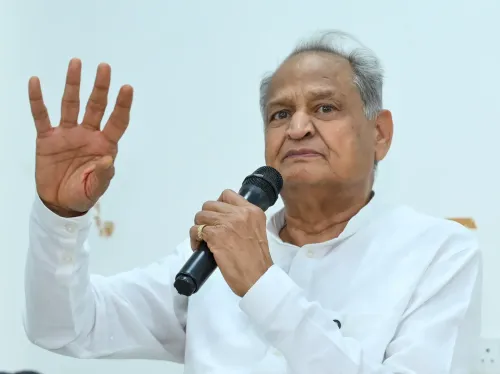
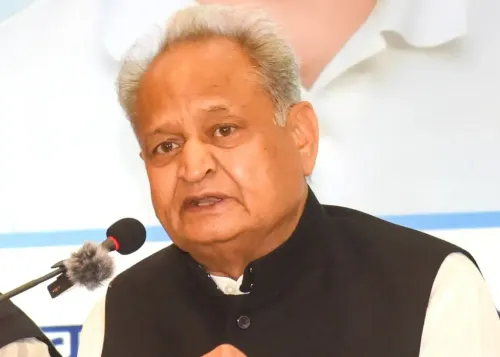
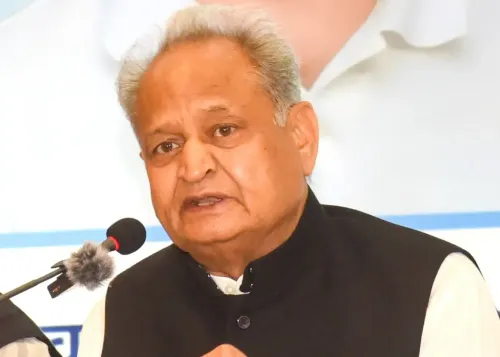
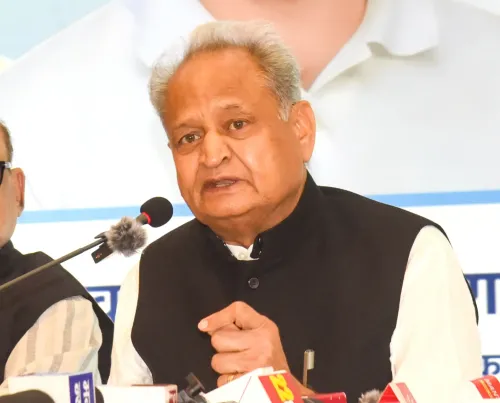
Jaipur, Dec 22 (NationPress) Former Chief Minister of Rajasthan, Ashok Gehlot, has vehemently condemned the Union government’s initiative to redefine the Aravali range, labeling it as misleading, factually empty, and motivated by personal interests.
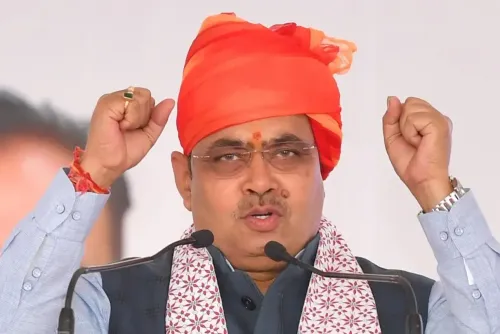
He dismissed Union Minister Bhupender Yadav’s assertion that mining would only be allowed on 0.19 percent of the Aravali landscape, describing it as a tactic aimed at misleading the populace through selective data.
Gehlot emphasized that the new “100-metre definition” of the Aravali should not be seen in isolation. When analyzed in conjunction with two significant policy decisions made by the Union government, it is evident that this move is not an effort for environmental preservation but a calculated strategy to transfer the Aravali ecosystem to the mining industry through institutional manipulation.
He elaborated on how the protector has turned into a predator and how the Central Empowered Committee (CEC) was effectively neutralized.
Gehlot accused the Union government of intentionally undermining the CEC—established in 2002 under the Supreme Court’s supervision to safeguard the environment—by removing it from judicial oversight and placing it under the Ministry of Environment via a notification on September 5, 2023.
The CEC, previously an independent body monitored by the court, was converted into a permanent government entity through executive action.
Previously, CEC members were appointed with the approval of the Supreme Court. Following the notification, the Central Government gained complete control over these appointments, effectively transforming the CEC into a tool of the government.
“This is the same CEC whose autonomous report led to the arrest of a prominent BJP minister, Janardhan Reddy, in an illegal mining case in Karnataka on September 5, 2011,” Gehlot noted.
“Precisely 12 years later, on September 5, 2023, this watchdog was choked and diminished to a mere formality.”
He questioned whether the government was apprehensive that if the CEC remained independent, mining permits in protected areas like Aravalli and Sariska would not be granted. Gehlot also lashed out at the central government regarding the Sariska Model.
Labeling Union Minister Bhupender Yadav’s statements as incomplete and deceptive, Gehlot pointed to the Sariska Tiger Reserve as evidence of the government’s true intentions.
The Rajasthan government had designated 881 sq km as Critical Tiger Habitat (CTH) for Sariska, prohibiting mining within one kilometer of the area. In 2025, the BJP-led Rajasthan government suggested a “rationalization” of the CTH boundaries under the guise of land exchange.
“The actual goal,” Gehlot claimed, “was to revive over 50 marble and dolomite mines that had been closed due to their location within the restricted zone. By shifting the boundaries, these mines would be legitimized.”
Gehlot pointed out the extraordinary pace at which approvals were granted: June 24, 2025: Rajasthan State Wildlife Board approved the proposal; June 25, 2025: National Tiger Conservation Authority (NTCA) sanctioned it; June 26, 2025: Standing Committee of the National Board for Wildlife endorsed it. This followed the intentional delay of the National Wildlife Board meeting from June 11 to June 26 to facilitate the proposal.
On August 6, 2025, the Supreme Court halted this decision and sharply criticized how a process that typically requires months was completed in just 48 hours.
“This observation alone exposes the government’s true intent,” Gehlot stated, adding that attempts to alter the Sariska boundary persist even today.
Citing a recent report, Gehlot made grave accusations, alleging that a mine owner from Thanagazi, K.S. Rathore, contacted the Prime Minister’s Office on June 14, claiming that mine owners were being instructed to “collect funds” to resume mining activities.
The same report quoted an anonymous CEC member stating, “We want to conclude this before the Supreme Court’s deadline because Minister Bhupender Yadav is personally overseeing it.”
“This statement confirms that the CEC is no longer accountable to the Supreme Court but is operating to fulfill ministerial orders,” Gehlot remarked.
Gehlot questioned how anyone could believe claims that mining would be restricted to merely 0.19 percent of the Aravali when both the Centre and the Rajasthan government have consistently attempted to weaken even protected regions.
“First, the definition of Aravali was modified. Then the boundaries of Sariska were targeted. Rajasthan will not tolerate this systematic assault on its natural heritage,” he asserted.
Point of View
It’s crucial to recognize the serious implications of Ashok Gehlot's accusations against the Union government regarding the Aravali range. The changes in policy not only raise questions about environmental protection but also about governance and accountability. This situation requires our attention as it could set precedents for future environmental legislation.
NationPress
28 Oct 2026
Frequently Asked Questions
What is the Aravali range?
The Aravali range is one of the oldest mountain ranges in India, stretching across several states, including Rajasthan and Haryana, and is known for its biodiversity.
Why is the CEC important?
The Central Empowered Committee was established by the Supreme Court to ensure environmental protection and monitor compliance with ecological regulations.
What changes were made to the Aravali range's definition?
The Union government modified the definition of the Aravali range, which critics argue undermines environmental protections and facilitates mining operations.
What are the implications of mining in the Aravali?
Mining in the Aravali region could lead to significant ecological damage, affecting biodiversity and disrupting local communities.
What actions did Gehlot take regarding this issue?
Ashok Gehlot publicly criticized the government's actions, alleging that they serve the interests of the mining mafia and weaken environmental safeguards.