Is Bhupender Yadav’s Claim of 0.19% Mining in Aravalis Destructive?
Synopsis
Former Chief Minister Ashok Gehlot critiques Union Minister Bhupender Yadav's claim of only 0.19% mining in the Aravalli region, calling it destructive. He warns that this could lead to the legal sanctioning of 27,200 new mines, threatening the environment and agriculture of Rajasthan. The debate highlights critical amendments to mining laws and their implications.
Key Takeaways
Gehlot critiques the 0.19% mining claim.
Potential for 27,200 new mines raises environmental concerns.
MMDR Amendments challenge state rights.
Impact on agriculture and ecosystem is significant.
Need for sustainable mining practices .
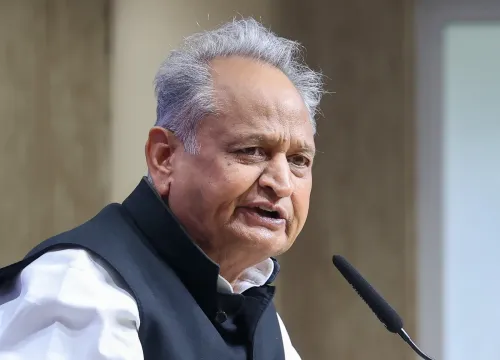
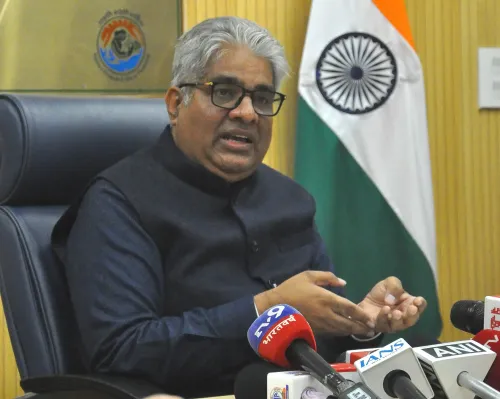
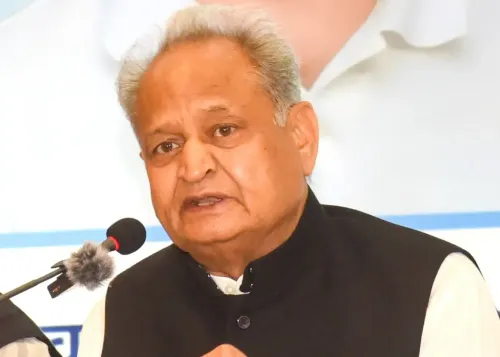
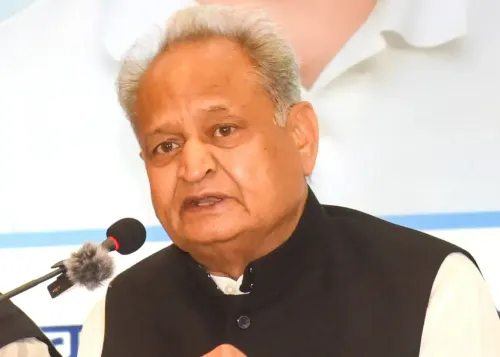
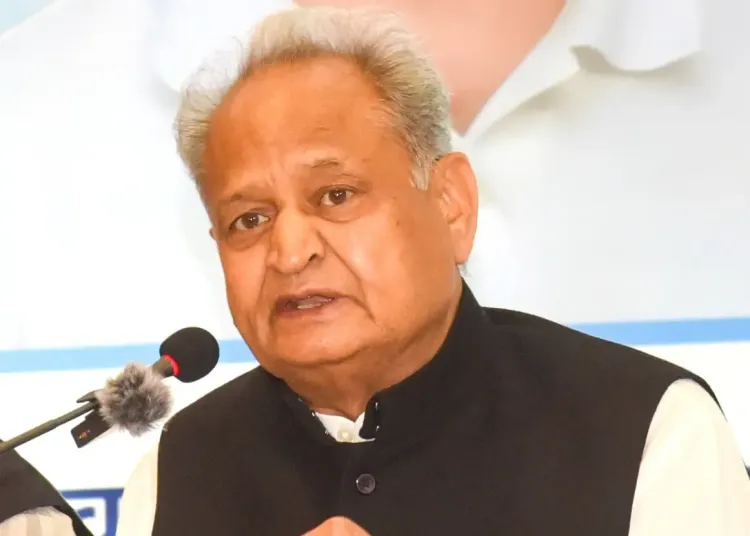
Jaipur, Dec 23 (NationPress) Former Chief Minister Ashok Gehlot asserted that Union Minister Bhupender Yadav's declaration regarding the allowance of only 0.19 percent new mining in the Aravalli region is detrimental.
Gehlot indicated that the central government is engaging in “number manipulation” that is jeopardizing the environment of Rajasthan and undermining its federal structure.
He remarked that the assertion of mining being confined to merely 0.19 percent is intended to mislead citizens.
“Illegal mining disguised as legal mining cannot be regulated by any administration,” he explained.
Although Bhupender Yadav has yet to respond to inquiries about the weakening of the CEC and efforts to initiate mining through alterations to the Sariska Protected Area in a mere three days.
Gehlot stated, “The government asserts that only 0.19 percent of the total 1.44 lakh sq km area will be utilized for mining. However, this area encompasses not only hills but the entire land across 34 districts, including urban areas, rural locales, agricultural fields, and plains, all designated as part of the Aravalli region. The actual Aravalli hill range is not nearly that extensive. Mining will only occur on hills,” he added.
While 0.19 percent may appear minimal compared to the expanse of 34 districts, in reality, it will result in significant devastation, Gehlot warned.
He noted that 0.19 percent translates to 273.6 sq km, or close to 68,000 acres.
“If small mining leases of one hectare (2.5 acres) each are granted, this could legally authorize 27,200 mines. The repercussions of mining extend beyond the immediate site. Infrastructure such as roads, disposal areas, crushers, and dust will obliterate vast stretches of arable land, agriculture, and the surrounding environment,”
he elaborated.
Furthermore, Gehlot emphasized that the two amendments to the MMDR Act represent an affront to state autonomy and are part of a strategy to devastate the Aravallis.
“The MMDR Amendment 2021 stipulates that if a state fails to auction a mineral block promptly, the Centre can take over the auction. This is tantamount to forcibly seizing control of state resources. Even if a state opposes mining in the Aravallis, the Centre can still permit it. The MMDR Amendment 2023 indicates that under the guise of ‘critical minerals,’ states have forfeited the right to auction minerals such as lithium, copper, and zinc. In the Aravallis, copper and zinc are found deep underground,”
he indicated.
Gehlot further stated that private corporations will now be granted exploration licenses, enabling extensive excavation within the Aravallis.
He concluded that by redefining minor and major minerals, modifying protected area boundaries, weakening the CEC, and creating a model akin to the alterations made to the Sariska protected area within just three days, steps are being taken towards the destruction of the Aravallis.
“Our position remains unchanged; this is not merely about 0.19 percent, but rather a conspiracy to obliterate 90 percent of the Aravallis. We will not permit the sacrifice of Rajasthan’s environment, agriculture, and the future of subsequent generations for corporate gain. The government must explicitly state whether it wishes to protect the Aravallis or exploit them,”
he asserted.
Point of View
The discussions surrounding mining in the Aravalli region highlight the delicate balance between economic development and ecological preservation. As the nation navigates these challenges, it is crucial to prioritize sustainable practices that honor both state rights and environmental integrity.
NationPress
22 Oct 2026
Frequently Asked Questions
What are the implications of the 0.19% mining claim?
The claim could result in the legal sanctioning of 27,200 new mines, leading to significant environmental degradation and loss of fertile land.
How does the MMDR Amendment affect state autonomy?
The MMDR Amendment allows the central government to auction mineral blocks if states fail to do so, undermining state control over natural resources.
What minerals are affected by the amendments?
The amendments affect critical minerals like lithium, copper, and zinc, depriving states of the right to auction these resources.
What is Gehlot's stance on mining in the Aravallis?
Gehlot opposes mining in the Aravallis, asserting it poses a threat to the environment and future generations.
Why is the Aravalli region significant?
The Aravalli region is crucial for its biodiversity and as a source of resources, making its protection essential for ecological balance.