CM Himanta's Anna Sewa Din Completes 7th Day in Assam
Synopsis
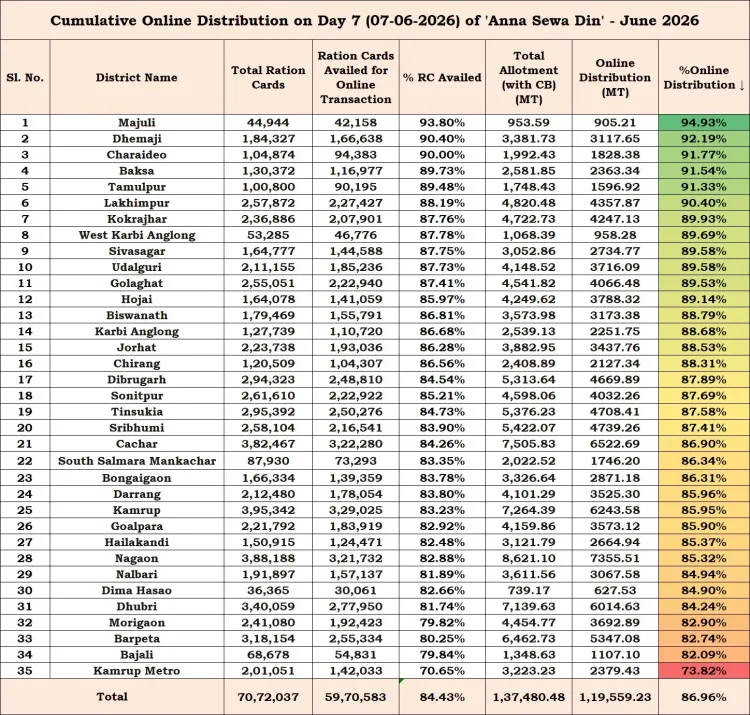
Assam's Anna Sewa Din initiative has completed its seventh day, with over 59.7 lakh ration card holders receiving nearly 1.2 lakh metric tonnes of subsidised rice — covering 86.96 per cent of the state's distribution target under CM Himanta Biswa Sarma's direction.
Key Takeaways
The Anna Sewa Din initiative in Assam concluded its 7th day on June 7, 2026 .
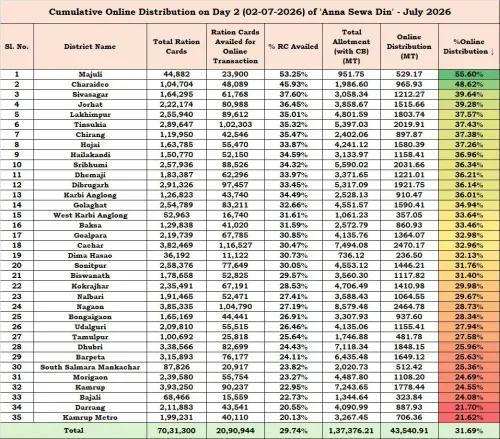
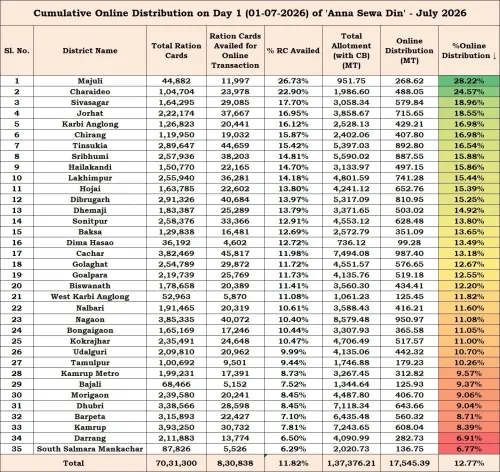
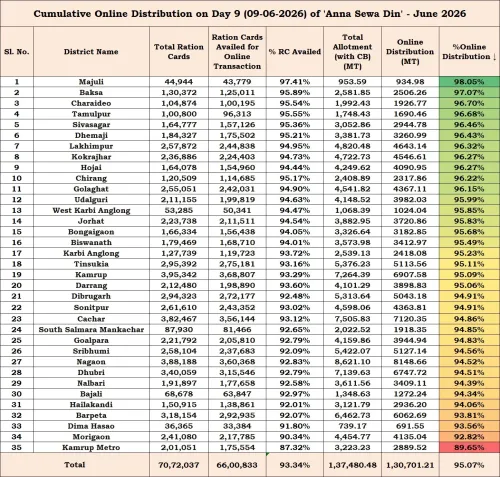
59,70,583 ration card holders have received subsidised rice so far during the drive.
Total rice distributed stands at 1,19,559.23 metric tonnes , equal to 86.96 per cent of the target.
The initiative operates under the direction of Chief Minister Dr.
Himanta Biswa Sarma .
The drive supplements routine Fair Price Shop operations under the National Food Security Act, 2013 .
The remaining ~13 per cent of targeted distribution is yet to be completed as the cycle nears its close.
The Chief Minister's Office of Assam announced on Sunday, June 7, 2026, that the state-wide Anna Sewa Din initiative has successfully concluded its seventh consecutive day of subsidised rice distribution under the direction of Chief Minister Dr. Himanta Biswa Sarma.
What Happened
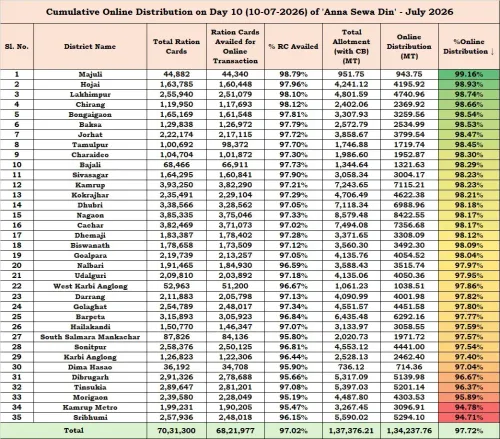
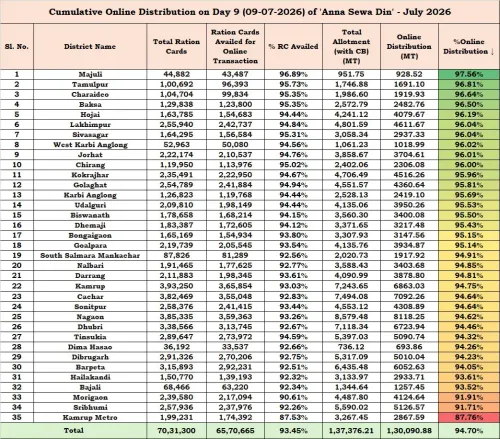
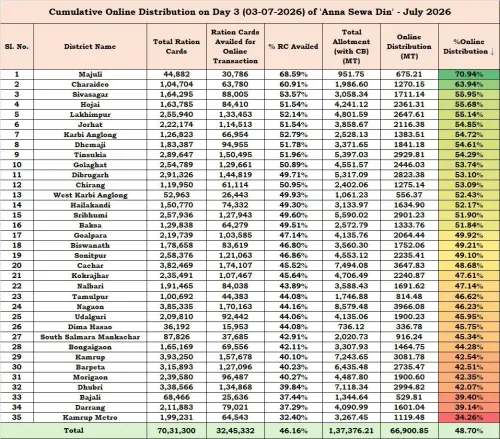
As of the close of the seventh day, 59,70,583 ration card holders across Assam have received 1,19,559.23 metric tonnes of subsidised rice, representing 86.96 per cent of the targeted distribution. The figures indicate a near-complete coverage of the state's eligible beneficiary base within a single week-long drive.
The Chief Minister's Office stated that the initiative had 'successfully concluded its 7th day,' signalling continued momentum in the campaign's final phase.
Context
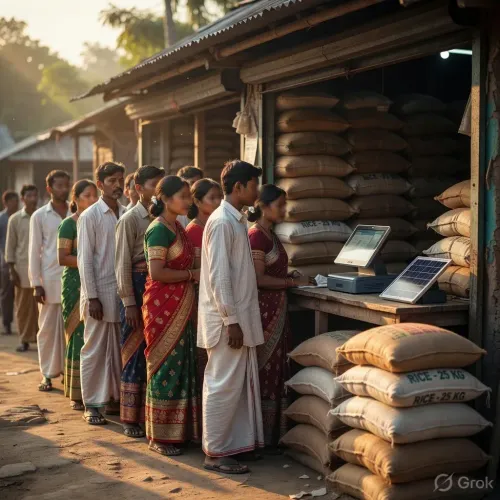
Anna Sewa Din is an Assam government initiative designed to ensure door-step or camp-based delivery of subsidised rice to ration card holders, supplementing the routine operations of Fair Price Shops. The drive is aimed at closing distribution gaps and reducing carry-over stocks within monthly entitlement cycles.
The campaign operates within the framework of the National Food Security Act, 2013, which establishes legal entitlements for subsidised foodgrains to priority households across India. Assam, a northeastern state with a large rural population, has consistently used time-bound distribution drives to maximise NFSA coverage.
Policy Backdrop
Indian states routinely organise such concentrated distribution campaigns to meet monthly entitlements and prevent stock carry-overs. The Public Distribution System (PDS), administered jointly by the central and state governments, forms the backbone of food security delivery across the country.
Chief Minister Dr. Himanta Biswa Sarma, who has helmed the Assam government since May 2021, has positioned welfare delivery efficiency as a governance priority. The Anna Sewa Din model reflects a broader pattern of states using special camps and monitored drives to supplement regular Fair Price Shop operations.
Stakeholders and Impact
The primary beneficiaries are Assam's ration card holders — a base exceeding 59 lakh households — who depend on subsidised rice as a core food security entitlement. With 86.96 per cent of the targeted tonnage already distributed in seven days, the remaining roughly 13 per cent represents the final push to achieve full-cycle coverage.
Such drives are typically monitored through state portals tracking coverage rates and offtake percentages, providing real-time accountability for the distribution machinery.
What's Next
Attention will now turn to the final consolidated figures once the complete Anna Sewa Din cycle concludes. The state's ability to close the remaining 13.04 per cent gap will determine the overall success rate of this edition of the initiative. Any subsequent announcements on PDS reforms or enhanced subsidies in Assam's policy calendar will be closely watched by welfare economists and beneficiary groups alike.
Point of View
High-visibility welfare drives like Anna Sewa Din serve a dual purpose: closing last-mile distribution gaps mandated under the NFSA and projecting administrative efficiency ahead of any electoral cycle. The 86.96 per cent coverage figure, while strong, also underscores that roughly one in eight targeted households remains unreached — a metric the state will need to address before the cycle closes. Nationally, such time-bound distribution campaigns are increasingly seen as a template for states seeking to demonstrate measurable welfare delivery outcomes.
NationPress
19 Sept 2026
Frequently Asked Questions
What is Anna Sewa Din in Assam?
Anna Sewa Din is an Assam government initiative that organises camp-based or door-step distribution of subsidised rice to ration card holders, supplementing the regular Fair Price Shop system under the National Food Security Act, 2013.
How many beneficiaries received rice under Anna Sewa Din so far?
As of the 7th day on June 7, 2026, a total of 59,70,583 ration card holders in Assam had received subsidised rice under the Anna Sewa Din initiative.
How much rice has been distributed under Anna Sewa Din 2026?
A total of 1,19,559.23 metric tonnes of subsidised rice has been distributed, covering 86.96 per cent of the targeted quantity across Assam.
Who is overseeing Anna Sewa Din in Assam?
The initiative is being conducted under the guidance of Chief Minister Dr. Himanta Biswa Sarma, with the Chief Minister's Office monitoring and reporting daily progress.
What is the target completion for Anna Sewa Din?
The drive aims to cover all eligible ration card holders in Assam; with 86.96 per cent achieved in seven days, the remaining roughly 13 per cent is expected to be covered before the distribution cycle concludes.