CM Himanta's Assam Budget 2026 Bets Big on Roads, Airports
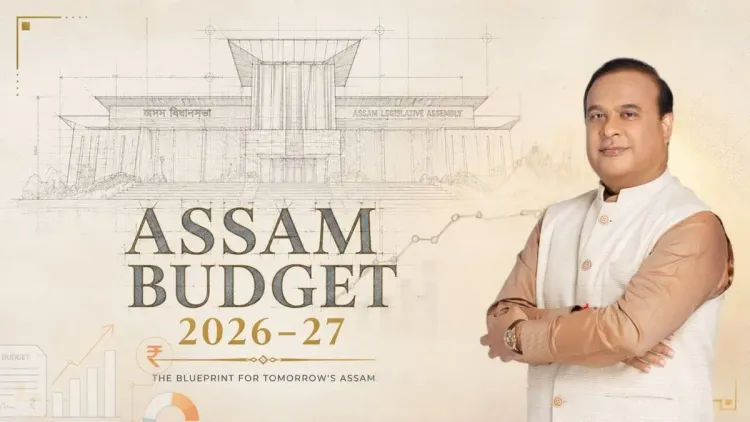
Synopsis
Assam's Budget 2026 proposes Asom Mala Phase 4 with 800 km of new roads, supports the Baihata Chariali–Mission Chariali four-laning and the Airport–Jalukbari Elevated Corridor, and announces modernisation of two airports, reinforcing the state's infrastructure push under CM Himanta Biswa Sarma.
Key Takeaways
Asom Mala Phase 4 proposes 800 km of new roads across Assam in the Budget 2026 .
The budget supports the Baihata Chariali–Mission Chariali four-laning on NH-27 near Guwahati.
The Airport–Jalukbari Elevated Corridor in Guwahati receives budgetary backing to cut city travel time.
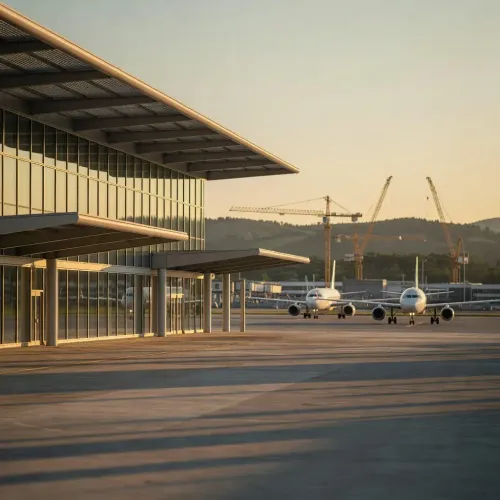
Two airports in Assam are to be modernised to strengthen the state's aviation connectivity.
The proposals reflect the 'Double Engine Government' model of state-centre infrastructure coordination under CM Himanta Biswa Sarma .
Asom Mala has been a cornerstone of Assam's road development strategy since its first phase in 2017-18 .
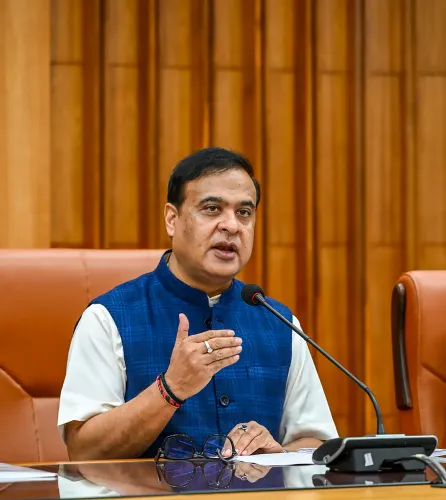
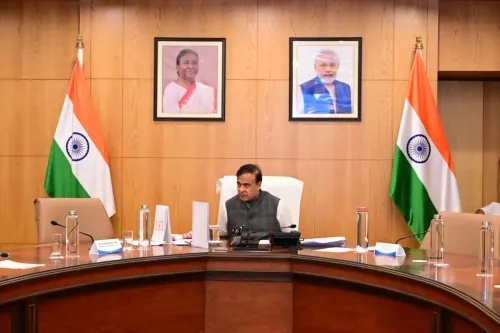
The Chief Minister's Office of Assam announced on Friday, July 10, 2026 that Chief Minister Dr. Himanta Biswa Sarma has unveiled sweeping infrastructure proposals in the Assam Budget 2026, including a new phase of the state's flagship road programme and the modernisation of two airports to bolster regional connectivity.
Context
Presenting the budget, CM Himanta Biswa Sarma stated that the Assam Budget 2026 'reinforces the Government's commitment to building world-class infrastructure across the State.' The centrepiece road proposal is Asom Mala Phase 4, which envisages 800 km of new roads across Assam. Two airports in the state are also slated for modernisation, though specific facilities have not yet been named officially.
The budget also extends support to major Government of India projects already under way in the state, signalling coordinated planning between the state and the Union government — a dynamic the Chief Minister's Office described as the strength of the 'Double Engine Government.'
Policy Backdrop
Asom Mala is Assam's multi-phase state road development programme, first incorporated in the state budget in 2017-18, designed to upgrade state highways and major district roads in tandem with central highway schemes. The programme mirrors the approach of the Union government's Bharatmala Pariyojana, launched in 2017, which has funded several national highway stretches across the Northeast.
The budget specifically calls out two centrally supported projects: the Baihata Chariali–Mission Chariali four-laning on NH-27, a corridor aimed at decongesting traffic near Guwahati, and the Airport–Jalukbari Elevated Corridor, a proposed elevated road linking Guwahati airport to Jalukbari to cut travel time within the capital city. Both projects represent the state government's strategy of using budget allocations to accelerate Union-funded works.
CM Himanta Biswa Sarma, who has led the state since May 2021, has consistently aligned Assam's infrastructure spending with central schemes under the BJP-led Union government, a pattern that has deepened since his party's return to power in the state.
Stakeholders and Impact
The proposed 800 km of new roads under Asom Mala 4 would directly benefit daily commuters, freight operators, and businesses across Assam, while the elevated corridor project is expected to ease the chronic traffic congestion between Guwahati's airport zone and the city's western gateway at Jalukbari. Improved road access also has downstream benefits for agricultural supply chains and emergency services in rural districts.
Airport modernisation, if executed, would strengthen Assam's position as the aviation hub of the Northeast, benefiting air travellers, the tourism sector, and businesses dependent on cargo connectivity. The Northeast has historically faced infrastructure deficits relative to other Indian regions, making these proposals significant for the broader regional economy.
What's Next
Attention will now shift to implementation: land acquisition timelines, tendering processes, and funding arrangements for the 800 km Asom Mala 4 stretches will be closely watched in subsequent budget sessions and legislative debates. The identification of the two airports earmarked for modernisation is expected to be a key announcement in the near term.
If the state sustains the pace of road-building set in earlier Asom Mala phases and secures central co-funding for the elevated corridor, Assam could consolidate its role as the infrastructure anchor of India's Northeast over the next planning cycle.
Point of View
Which raises the accountability bar. The airport modernisation pledge, while still unnamed, taps into the Northeast's longstanding demand for parity in aviation infrastructure. The real test will be whether land acquisition and tendering keep pace with the ambition, a challenge that has historically slowed Asom Mala's earlier phases.
NationPress
9 Oct 2026
Frequently Asked Questions
What is Asom Mala Phase 4 in Assam Budget 2026?
Asom Mala Phase 4 is a road development proposal in the Assam Budget 2026 that envisages construction of 800 km of new roads across the state, continuing the multi-phase Asom Mala programme that began in 2017-18.
Which airports will be modernised in Assam?
The Assam Budget 2026 announced that two airports in Assam will be modernised to strengthen connectivity, but the specific airports have not yet been officially named.
What is the Airport–Jalukbari Elevated Corridor?
The Airport–Jalukbari Elevated Corridor is a proposed elevated road project in Guwahati that aims to connect the city's airport to the Jalukbari area, reducing travel time within the Assam capital.
What is the Baihata Chariali–Mission Chariali four-laning project?
It is a four-laning project on NH-27 near Guwahati, supported by the Government of India, designed to decongest traffic on one of the major highway corridors in Assam.
What is the 'Double Engine Government' referenced in Assam's budget?
'Double Engine Government' refers to the political alignment between the BJP-led Assam state government and the BJP-led Union government , which the ruling party argues enables faster co-funding and approval of infrastructure projects.