Assam Cabinet Amends Minor Mineral Concession Rules 2013
Synopsis
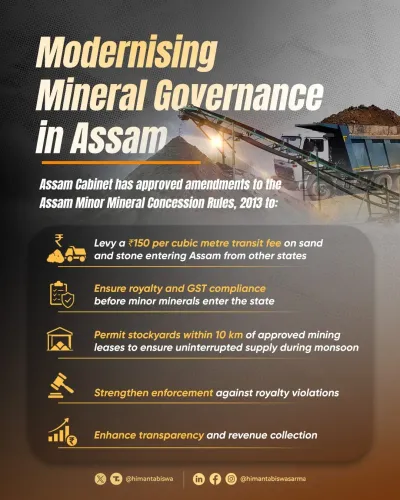
The Assam Cabinet has approved an amendment to the Minor Mineral Concession Rules, 2013, updating the decade-old state framework governing extraction of minor minerals including sand, stone and gravel. The decision was announced by the Chief Minister's Office on 6 July 2026.
Key Takeaways
The Assam Cabinet approved an amendment to the Minor Mineral Concession Rules, 2013 on 6 July 2026 .
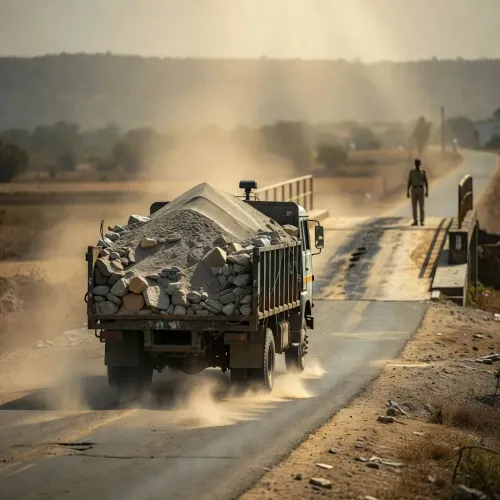
The rules govern leases and extraction of minor minerals — sand, stone and gravel — across Assam.
The original rules were framed under the central Mines and Minerals (Development and Regulation) Act, 1957 .
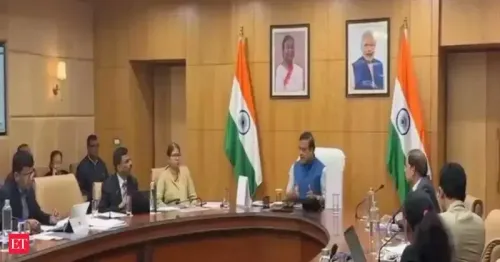
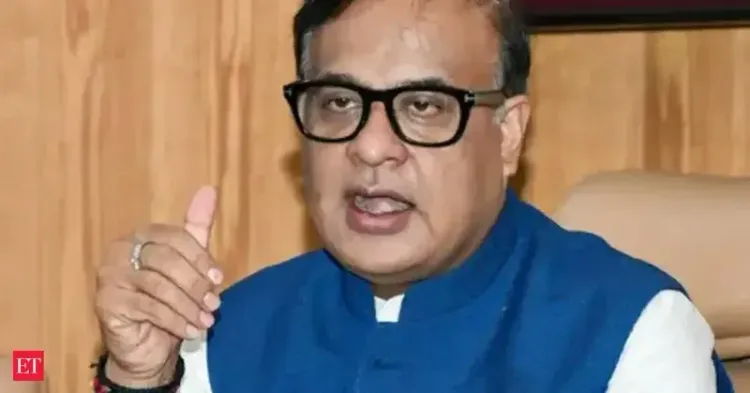
Chief Minister Himanta Biswa Sarma heads the cabinet that cleared the amendment.
The amended rules will become operative after publication in the official Assam Gazette .
Key stakeholders include mineral contractors and district administrations overseeing lease enforcement.
The Chief Minister's Office of Assam announced on Monday, 6 July 2026 that the Assam Cabinet has approved an amendment to the Minor Mineral Concession Rules, 2013, signalling a policy update to the state's framework governing extraction of minerals such as sand, stone, and gravel.
Context
The Minor Mineral Concession Rules, 2013 were originally notified by the Government of Assam under the central Mines and Minerals (Development and Regulation) Act, 1957. These rules govern the grant of leases and regulate the extraction of minor minerals across the state. The cabinet's decision to amend these rules marks a formal revision to a framework that has been in place for over a decade.
Chief Minister Himanta Biswa Sarma, who has led the Assam government since May 2021, heads the cabinet that cleared the amendment. The CMO's announcement did not specify the exact provisions altered, and the full text of the amendment is expected to be published via an official gazette notification.
Policy Backdrop
Across India, state governments periodically revise minor mineral rules in response to central legislative changes, Supreme Court directions on sustainable extraction, and persistent challenges around illegal mining and royalty leakage. The MMDR Act has itself seen multiple central amendments in recent years, prompting states to align their subsidiary rules accordingly.
Assam's mining sector, particularly sand and stone extraction from its riverine geography, has historically faced scrutiny over environmental compliance and enforcement. Amendments to concession rules typically address lease tenure, royalty rates, environmental safeguards, and the role of district administrations in oversight.
Stakeholders and Impact
The amendment directly affects mineral contractors operating in Assam and district administrations responsible for issuing and monitoring leases. Any revision to royalty structures or lease conditions will have downstream consequences for the construction and infrastructure sectors, which depend heavily on locally sourced minor minerals.
Environmental groups and local communities in riverine areas have long raised concerns about unregulated sand mining and its impact on river ecosystems. Policy changes in this space are therefore watched closely by both industry and civil society.
What's Next
The immediate next step is the publication of the amended rules through an official Assam Gazette notification, which will make the specific changes legally operative. Following that, the state's mining department may initiate fresh lease auctions or enforcement actions aligned with the revised framework.
Observers will watch whether the amendment introduces stricter environmental conditions, revised royalty rates, or new digital monitoring mechanisms — areas that have been focal points of minor mineral governance reform across Indian states in recent years.
Point of View
The move signals an intent to modernise extraction oversight in a state where riverine mining has been a persistent regulatory challenge. The real test, however, lies in implementation — whether the revised rules introduce enforceable environmental safeguards and transparent royalty mechanisms, or remain largely procedural. Until the gazette notification is published and its provisions are public, the amendment's true policy weight cannot be fully assessed.
NationPress
5 Oct 2026
Frequently Asked Questions
What are the Minor Mineral Concession Rules 2013 in Assam?
The Minor Mineral Concession Rules, 2013 are state-level regulations framed by the Government of Assam under the central Mines and Minerals (Development and Regulation) Act, 1957. They govern the grant of leases and regulate the extraction of minor minerals such as sand, stone and gravel within the state.
Why did the Assam Cabinet amend the Minor Mineral Concession Rules?
Indian states periodically amend minor mineral rules to address illegal mining, improve royalty collection and introduce environmental safeguards, often in response to central MMDR Act amendments and Supreme Court directions. The specific provisions changed in the 2026 Assam amendment will be known once the official gazette notification is published.
Who approved the amendment to Assam's mineral rules?
The Assam Cabinet, headed by Chief Minister Himanta Biswa Sarma, approved the amendment to the Minor Mineral Concession Rules, 2013. The decision was announced by the Chief Minister's Office on 6 July 2026.
When will the amended Assam mineral rules come into effect?
The amended rules will become legally operative after they are published through an official Assam Gazette notification. No date for gazette publication has been announced yet.
Who is affected by changes to Assam's Minor Mineral Concession Rules?
Mineral contractors holding or seeking leases for sand, stone and gravel extraction are directly affected, as are district administrations responsible for issuing and monitoring those leases. The construction and infrastructure sectors, which rely on locally sourced minor minerals, will also feel the downstream impact.