Amit Shah Pushes Coop Tech Reforms at Ministry's 5th Foundation Day
Synopsis
Union Minister Amit Shah addressed the Ministry of Cooperation's 5th Foundation Day on 6 July 2026, stressing e-PACS, digital payments, and natural farming under the 'Sahkar se Samridhi' vision. Rajasthan CM Bhajanlal Sharma attended and thanked PM Modi and Shah for cooperative sector leadership.
Key Takeaways
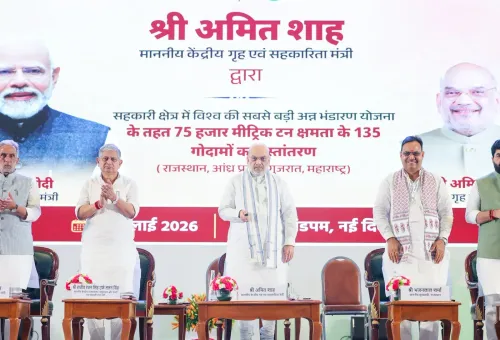
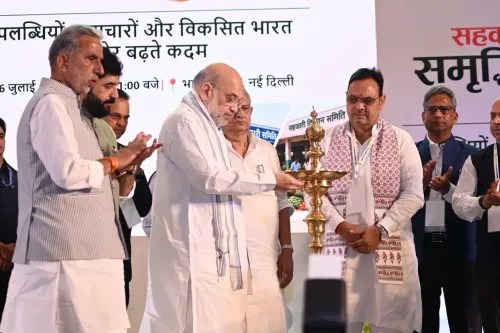
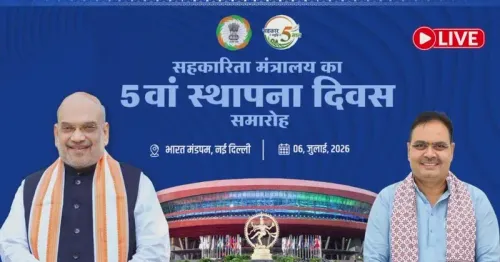
Amit Shah addressed the 5th Foundation Day of the Ministry of Cooperation on 6 July 2026 .
He stressed expansion of e-PACS , digital payment systems , and transparent cooperative governance under 'Sahkar se Samridhi' .
Shah called on farmers to adopt natural and organic farming in greater numbers.
Tribute was paid to Dr.
Shyama Prasad Mukherjee on his 125th birth anniversary .
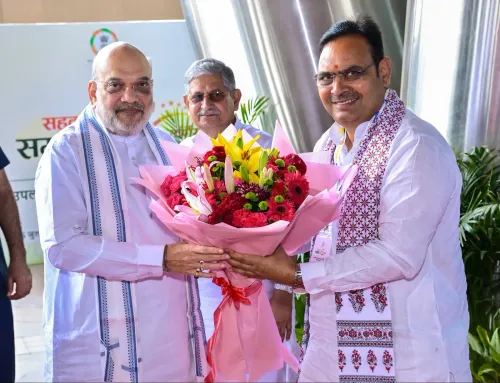
CM Bhajanlal Sharma attended and credited PM Narendra Modi and Amit Shah for transforming the cooperative sector.
The Ministry of Cooperation was established in July 2021 ; its flagship e-PACS programme covers approximately 63,000 PACS nationwide.
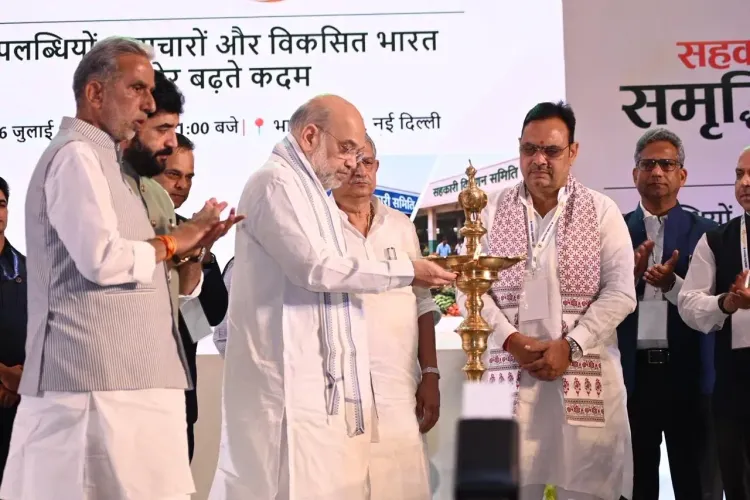
The Chief Minister's Office of Rajasthan on Monday, 6 July 2026 shared that Union Home and Cooperation Minister Amit Shah addressed the 5th Foundation Day ceremony of the Ministry of Cooperation, calling for technology-driven reforms, expansion of e-PACS, digital payment systems, and a more transparent cooperative structure to realise the vision of 'Sahkar se Samridhi' (Prosperity through Cooperation).
Context
Amit Shah used the occasion to urge farmers across the country to adopt natural and organic farming in greater numbers. He also paid tribute to Dr. Shyama Prasad Mukherjee on the occasion of his 125th birth anniversary, honouring the political leader who founded the Bharatiya Jana Sangh. The event brought together central and state leadership to assess five years of cooperative sector reform.
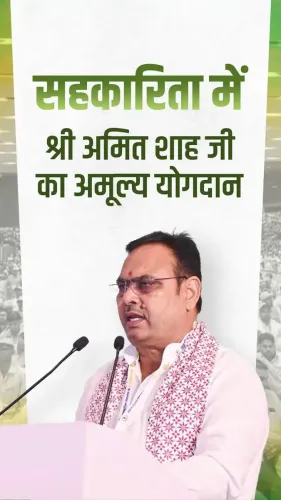
Chief Minister Bhajanlal Sharma of Rajasthan was present at the ceremony and expressed gratitude to Prime Minister Narendra Modi and Amit Shah for their focus on the cooperative sector. He said that unprecedented work was being done across the country in the field of cooperatives.
Policy Backdrop
The Ministry of Cooperation was established in July 2021 as a dedicated central ministry to give focused attention to India's vast cooperative network. Before its creation, cooperative policy was managed under the agriculture ministry without a standalone institutional mandate.
A flagship initiative under the ministry — the computerisation of approximately 63,000 Primary Agricultural Credit Societies (PACS) — was approved in 2022-23. The e-PACS programme aims to bring digital accounting, loan management, and service delivery to grassroots credit institutions that serve millions of rural households. The 'Sahkar se Samridhi' slogan has anchored the government's messaging around cooperatives as an engine of rural economic uplift.
Stakeholders and Impact
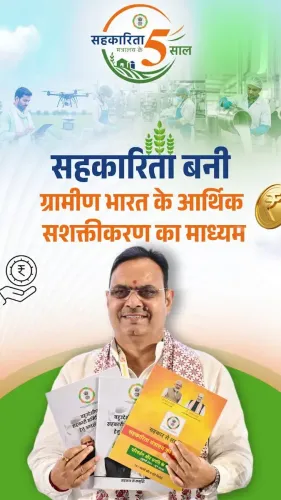
The cooperative framework directly touches crores of farmers, women, youth, livestock farmers, and rural communities across India. CM Bhajanlal Sharma noted that cooperatives have become a vehicle for the economic empowerment of these groups, with the 'Sahkar se Samridhi' model shaping both central and state-level rural programmes.
Rajasthan's participation at the national event underscores the state's alignment with central cooperative reforms. The push for natural and organic farming ties into a broader national sustainable agriculture strategy, with cooperatives positioned as the delivery mechanism for inputs, credit, and market linkages for farmers transitioning away from chemical-intensive cultivation.
What's Next
The immediate focus will be on the roll-out of digital payment systems and e-PACS infrastructure within Rajasthan's cooperative institutions. State-level schemes promoting organic farming clusters are expected to gain momentum as centre-state coordination deepens under the cooperative ministry's five-year framework.
With the ministry now entering its sixth year, the government's emphasis on technology integration and transparency signals a shift from institution-building to measurable outcomes — making the performance of digitised PACS and farmer uptake of natural farming key benchmarks to watch.
Point of View
With Shah's emphasis on e-PACS and digital payments signalling that the government now wants measurable outcomes from its cooperative reforms. Bhajanlal Sharma's presence and public gratitude reflect the BJP's strategy of showcasing centre-state synergy on rural economic programmes ahead of future electoral cycles. The dual messaging — technology modernisation alongside organic farming — attempts to bridge the interests of digitally-connected cooperative managers and traditional smallholder farmers. Honouring Dr. Shyama Prasad Mukherjee on the same platform reinforces the ideological continuity the party draws between its founding figures and current governance priorities.
NationPress
5 Oct 2026
Frequently Asked Questions
What is the Ministry of Cooperation's Foundation Day?
The Ministry of Cooperation was established in July 2021 as a dedicated central ministry for India's cooperative sector; its Foundation Day marks the anniversary of that creation. The 5th Foundation Day was observed on 6 July 2026 with Amit Shah as the keynote speaker.
What is e-PACS and why does it matter?
e-PACS is a national programme to computerise and digitise Primary Agricultural Credit Societies , covering approximately 63,000 PACS across India. It aims to bring digital accounting, loan processing, and service delivery to rural credit institutions that serve crores of farmers.
What does 'Sahkar se Samridhi' mean?
'Sahkar se Samridhi' translates to 'Prosperity through Cooperation' and is the central government's guiding slogan for cooperative sector reforms. It frames cooperatives as the primary vehicle for the economic empowerment of farmers, women, youth, and rural communities.
Why was Dr. Shyama Prasad Mukherjee mentioned at the event?
Dr. Shyama Prasad Mukherjee's 125th birth anniversary coincided with the Foundation Day event, and Amit Shah paid tribute to the political leader who founded the Bharatiya Jana Sangh . The tribute connected the ideological lineage of the ruling party to its current governance agenda.
What was Rajasthan CM Bhajanlal Sharma's role at the event?
CM Bhajanlal Sharma attended the national ceremony and expressed gratitude to PM Narendra Modi and Amit Shah for their leadership on cooperative reforms. He stated that cooperatives had become an unprecedented force for rural economic empowerment across the country.