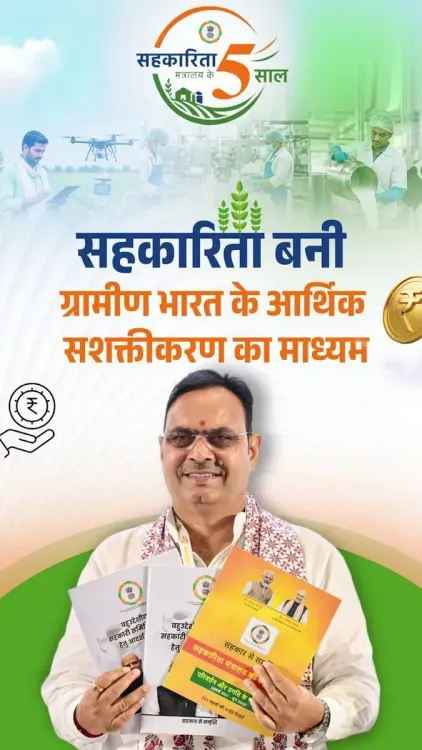
CM Bhajanlal at Cooperation Ministry's 5th Foundation Day
Synopsis
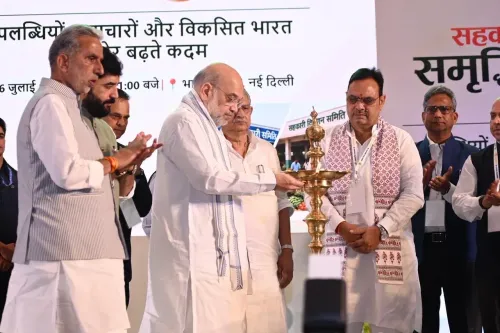
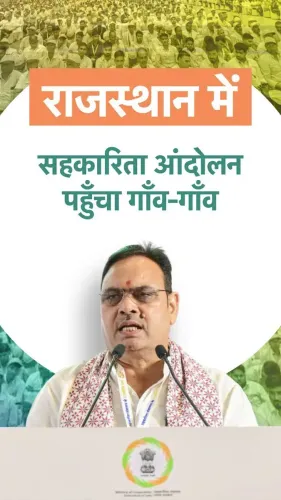
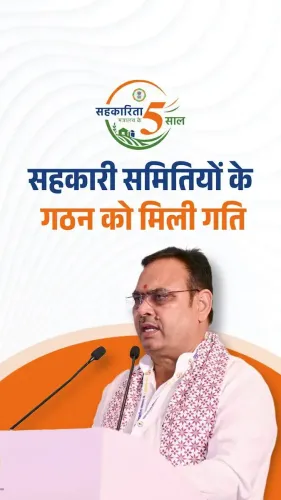
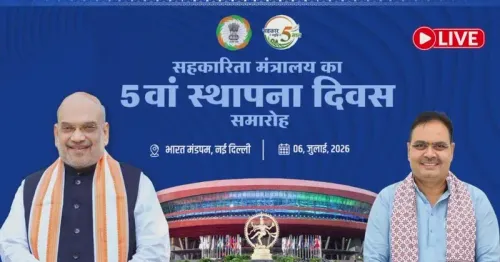
Chief Minister Bhajanlal Sharma addressed the 5th Foundation Day of India's Ministry of Cooperation in New Delhi on 6 July 2026, where Union Minister Amit Shah inaugurated key initiatives and both leaders highlighted the ministry's role in empowering farmers, women and rural India.
Key Takeaways
CM Bhajanlal Sharma represented Rajasthan at the Ministry of Cooperation's 5th Foundation Day in New Delhi on 6 July 2026 .
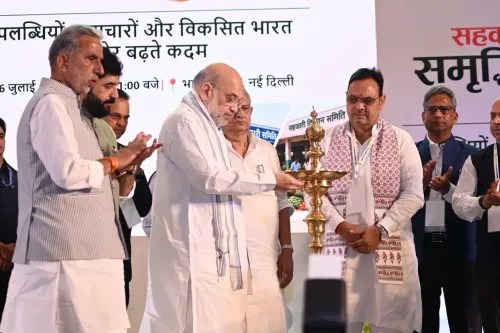
Union Minister Amit Shah laid foundation stones and inaugurated multiple initiatives at the event.
The Ministry of Cooperation was established in July 2021 — the first dedicated cooperative ministry in independent India's history.
PM Narendra Modi was credited with the decision to create a standalone ministry, described as a landmark structural reform.
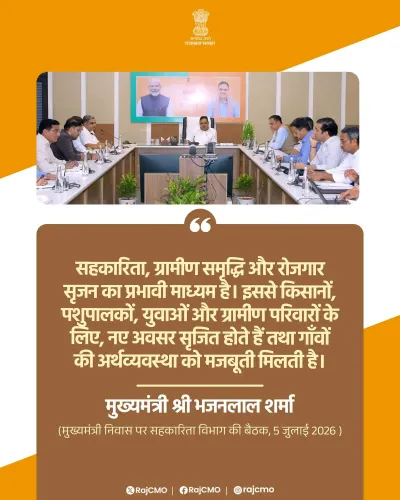
The ministry's stated mission targets economic empowerment of farmers, animal husbandry workers, women, youth and rural communities .
Rajasthan's participation signals intent to align state cooperative policy with the national framework.
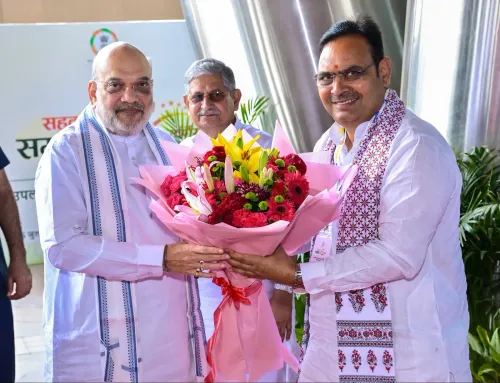
New Delhi, 6 July 2026: The Chief Minister's Office of Rajasthan announced on Monday that Chief Minister Bhajanlal Sharma addressed the 5th Foundation Day of the Ministry of Cooperation in New Delhi, where Union Home and Cooperation Minister Amit Shah laid the foundation stones and inaugurated several key initiatives.
Context
Addressing the gathering, CM Bhajanlal Sharma stated that under the 'दूरदर्शी नेतृत्व' (visionary leadership) of Prime Minister Narendra Modi, a dedicated Ministry of Cooperation was formed for the first time in independent India's history. He credited this structural reform with giving the cooperative sector an institutional identity and policy focus it had long lacked.
The Ministry of Cooperation was carved out of the Ministry of Agriculture in July 2021, making it India's first standalone cooperative ministry. The move was widely seen as a signal that cooperatives — spanning agriculture, dairy, credit and rural marketing — would be treated as a primary instrument of rural economic policy rather than a secondary adjunct.
Policy Backdrop
Amit Shah, who holds both the Home Affairs and Cooperation portfolios, has positioned the cooperative sector as a vehicle for the economic empowerment of crores of farmers, animal husbandry workers, women, youth and rural India — the exact formulation used by CM Sharma at the event. The ministry's five-year trajectory has emphasised expanding cooperative reach into areas such as organic farming, exports, warehousing and digital integration.
India's cooperative movement historically drew its strength from dairy federations and agricultural credit societies. Since 2021, the policy thrust has broadened to include Farmer Producer Organisations (FPOs), digital public infrastructure linkages and formalised credit pipelines for rural women and youth — groups explicitly named in the foundation-day address.
Stakeholders and Impact
The event underscores the centre-state coordination dimension of cooperative policy. Rajasthan, with a large agrarian and pastoral economy, stands to be a significant beneficiary of any expanded cooperative frameworks, particularly those touching animal husbandry and rural women's self-help groups. CM Sharma's presence at a central ministry event signals Rajasthan's alignment with the national cooperative agenda.
Farmers, rural women and youth were specifically cited as the intended beneficiaries of the cooperative empowerment drive. These three groups collectively represent the bulk of Rajasthan's rural workforce, making state-level implementation of central cooperative schemes a politically and economically significant priority.
What's Next
State-level follow-through will be closely watched, including whether Rajasthan's upcoming assembly sessions introduce legislative or budgetary measures aligned with the initiatives announced at the foundation-day event. The Ministry of Cooperation has used such national platforms in the past to announce scheme expansions that require state governments to act as implementation partners. CM Sharma's participation suggests Rajasthan intends to remain an active partner in that process.
Point of View
Reinforcing the BJP's narrative that the 2021 creation of the Cooperation Ministry was a transformative governance decision rather than an administrative reshuffle. CM Sharma's presence in New Delhi — and his decision to amplify the event through the official CMO account — reflects the political dividend Rajasthan's ruling dispensation sees in associating closely with Amit Shah's cooperative agenda. For a state with a vast agrarian base, being seen as a proactive partner in rural economic empowerment carries both electoral and developmental logic. The broader pattern of annual foundation-day events being used to announce scheme expansions means the real test will be state-level implementation rather than the optics of participation.
NationPress
5 Oct 2026
Frequently Asked Questions
When was India's Ministry of Cooperation established?
The Ministry of Cooperation was established in July 2021 , carved out of the Ministry of Agriculture to provide a dedicated institutional focus to India's cooperative sector — the first such standalone ministry in the country's history.
Why did CM Bhajanlal Sharma attend the Ministry of Cooperation's foundation day?
CM Bhajanlal Sharma attended the 5th Foundation Day of the Ministry of Cooperation in New Delhi to address the gathering and signal Rajasthan's alignment with the national cooperative empowerment agenda led by Union Minister Amit Shah .
What did Amit Shah do at the Cooperation Ministry's 5th foundation day?
Union Minister Amit Shah laid the foundation stones and inaugurated several important initiatives at the Ministry of Cooperation's 5th Foundation Day event held in New Delhi on 6 July 2026 .
Who benefits from India's cooperative ministry schemes?
The Ministry of Cooperation's programmes are targeted at farmers, animal husbandry workers, women, youth and rural communities across India, with the stated goal of making cooperatives a mainstream instrument of economic empowerment.
What is Rajasthan's role in India's cooperative sector?
Rajasthan , with a large agrarian and pastoral economy, is a significant participant in national cooperative frameworks, particularly those related to animal husbandry and rural women's groups. CM Sharma's attendance at the foundation-day event underlines the state's intent to implement central cooperative initiatives.