Assam Cabinet Clears CBG Policy, Two Forests Get Reserve Status
Synopsis
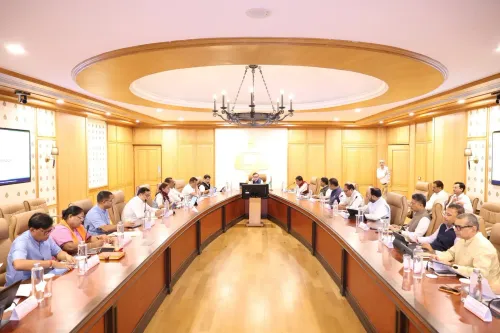
The Assam Cabinet on 1 August 2026 approved a Compressed Biogas policy to turn organic waste into clean fuel under the SATAT framework, and granted reserve forest status to two forests, signalling a dual push on clean energy and biodiversity protection.
Key Takeaways
The Assam Cabinet approved a Compressed Biogas (CBG) policy on 1 August 2026 to convert organic waste into clean energy.
The policy aligns with the central government's SATAT scheme , launched in October 2018 , which targets 5,000 CBG plants across India.
CBG plants process agricultural residue and municipal organic waste, producing compressed fuel and organic fertiliser as a byproduct.
The cabinet simultaneously granted reserve forest status to two forests in Assam, strengthening legal protection against encroachment.
Assam lies within the Indo-Burma biodiversity hotspot ; expanded reserve forest cover supports wildlife corridors for species like the one-horned rhinoceros and Asiatic elephant.
Implementation details — plant locations, subsidies, and formal forest gazette notifications — are the critical next steps.
Assam just made two decisions in a single cabinet sitting that reach in opposite directions — one into the future of clean energy, one into the heart of its forests. The Chief Minister's Office of Assam announced on Saturday, 1 August 2026 that the state cabinet has approved a Compressed Biogas (CBG) policy to convert organic waste into clean fuel, while simultaneously granting reserve forest status to two forests in the state.
Turning Waste Into Watts: What the CBG Policy Does
Compressed Biogas is produced by processing organic matter — farm stubble, municipal solid waste, cattle dung — under anaerobic conditions, then compressing the resulting methane-rich gas to a purity and pressure comparable to CNG. The Assam cabinet's new policy creates a state-level framework to attract investment into such plants, building on the central government's SATAT (Sustainable Alternative Towards Affordable Transportation) scheme, launched in October 2018 by the Ministry of Petroleum and Natural Gas with a target of 5,000 CBG plants nationwide.
For Assam, the logic is compelling. The state generates substantial agricultural residue — paddy straw chief among it — alongside urban organic waste from cities like Guwahati. Without a structured outlet, much of that residue is openly burned, contributing to seasonal air-quality crises. A CBG policy channels that waste into a revenue-generating, emission-reducing loop: farmers and urban local bodies supply feedstock, plants produce biogas and organic fertiliser as a byproduct, and the compressed fuel enters the transport or industrial energy market. It is a circular-economy play with a direct air-quality dividend.
The key details that will determine whether the policy moves from paper to plant — site allocations, state subsidy or viability-gap funding, offtake guarantees — are expected in the implementation guidelines to follow.
Two Forests, One Notification: Assam Expands Its Protected Landscape
The second decision is quieter but ecologically significant. Granting 'reserve forest' status under the Indian Forest Act gives the state enhanced legal authority to restrict encroachment, regulate resource extraction, and protect biodiversity within the notified boundaries. Assam sits in one of the world's most biodiverse regions — the Indo-Burma biodiversity hotspot — and its forest corridors are critical for species including the one-horned rhinoceros and Asiatic elephant. Adding reserve status to previously unclassified or partially protected patches strengthens those corridors and can support wildlife movement between existing protected areas.
The names and precise locations of the two forests have not been officially specified in the announcement. Formal gazette notifications are the next procedural step.
Two Policies, One Strategic Signal
Read together, the two decisions trace a single line of intent: Assam is trying to grow its economy and protect its ecology simultaneously, rather than treating them as a trade-off. The CBG policy positions the state to participate in India's bioenergy market while reducing agricultural pollution. The forest notifications shore up the biodiversity estate that makes Assam's landscape globally distinctive. Both feed into India's commitments under its National Action Plan on Climate Change and its pledge to bring 30 percent of land under forest and tree cover.
Whether the CBG plants get built on schedule and the forest notifications hold against ground-level pressure will be the real test. The cabinet has fired the starting gun — implementation is the race.
Point of View
Signalling climate seriousness without committing to a single headline. For Assam, the CBG policy is also a political calculation — stubble burning is a visible, voter-felt problem, and a state-level framework lets the government claim ownership of a solution even when central SATAT targets have lagged. The reserve forest notifications, meanwhile, cost little politically while generating goodwill with conservation constituencies and strengthening Assam's hand in any future carbon-credit or biodiversity-offset frameworks. The real measure of ambition will be the implementation gazette, not the cabinet minute.
NationPress
1 Aug 2026
Frequently Asked Questions
What is the Assam CBG policy approved in August 2026?
The Assam Cabinet approved a Compressed Biogas (CBG) policy on 1 August 2026 that creates a state framework to set up plants converting organic waste — including agricultural residue and municipal solid waste — into compressed biogas usable as clean fuel.
What is the SATAT scheme and how does it relate to Assam's CBG policy?
SATAT (Sustainable Alternative Towards Affordable Transportation) is a central government scheme launched in October 2018 targeting 5,000 compressed biogas plants across India. Assam's new CBG policy builds on this national framework at the state level.
What does 'reserve forest' status mean in India?
Under the Indian Forest Act, reserve forest status gives the state government enhanced legal authority to restrict encroachment, regulate resource extraction, and protect biodiversity within the notified area — a higher level of protection than unclassified forest land.
Which two forests in Assam got reserve status?
The cabinet announcement confirmed reserve status for two forests in Assam, but their names and exact locations have not been officially specified. Formal gazette notifications are the next procedural step.
How does compressed biogas help reduce pollution in Assam?
By channelling agricultural residue like paddy straw into CBG plants instead of open fields, the policy reduces stubble burning — a major source of seasonal air pollution. Plants also produce organic fertiliser as a byproduct, creating an additional benefit for farmers.