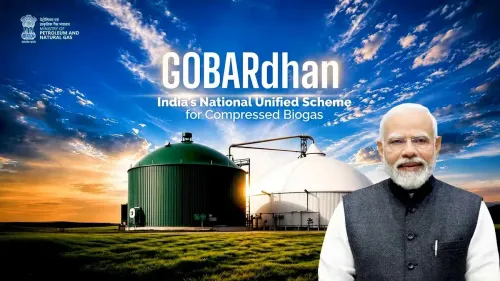
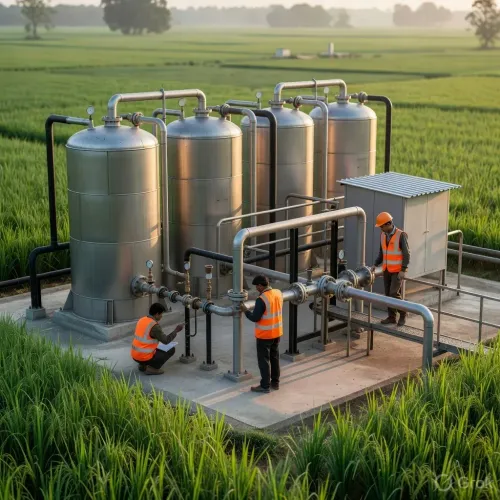
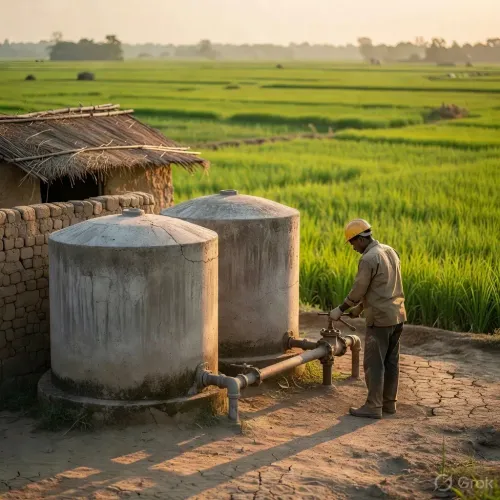
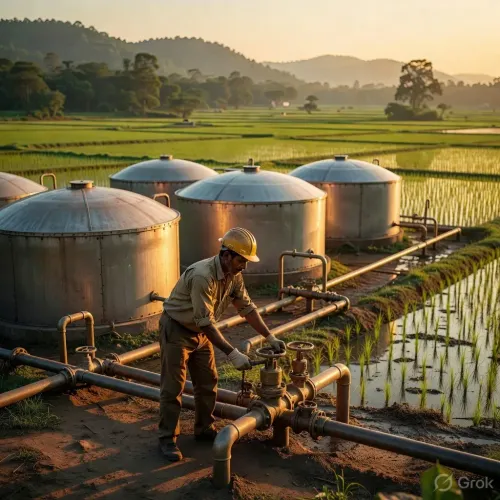
Assam GOBARdhan Plant in Kokrajhar Turns Waste to Energy

Synopsis
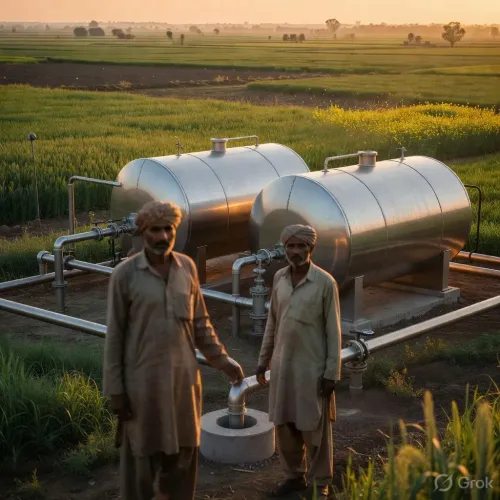
The Chief Minister's Office of Assam highlighted the GOBARdhan Biogas Plant at Khalaichi Bongaon in Kokrajhar, which converts organic waste into clean biogas for rural households. The plant advances CM Himanta Biswa Sarma's push for sustainable energy in Assam under the central GOBARdhan scheme.
Key Takeaways
The GOBARdhan Biogas Plant at Khalaichi Bongaon in Kokrajhar district is converting organic waste into clean biogas for rural households.
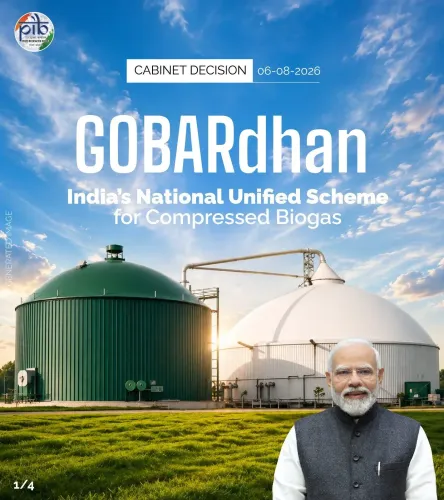
The plant operates under the central GOBARdhan scheme , launched in April 2018 as part of the Swachh Bharat Mission .
Kokrajhar is located in the Bodoland Territorial Region of western Assam, a focus area for rural development initiatives.
Beneficiaries include rural households receiving clean cooking fuel and small farmers who can use bio-slurry as organic fertiliser.
The initiative aligns with India's Nationally Determined Contributions to reduce methane emissions and expand non-fossil energy sources.
The Assam government adopted the national Bioenergy Programme framework after 2021 to scale such decentralised plants across rural districts.
The Chief Minister's Office of Assam announced on Friday, 17 July 2026 that the GOBARdhan Biogas Plant at Khalaichi Bongaon in Kokrajhar district is converting organic waste into clean biogas and supplying energy to rural households, advancing what the office described as Chief Minister Dr. Himanta Biswa Sarma's vision for a greener, more sustainable Assam.
Context
The post from the official CMO Assam account states: 'From waste to clean energy. The GOBARdhan Biogas Plant at Khalaichi Bongaon in Kokrajhar is converting organic waste into clean biogas, supplying clean energy to rural households and advancing the vision of HCM Dr. Himanta Biswa Sarma for a greener, more sustainable Assam.' The plant is located in Kokrajhar, a district in western Assam within the Bodoland Territorial Region, an area that has seen multiple rural development and infrastructure drives in recent years. The announcement highlights the use of organic waste — including cattle dung and agricultural residue — as a feedstock for decentralised energy generation.
Policy Backdrop
The GOBARdhan scheme — short for Galvanising Organic Bio-Agro Resources Dhan — was launched nationwide by the Ministry of Drinking Water and Sanitation in April 2018 as part of the Swachh Bharat Mission framework. Its core objective is to convert cattle dung and organic waste into biogas for cooking and electricity, while producing bio-slurry as organic fertiliser for farmers. The Assam government adopted the national Bioenergy Programme framework after 2021 to expand waste-to-energy projects across rural districts, with central funding channelled into decentralised biogas units as part of broader rural sanitation and clean cooking strategies.
India's push for community biogas plants is also tied to its Nationally Determined Contributions under the Paris Agreement, specifically the target of expanding non-fossil energy capacity and reducing methane emissions from livestock waste. Northeastern states, including Assam, have been prioritised for such decentralised units given their large rural populations and dependence on traditional biomass fuels.
Stakeholders and Impact
Rural households in and around Khalaichi Bongaon are the immediate beneficiaries, gaining access to clean cooking fuel and potentially reducing their dependence on LPG cylinders and firewood. Small and marginal farmers in the Kokrajhar region stand to benefit additionally from bio-slurry, a nutrient-rich organic fertiliser produced as a byproduct of the biogas process, which can reduce input costs and improve soil health. The plant also contributes to reducing open dumping and burning of organic waste in the locality, with positive implications for local air quality and sanitation.
What's Next
Attention will now turn to the broader rollout of GOBARdhan plants across the Bodoland Territorial Region districts and to state-level reporting on the number of household connections achieved under the scheme. The Assam government's ability to scale this model — replicating the Khalaichi Bongaon template in other rural clusters — will be a key indicator of how effectively the state translates central scheme funding into on-ground clean energy access. Progress on this front will also feed into Assam's contribution to India's national bioenergy targets for the coming years.
Point of View
Particularly in the politically sensitive Bodoland Territorial Region. By anchoring a central government scheme — GOBARdhan — to a local, visible installation, the state government is simultaneously claiming ownership of rural energy access and signalling alignment with New Delhi's Swachh Bharat and bioenergy priorities. The choice of Kokrajhar, a district with a distinct political and administrative identity, is also notable: clean energy delivery in the Bodoland region serves both development and political consolidation goals. How quickly the model scales to other BTR districts will determine whether this remains a showcase project or becomes a structural shift in Assam's rural energy landscape.
NationPress
16 Oct 2026
Frequently Asked Questions
What is the GOBARdhan Biogas Plant in Kokrajhar, Assam?
The GOBARdhan Biogas Plant at Khalaichi Bongaon in Kokrajhar district, Assam, converts organic waste — including cattle dung and agricultural residue — into clean biogas that is supplied to rural households for cooking and energy use.
What is the GOBARdhan scheme in India?
GOBARdhan (Galvanising Organic Bio-Agro Resources Dhan) is a central government scheme launched in April 2018 under the Ministry of Drinking Water and Sanitation. It aims to convert cattle dung and organic waste into biogas and bio-slurry fertiliser, integrated with the Swachh Bharat Mission.
Where is Kokrajhar district located in Assam?
Kokrajhar is a district in western Assam and is part of the Bodoland Territorial Region (BTR), an autonomous administrative area that has been a focus of rural development and infrastructure investment.
How does the Assam biogas plant benefit farmers and rural households?
Rural households receive clean biogas as a cooking fuel, reducing dependence on LPG and firewood. Small and marginal farmers benefit from bio-slurry, a nutrient-rich organic fertiliser produced as a byproduct, which can lower agricultural input costs.
What is CM Himanta Biswa Sarma's role in Assam's clean energy push?
Chief Minister Dr. Himanta Biswa Sarma, who has led Assam since May 2021, has publicly emphasised sustainable development and renewable energy projects. The Assam government adopted the national Bioenergy Programme framework after 2021 to expand waste-to-energy plants in rural districts under his administration.