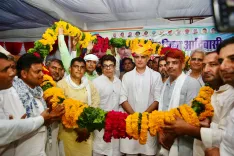
CM Yogi launches 90 projects worth ₹868 cr in Ghaziabad
Synopsis
Chief Minister Yogi Adityanath launched 90 development projects worth over ₹868 crore in Ghaziabad on 17 July 2026, combining infrastructure inaugurations with welfare handouts and the unveiling of a statue of late former UP cabinet minister Rajpal Tyagi.
Key Takeaways
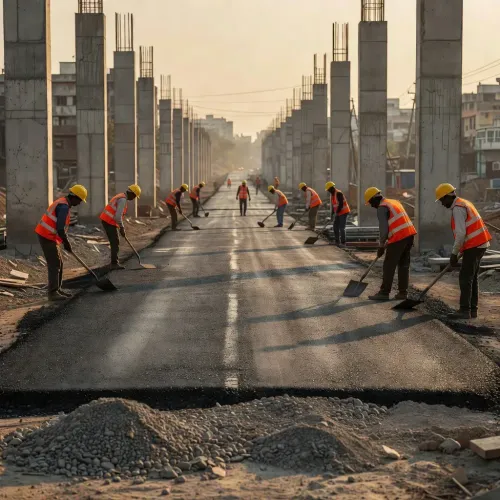
90 development projects worth over ₹868 crore were inaugurated or had foundation stones laid in Ghaziabad on 17 July 2026 .
CM Yogi Adityanath presided over the event, framing Ghaziabad's road infrastructure as a direct outcome of good governance.
Beneficiaries of public welfare schemes received laptops, symbolic cheques, and keys at the ceremony.
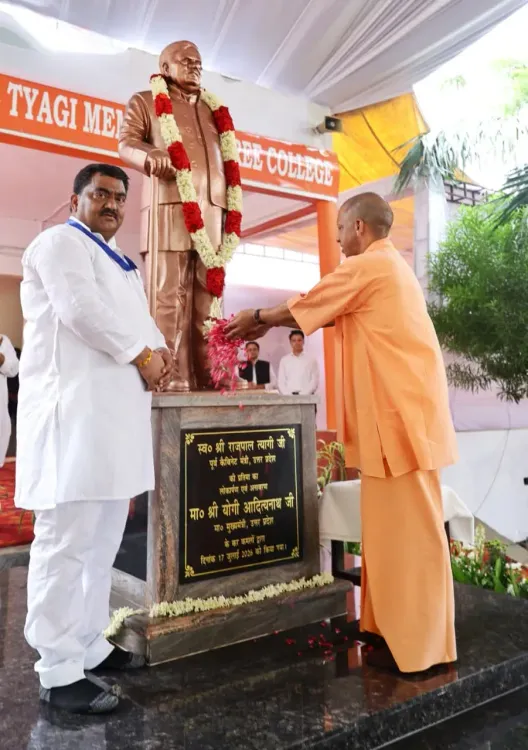
The statue of late Rajpal Tyagi , former cabinet minister of the Uttar Pradesh government, was unveiled during the event.
The event is part of the state's broader 'Naya Uttar Pradesh' narrative linking capital investment with welfare delivery in NCR-adjacent districts.
Ghaziabad's position in the National Capital Region makes infrastructure improvements here significant for Delhi-UP connectivity.
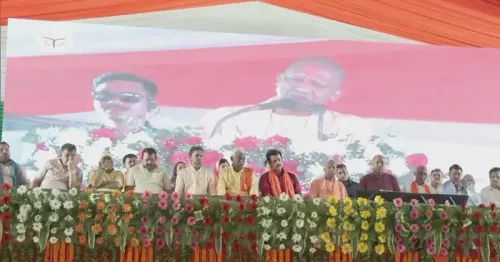
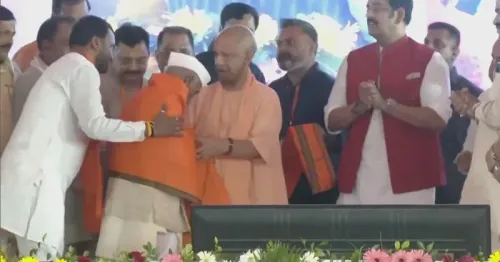
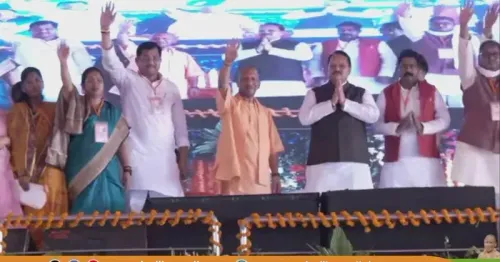
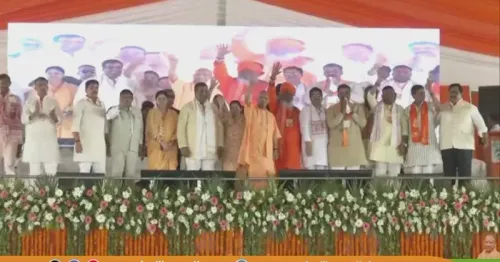
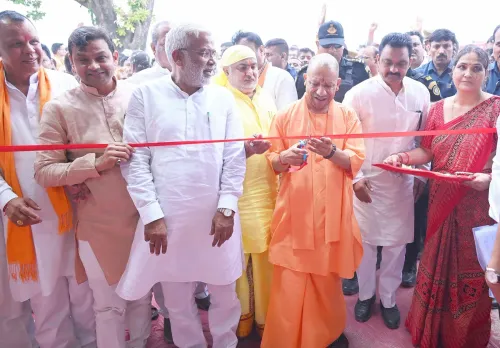
Chief Minister Yogi Adityanath visited Ghaziabad on Friday, 17 July 2026, to inaugurate and lay the foundation stones of 90 development projects valued at over ₹868 crore, while also unveiling a statue of late Rajpal Tyagi, former cabinet minister of the Uttar Pradesh government. Beneficiaries of various public welfare schemes received laptops, symbolic cheques, and keys at the event.
Context
The Chief Minister's Office of Uttar Pradesh announced the event on X, describing it as 'vikas ko vistar, sushasan ka sashakt aadhar' — 'expanding development, a strong foundation of good governance.' The occasion combined physical infrastructure launches with direct welfare delivery, a format the state government has used consistently across districts to demonstrate on-the-ground impact.
Ghaziabad, situated in western Uttar Pradesh within the National Capital Region, has seen rapid urbanisation and serves as a key transit corridor between Delhi and the state's interior. Infrastructure investment here carries both economic and political significance given the district's density and connectivity demands.
Policy Backdrop
Since 2017, the Uttar Pradesh government under CM Yogi Adityanath has prioritised road connectivity and urban infrastructure, particularly in NCR-adjacent districts. The state has framed capital expenditure on expressways and state highways as central to its 'Naya Uttar Pradesh' — or 'New Uttar Pradesh' — governance narrative.
Laptop distribution programmes for students and youth have been a recurring feature of welfare outreach in the state since 2017, linking skill and education goals to public-facing events. Combining such handouts with infrastructure inaugurations allows the administration to present a composite image of development across multiple sectors simultaneously.
At the event, CM Yogi stated that the development of 'excellent road infrastructure in Ghaziabad is the result of good governance,' and that 'Naya Uttar Pradesh, with modern connectivity, robust infrastructure and effective implementation of public welfare schemes, is continuously moving towards new heights as an outstanding model of development and good governance.'
Stakeholders and Impact
Residents of Ghaziabad are the immediate beneficiaries of the 90 projects, which span road infrastructure and other civic works. Welfare scheme recipients who received laptops, cheques, and keys at the ceremony represent a broader cross-section of the district's population targeted by state social programmes.
The unveiling of the statue of Rajpal Tyagi, a former cabinet minister of the Uttar Pradesh government, added a commemorative dimension to the event, acknowledging the contributions of a local political figure to the region's public life.
Given Ghaziabad's role as an economic and logistical gateway between Delhi and western Uttar Pradesh, improved road and civic infrastructure in the district has implications for commuters, businesses, and supply chains operating across the NCR belt.
What's Next
The state government is expected to continue its infrastructure push in NCR-adjacent districts ahead of the next state budget session, with further announcements on Ghaziabad-Delhi corridor upgrades likely. Events of this scale typically precede broader policy statements on urban development and connectivity investment in the region.
The 'Naya Uttar Pradesh' framework signals that the administration intends to sustain this tempo of project completions and welfare deliveries as a governance benchmark going into the next political cycle.
Point of View
Multi-project inauguration ceremonies in NCR districts to project governance credibility in politically sensitive urban constituencies. Combining road infrastructure launches with direct welfare handouts — laptops, cheques, keys — allows the state to address both aspirational and immediate material concerns of voters in a single public moment. The 'Naya Uttar Pradesh' framing is a deliberate branding exercise that positions infrastructure delivery as a governance differentiator ahead of future electoral cycles. Sustaining this tempo in NCR-adjacent districts, where voters compare quality of life directly with Delhi, is central to the administration's long-term political calculus.
NationPress
17 Jul 2026
Frequently Asked Questions
What projects did CM Yogi inaugurate in Ghaziabad on 17 July 2026?
CM Yogi Adityanath inaugurated and laid the foundation stones of 90 development projects worth over ₹868 crore in Ghaziabad, primarily focused on road and civic infrastructure.
Who was Rajpal Tyagi whose statue was unveiled in Ghaziabad?
Rajpal Tyagi was a former cabinet minister in the Uttar Pradesh government; his statue was unveiled by CM Yogi Adityanath during the 17 July 2026 event in Ghaziabad.
What welfare benefits were distributed at the Ghaziabad event?
Beneficiaries of various public welfare schemes received laptops, symbolic cheques, and keys at the ceremony presided over by CM Yogi Adityanath.
What is the 'Naya Uttar Pradesh' model CM Yogi referred to?
'Naya Uttar Pradesh' or 'New Uttar Pradesh' is the Yogi administration's governance framework emphasising modern connectivity, robust infrastructure, and effective welfare delivery as markers of development.
Why is infrastructure investment in Ghaziabad significant for Uttar Pradesh?
Ghaziabad is a key district in the National Capital Region bordering Delhi, making road and civic infrastructure there critical for economic integration and daily commuting across the Delhi-UP corridor.