PM Modi Calls for BJP Double Engine Govt in Punjab
Synopsis
Prime Minister Narendra Modi on 17 July 2026 praised Punjab's farmers and youth as extraordinarily capable and argued that a BJP 'double engine' government aligned with the Centre is necessary for the state's rapid development, signalling the party's early campaign push ahead of the 2027 Punjab assembly elections.
Key Takeaways
Prime Minister Narendra Modi posted on X on 17 July 2026 calling Punjab's potential 'extraordinary.' He specifically highlighted Punjab's farmers and youth as possessing immense capabilities.
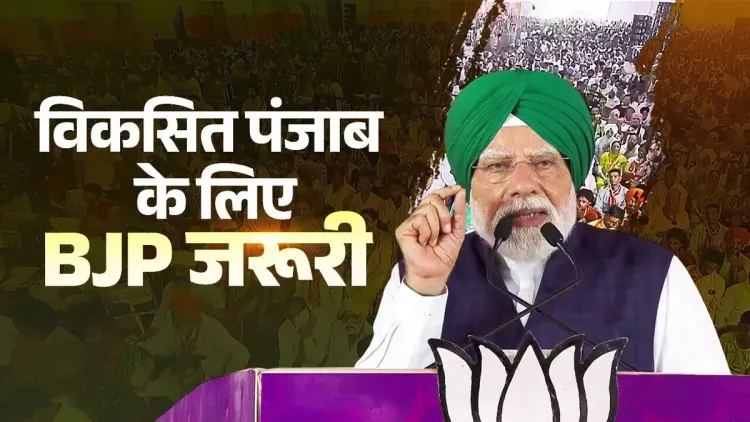
Modi argued that a BJP double engine government in Punjab is essential for the state's rapid development.
The 'double engine government' has been a core BJP campaign slogan since at least the 2017 Uttar Pradesh elections .
Punjab is currently governed by AAP and is due for assembly elections in 2027 .
Punjab's political significance is shaped by its role in Indian agriculture and the 2020-21 farmers' agitation .
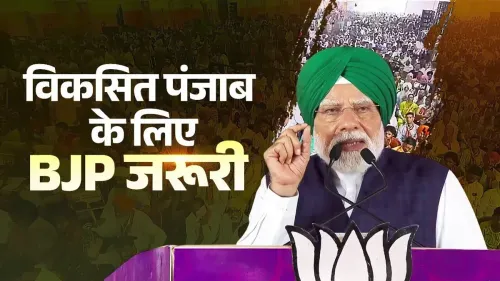
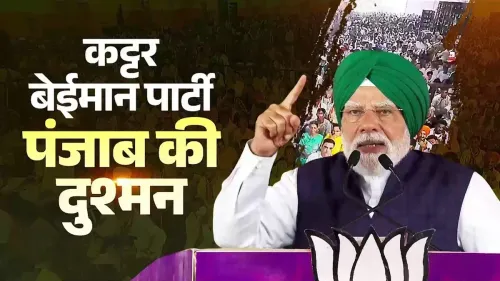
Prime Minister Narendra Modi on Friday, 17 July 2026, invoked Punjab's agricultural and demographic strengths to make a direct pitch for a BJP-led government in the state, arguing that only a 'double engine' dispensation aligned with the Centre can deliver rapid development for the state's farmers and youth.
Posting in Hindi on X, Modi wrote: 'Punjab ka samarthya adbhut hai, yahan ke kisanon aur naujawanon mein bahut kshamataen hain.' ('Punjab's potential is extraordinary; its farmers and youth possess immense capabilities.') He added that a BJP double engine government in the state is essential for Punjab to develop rapidly.
Context
Punjab is currently governed by the Aam Aadmi Party (AAP), which swept the 2022 assembly elections with a decisive majority, ending the state's long rotation between the Congress and the Shiromani Akali Dal. The BJP, which has historically had a limited independent footprint in the state, is in opposition and has been working to build its organisational presence ahead of the 2027 Punjab assembly elections.
Modi's post is consistent with the BJP's sustained effort to frame the development debate in Punjab around central-state alignment, positioning the party as the vehicle through which the state can access the full benefit of Union government schemes and resources.
Policy Backdrop
The 'double engine government' formulation has been a central BJP campaign argument since at least the 2017 Uttar Pradesh assembly elections. The phrase refers to the idea that when the same party governs both the Centre and a state, policy implementation is faster and resource flows are smoother — a claim that has been contested by opposition-governed states.
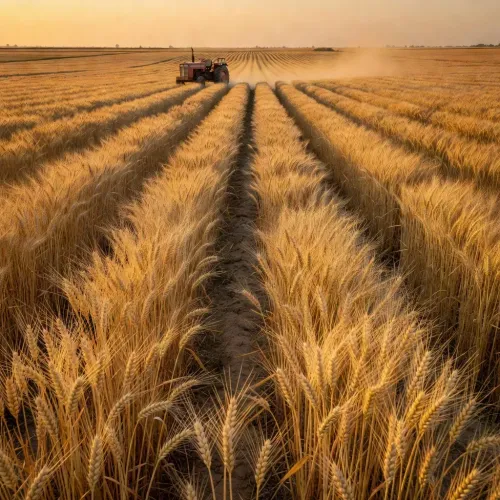
Punjab holds particular national significance because of its role in Indian agriculture. The state was at the heart of the Green Revolution and continues to be a major contributor to the national food grain buffer. It was also the epicentre of the farmers' agitation of 2020-21 that led to the eventual repeal of three central farm laws, a sequence that continues to shape BJP's political calculus in the state.
Stakeholders and Impact
Punjab's farmers remain a critical constituency. The state has one of the highest concentrations of agricultural land-holders in northern India, and rural distress — linked to debt, input costs, and procurement prices — has been a persistent political issue. Any party seeking a foothold in Punjab must credibly address this constituency.
Punjab's youth represent the second pillar of Modi's pitch. The state has seen significant emigration, particularly to Canada and other Western countries, driven by limited local employment opportunities. The BJP's national messaging on manufacturing, skilling, and startup ecosystems is being projected as an answer to this outmigration trend, though the party has yet to announce specific Punjab-targeted programmes for the 2027 cycle.
What's Next
With the 2027 Punjab assembly elections on the horizon, the BJP is expected to intensify its outreach in the state through rallies, organisational drives, and targeted announcements of Union government schemes benefiting Punjab's agriculture and employment sectors. Modi's social media messaging is an early signal of the party's intent to make the election a referendum on central-state coordination.
Whether the 'double engine' argument gains traction will depend significantly on voter perception of the current AAP government's performance and the BJP's ability to build alliances or a standalone vote base in a state where it has historically struggled to win a majority on its own.
Point of View
Deploying the proven 'double engine' frame in a state where the party remains electorally weak. By anchoring the pitch on farmers and youth — the two constituencies most associated with Punjab's political identity and its most acute economic anxieties — the BJP is attempting to recast itself as a development alternative rather than a cultural-political outsider. The timing is notable: it comes without an obvious immediate trigger, suggesting a deliberate, sustained cadence of messaging rather than a reactive statement. Whether this narrative can overcome the residual hostility generated by the 2020-21 farm laws episode will be the defining test of the BJP's Punjab strategy over the next two years.
NationPress
16 Oct 2026
Frequently Asked Questions
What did PM Modi say about Punjab on 17 July 2026?
PM Modi said Punjab's potential is extraordinary and that its farmers and youth possess immense capabilities. He argued that a BJP double engine government is essential for Punjab's rapid development.
What is the BJP double engine government concept?
The 'double engine government' is a BJP campaign formulation that argues development is faster and more effective when the same party governs both the central government and a state government, enabling smoother policy coordination and resource flow.
Is BJP in power in Punjab currently?
No. Punjab is currently governed by the Aam Aadmi Party, which won the 2022 assembly elections with a large majority. The BJP is in opposition in the state.
When are the next Punjab assembly elections?
The next Punjab assembly elections are scheduled for 2027. The BJP has been working to build its presence in the state ahead of that contest.
Why is Punjab politically significant for the BJP?
Punjab is significant because of its large farming community, its role in national food security, and the 2020-21 farmers' agitation that led to the repeal of three central farm laws — an episode that damaged the BJP's standing in the state and which the party is working to move past.