Assam Cabinet clears land lease for Spices Board quality lab
Synopsis
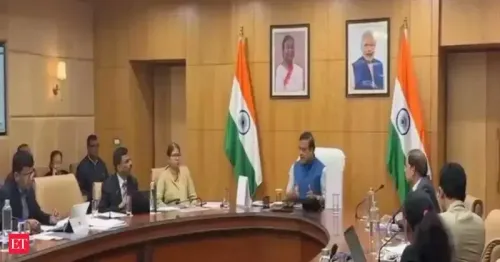
The Assam Cabinet chaired by CM Dr. Himanta Biswa Sarma approved leasing land to the Spices Board of India on September 24, 2026, for a Quality Evaluation Laboratory and Skill Development Centre aimed at boosting spice export readiness across the northeast.
Key Takeaways
The Assam Cabinet on September 24, 2026 approved leasing state land to the Spices Board of India .
The facility will house a Quality Evaluation Laboratory , a Skill Development and Training Centre , and allied infrastructure.
The Spices Board is a statutory body under India's Ministry of Commerce and Industry overseeing spice export promotion and quality regulation.
The move is designed to help Assam's spice growers meet international export quality standards without sending samples to out-of-state labs.
The facility is expected to benefit the broader Northeast India spice-growing belt, addressing a long-standing infrastructure gap for agri-exporters.
A single cabinet decision in Guwahati on Thursday, September 24, 2026 could reshape how Assam's spice farmers connect to global export markets — the state government has approved leasing land to the Spices Board of India for a state-of-the-art Quality Evaluation Laboratory, a Skill Development and Training Centre, and allied facilities.
Chief Minister Dr. Himanta Biswa Sarma, chairing the Assam Cabinet, announced the decision as part of the day's resolutions. The Spices Board — the statutory body under India's Ministry of Commerce and Industry responsible for spice export promotion and quality regulation — will now have a dedicated institutional footprint in the northeast to serve growers and exporters in the region.
Why a lab in Assam matters for spice exporters
Quality certification is the gatekeeper to premium international markets, and its absence at the source forces Assam's producers to ship samples to distant labs — adding cost, time, and risk to every consignment. A Quality Evaluation Laboratory on home soil means growers can test pesticide residues, moisture content, and adulteration parameters before produce leaves the state, dramatically cutting rejection rates at ports.
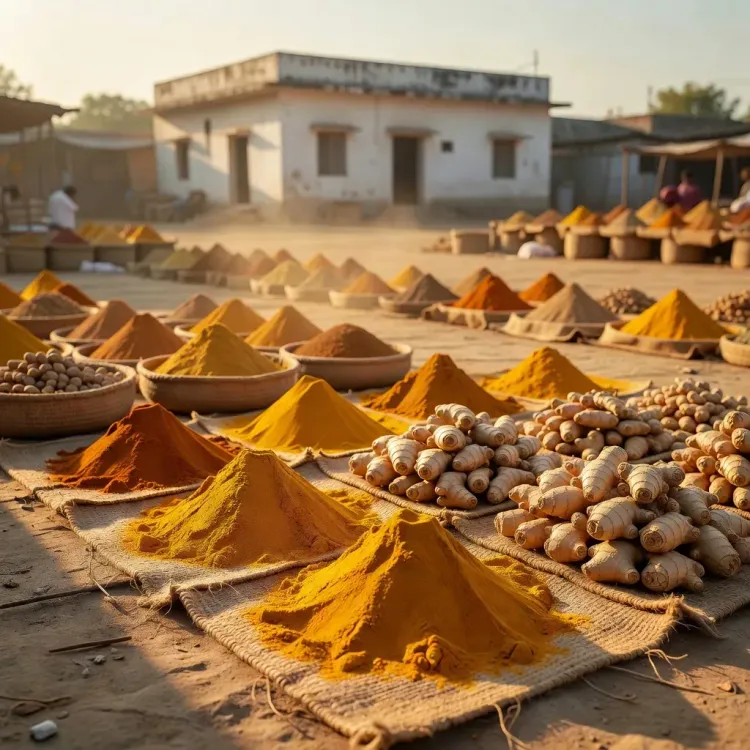
Assam is a significant producer of spices including ginger, turmeric, and large cardamom — crops whose export value hinges on meeting the stringent standards of buyers in the European Union, the United States, and the Gulf. Access to certified testing infrastructure has long been a structural gap for northeast India's agri-export ambitions.
Skill centre adds the human layer
Alongside the laboratory, the Skill Development and Training Centre targets the workforce gap — equipping farmers, processors, and traders with post-harvest handling, grading, and packaging know-how aligned with Spices Board protocols. Central commodity boards running such centres have historically unlocked funding under national skill and agricultural infrastructure schemes, giving the facility a dual revenue base from day one.
The Assam government under Dr. Sarma has made land allocation for value-addition infrastructure a recurring feature of its cabinet calendar — from food processing parks to cold-chain nodes. Today's decision follows that pattern, channelling a central body's mandate into a state-level asset for the northeast's farming economy.
What comes next for the facility
The immediate milestones to watch: formalisation of the land lease deed, the Spices Board's project sanction, and construction timelines. Once operational, the lab and training centre are expected to serve not just Assam but potentially the wider Northeast India spice belt — a region that has long sought parity with western and southern growing states in export-readiness infrastructure.
For Assam's spice growers, the cabinet table just moved the export finishing line a good deal closer.
Point of View
Assam sidesteps the need to independently fund testing infrastructure while gaining a permanent central-government asset on state soil — smart intergovernmental deal-making. The harder question is implementation speed; land-lease-to-operational timelines for such facilities have historically stretched years, and the northeast's spice exporters need the lab running before the next crop cycle, not the next election cycle. If delivered on time, it also sets a template for pulling other commodity boards — tea, jute, sericulture — into similar co-investment arrangements across the region.
NationPress
24 Sept 2026
Frequently Asked Questions
What did the Assam Cabinet decide about the Spices Board on September 24 2026?
The Assam Cabinet approved leasing land to the Spices Board of India for setting up a Quality Evaluation Laboratory, a Skill Development and Training Centre, and related facilities in the state.
What is the Spices Board of India?
The Spices Board is a statutory body under India's Ministry of Commerce and Industry that regulates quality standards, promotes exports, and supports development of the spice sector across the country.
How will the Spices Board laboratory benefit Assam farmers?
The Quality Evaluation Laboratory will allow Assam's spice growers and exporters to test their produce locally for international export standards, reducing costs and rejection rates at ports.
What spices does Assam produce?
Assam is a significant producer of ginger, turmeric, and large cardamom — crops with strong export potential to the EU, the US, and Gulf markets when they meet quality certification benchmarks.
Who is Himanta Biswa Sarma?
Dr. Himanta Biswa Sarma is the Chief Minister of Assam, in office since May 2021, and chairs the state cabinet that made today's Spices Board land-lease decision.