CM Himanta Chairs Assam Cabinet, Approves Key Policy Decisions
Synopsis
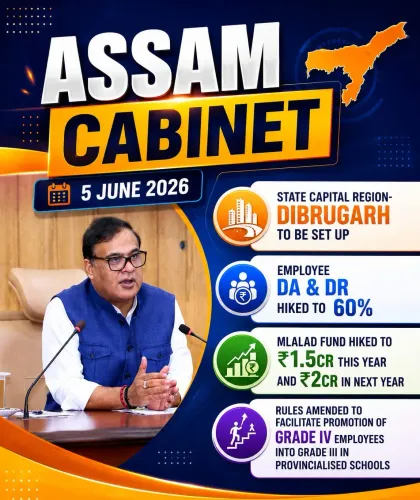
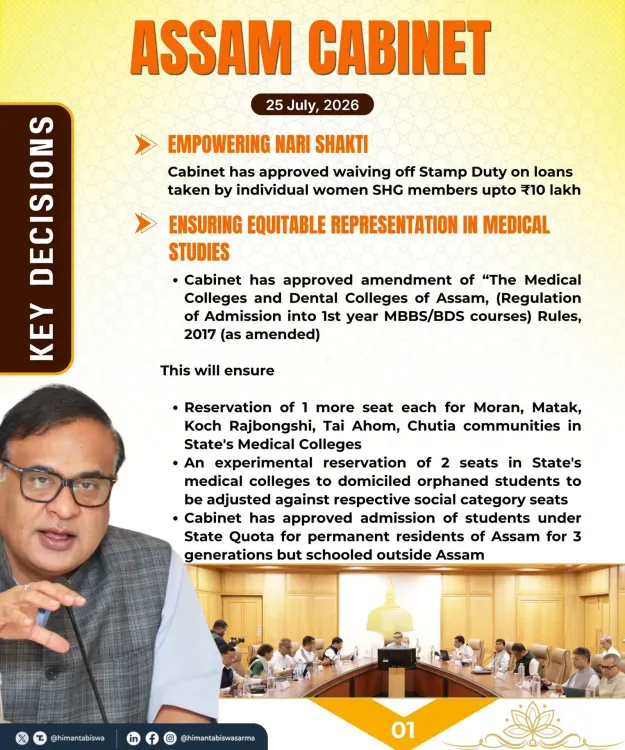
Assam Chief Minister Himanta Biswa Sarma chaired the weekly cabinet meeting on 25 July 2026, approving an experimental orphan quota in medical colleges, a stamp duty waiver for women under Nari Shakti, and streamlining of property registration and PDS procurement.
Key Takeaways
The Assam Cabinet met on 25 July 2026 under Chief Minister Himanta Biswa Sarma .
An experimental reservation for orphans in medical colleges was approved alongside equitable representation measures for all sections.
A stamp duty waiver for women was cleared under the Nari Shakti initiative to ease property transactions.
Reforms to property registration procedures and PDS procurement processes were approved to improve administrative efficiency.
Official notifications on quota percentages, eligibility criteria, and rollout timelines are yet to be issued.
Assam Chief Minister Himanta Biswa Sarma chaired the weekly Assam Cabinet meeting on Saturday, 25 July 2026, approving a set of policy decisions spanning medical college reservations, women-centric stamp duty relief, and administrative reforms in property registration and public food procurement.
Context
The cabinet cleared three broad policy directions in a single sitting. The first concerns equitable representation across sections of society in medical colleges, with an experimental reservation category introduced specifically for orphans — a demographic rarely addressed by mainstream quota frameworks in Indian states. The second decision extends a stamp duty waiver to women under the Nari Shakti initiative, reducing the financial burden on women purchasing or registering property. The third focuses on streamlining both property registration procedures and Public Distribution System (PDS) procurement processes.
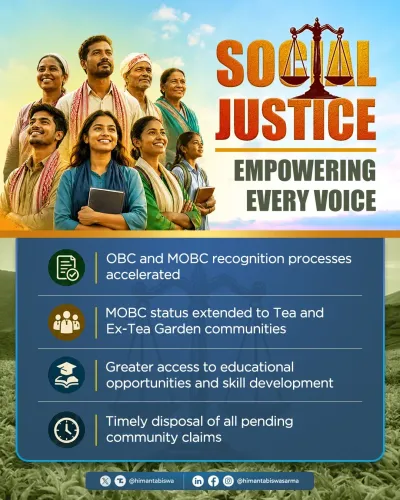
Chief Minister Sarma shared the decisions directly on social media, writing that the cabinet 'approved important policy decisions' covering these three areas, signalling the administration's intent to communicate governance milestones in real time.
Policy Backdrop
Assam's BJP-led government has periodically revised reservation policies in professional courses, including medical admissions, to address social equity concerns. Extending a quota category to orphans — even on an experimental basis — marks a notable departure from conventional reservation frameworks that typically address caste, tribe, or economic status.
Stamp duty concessions for women are not new to Assam; previous state administrations approved targeted waivers as part of women-centric welfare packages. The current move under the Nari Shakti banner, however, frames the relief within a broader empowerment narrative that the Himanta Biswa Sarma administration has pursued since 2021. Similarly, procedural reforms in property registration and PDS procurement align with an administrative modernisation drive seen across multiple Indian states aiming to cut red tape and reduce leakage.
Stakeholders and Impact
Medical aspirants from all social sections, and specifically children without parental guardianship, stand to be the most direct beneficiaries of the medical college reservation reform, should the experimental policy be formalised. The eligibility criteria and exact quota percentages are yet to be notified officially.
Women property buyers in Assam will benefit from the stamp duty waiver, lowering transaction costs on real estate purchases and potentially encouraging greater female asset ownership in the state. PDS beneficiaries — largely low-income households dependent on subsidised grain — may see improved supply-chain reliability if the procurement streamlining takes effect on the ground.
What's Next
Official government notifications are awaited that will detail the quota percentages for the orphan reservation, the eligibility criteria for the Nari Shakti stamp duty waiver, and the specific procedural changes to property registration and PDS procurement. Implementation schedules will determine how quickly these approvals translate into on-ground impact.
The decisions collectively reflect the Assam government's attempt to balance social inclusion with administrative efficiency — a pattern likely to inform the state's governance agenda in the months ahead as it approaches the next cycle of legislative scrutiny.
Point of View
Not competing, priorities. Cumulatively, these decisions reinforce Assam BJP's positioning ahead of future electoral cycles as a party that governs on both welfare delivery and systemic efficiency.
NationPress
25 Oct 2026
Frequently Asked Questions
What did the Assam Cabinet decide on 25 July 2026?
The Assam Cabinet approved three major policy directions: an experimental reservation for orphans in medical colleges alongside equitable representation measures, a stamp duty waiver for women under the Nari Shakti initiative, and streamlining of property registration and PDS procurement procedures.
What is the orphan reservation in Assam medical colleges?
The Assam Cabinet approved an experimental reservation category specifically for orphans in medical colleges — a step aimed at ensuring children without parental guardianship have equitable access to professional medical education. Exact quota percentages and eligibility criteria are yet to be officially notified.
What is the Nari Shakti stamp duty waiver in Assam?
The Nari Shakti stamp duty waiver is a cabinet-approved concession that reduces or eliminates stamp duty charges for women purchasing or registering property in Assam, lowering transaction costs and encouraging female asset ownership.
Who is Himanta Biswa Sarma?
Himanta Biswa Sarma is the Chief Minister of Assam since 2021, a senior BJP leader, and the convenor of the North-East Democratic Alliance (NEDA). He chairs the weekly Assam Cabinet meeting.
How will Assam streamline property registration and PDS procurement?
The cabinet approved measures to simplify procedural requirements in property registration and improve the procurement process under the Public Distribution System, though specific operational details and timelines are pending official notification.