Assam CM Himanta reviews ₹33,263 cr Finance Commission grants
Synopsis
Chief Secretary Dr Ravi Kota, acting on CM Himanta Biswa Sarma's directive, reviewed ₹17,829 crore under the 16th Finance Commission and ₹15,434 crore under the 7th Assam State Finance Commission for rural and urban local bodies, with a focus on audits, elections and geo-tagged accountability.
Key Takeaways
₹17,829 crore allocated to Assam under the 16th Finance Commission (2026–31) — ₹14,580 crore for Rural Local Bodies and ₹3,249 crore for Urban Local Bodies.
The 7th Assam State Finance Commission recommended ₹15,434 crore , split between ₹7,128 crore in devolution grants and ₹8,306 crore in specific grants for PRIs, ULBs and Sixth Schedule areas.
Proposals worth ₹347.46 crore for FY 2026–27 covering roads, drainage, street lighting, markets, sanitation and office infrastructure were placed under review.
Pending audits, utilisation certificates and outstanding liabilities from previous grants were flagged as priority clearances before new funds flow.
The state will deploy geo-tagging , third-party assessments and quarterly reviews as accountability tools for outcome-oriented spending.
Sixth Schedule area devolution, ULB constitution and timely local body elections were identified as structural issues requiring resolution within the 2026–31 cycle.
Over ₹33,000 crore in Finance Commission funds earmarked for Assam's local bodies came under the microscope on Tuesday, 17 November 2026, as the Chief Minister's Office of Assam announced a sweeping dual review — a signal that CM Dr Himanta Biswa Sarma is pushing hard to convert paper allocations into on-the-ground infrastructure and services.
Two commissions, one mandate: ₹33,263 crore for Assam's local bodies
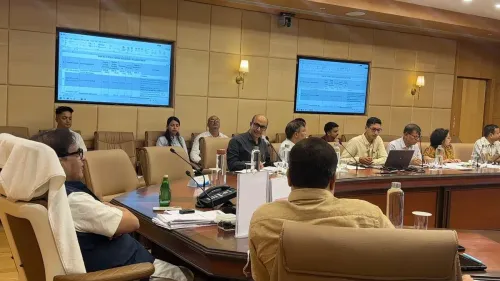
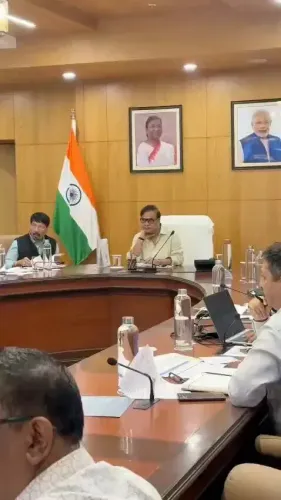
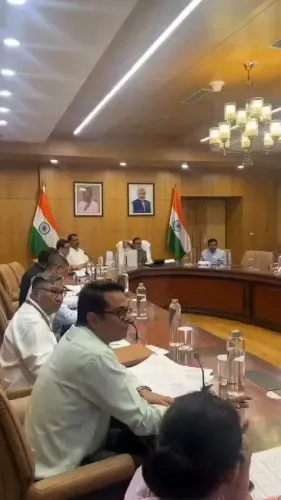
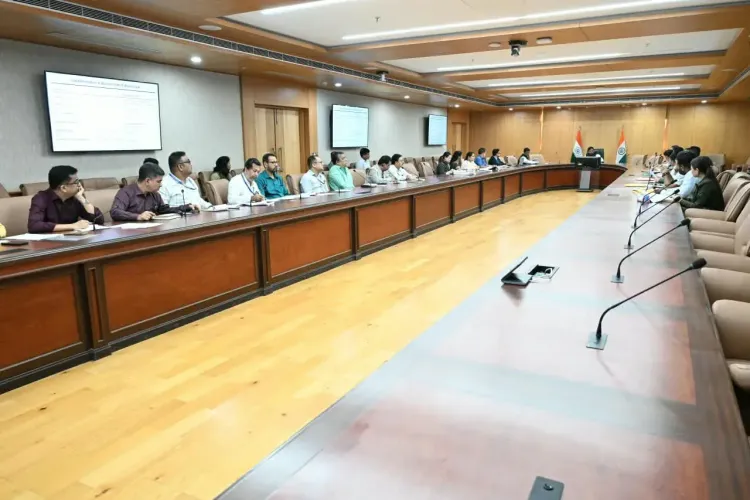
As directed by CM Dr Himanta Biswa Sarma, Chief Secretary Dr Ravi Kota chaired a twin high-level review in Guwahati — simultaneously convening the High-Level Monitoring Committee under the 16th Finance Commission and the State-Level Monitoring Committee under the 7th Assam State Finance Commission, both covering the period 2026–31. The combined agenda placed a combined outlay of roughly ₹33,263 crore on the table for scrutiny.
Under the 16th Finance Commission (2026–31), Assam's total allocation stands at ₹17,829 crore — split into ₹14,580 crore for Rural Local Bodies (RLBs) and ₹3,249 crore for Urban Local Bodies (ULBs). The meeting examined how Basic, Performance, tied and untied grants are being deployed, and pressed local bodies on revenue mobilisation and financial compliance — the conditions that unlock the next tranche of central money.
Sixth Schedule, pending audits and the ULB elections question
The committee did not stop at allocations. It dug into grant-release conditions, pending audits and utilisation certificates — the bureaucratic bottlenecks that have historically slowed fund flow in Assam. Discussions also surfaced the thorny issues of Sixth Schedule autonomous district areas, the constitution of Urban Local Bodies in newer towns, and the timely conduct of local body elections — a persistent governance gap the state has faced across successive finance commission cycles.
The Sixth Schedule of the Indian Constitution gives tribal areas in Assam — and several other northeastern states — autonomous district councils, creating a distinct legal and administrative layer that must be factored into any devolution formula. Getting Finance Commission funds to flow meaningfully into these areas has long been a challenge of coordination rather than intent.
₹15,434 crore under the 7th State Finance Commission — and ₹347 crore lined up for FY 2026–27
On the state side, the 7th Assam State Finance Commission has recommended ₹15,434 crore, comprising ₹7,128 crore in devolution grants and ₹8,306 crore in specific grants for Panchayati Raj Institutions (PRIs), ULBs and Sixth Schedule areas. For the immediate financial year 2026–27, proposals worth ₹347.46 crore were examined — covering roads, drainage, street lighting, markets, sanitation and office infrastructure.
Outstanding liabilities and pending utilisation certificates from earlier grants were also reviewed, underscoring the administration's attempt to close the loop on past spending before the new cycle accelerates.
Geo-tagging, third-party audits and the push for 'financially empowered' local institutions
The meeting landed on a clear institutional message: Finance Commission devolution must do more than move money. The committee emphasised geo-tagging of assets, quarterly reviews and third-party assessments as the accountability architecture for outcome-oriented expenditure. Regular inspections were flagged as non-negotiable for maintaining grant eligibility under performance-linked conditions.
The stated goal — articulated at the meeting — is to build 'financially empowered local institutions' capable of genuine grassroots planning, not just executing state-mandated schemes. That framing marks a shift in emphasis: from fund-transfer compliance toward institutional capacity, a distinction that will determine how much of the ₹33,263 crore actually translates into services that Assam's rural and urban residents can see and use.
With FY 2026–27 already under way and performance-linked tranches contingent on audit clearances, the pressure on district administrations and local body officials to clear the backlog — fast — just got official and very public.
Point of View
Not just allocation calendars — tying future tranches to audit compliance and performance metrics. The explicit flagging of Sixth Schedule areas and ULB elections reveals the structural fault lines in Assam's local governance that have persisted across multiple finance commission periods. Embedding geo-tagging and third-party assessment into the monitoring framework borrows from central scheme architecture, suggesting Assam is institutionalising a performance-linked model at the subnational tier. How quickly the state clears its pending utilisation certificate backlog will be the real test of whether this meeting is a turning point or a recurring ritual.
NationPress
17 Nov 2026
Frequently Asked Questions
How much money has Assam been allocated under the 16th Finance Commission?
Assam has been allocated ₹17,829 crore under the 16th Finance Commission for the period 2026–31, comprising ₹14,580 crore for Rural Local Bodies and ₹3,249 crore for Urban Local Bodies.
What is the 7th Assam State Finance Commission and what has it recommended?
The 7th Assam State Finance Commission is a state-level body recommending resource devolution to PRIs, ULBs and Sixth Schedule areas for 2026–31. It has recommended ₹15,434 crore — ₹7,128 crore in devolution grants and ₹8,306 crore in specific grants.
What are Sixth Schedule areas in Assam and why do they matter for Finance Commission grants?
Sixth Schedule areas in Assam are tribal regions governed by autonomous district councils under the Indian Constitution. They require a separate devolution mechanism, making coordination complex and historically leading to delays in Finance Commission funds reaching these communities.
What accountability measures did Assam announce for Finance Commission fund utilisation?
The monitoring committee directed implementation of geo-tagging of assets, third-party assessments , quarterly reviews and regular inspections to ensure outcome-oriented expenditure and institutional accountability across local bodies.
Who chaired the Finance Commission monitoring meeting in Assam on 17 November 2026?
Chief Secretary Dr Ravi Kota chaired both the High-Level Monitoring Committee under the 16th Finance Commission and the State-Level Monitoring Committee under the 7th Assam State Finance Commission, as directed by CM Dr Himanta Biswa Sarma .