CM Himanta Hails Sribhumi Police's ₹2.34 Cr Drug Bust
Synopsis
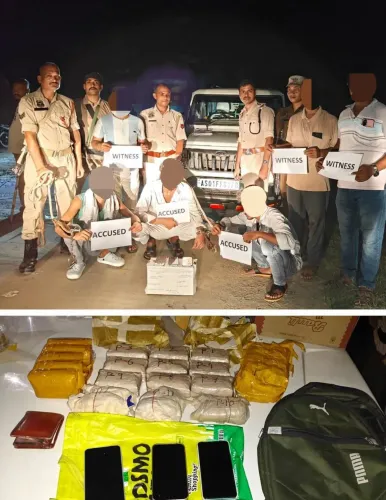
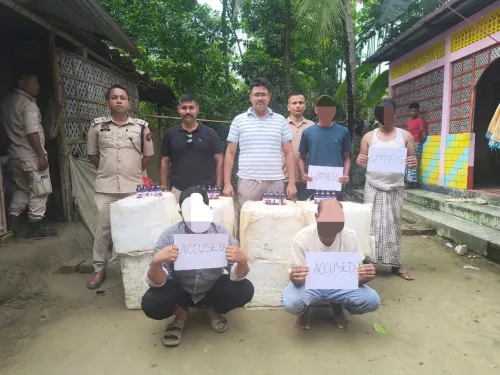
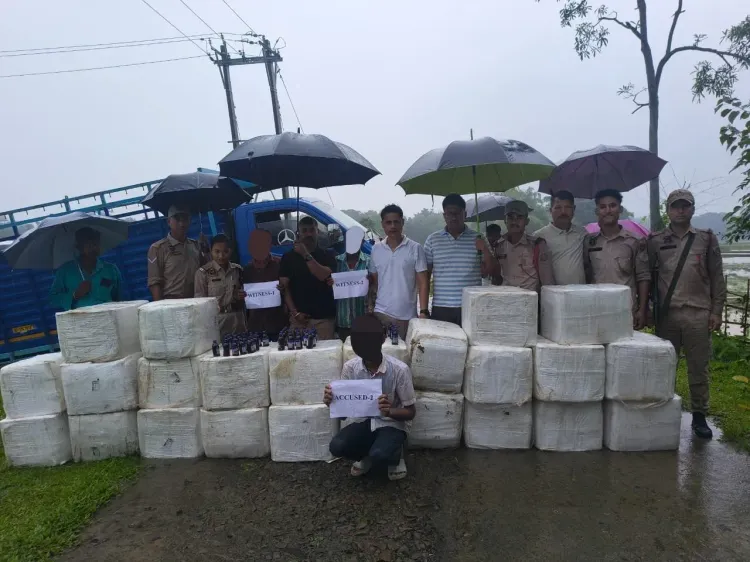
Assam Chief Minister Himanta Biswa Sarma on June 25, 2026, lauded Sribhumi Police for seizing 11,695 bottles of an intoxicating substance worth ₹2.34 crore and arresting three individuals, reinforcing the state's high-profile campaign against pharmaceutical drug networks under #AssamAgainstDrugs.
Key Takeaways
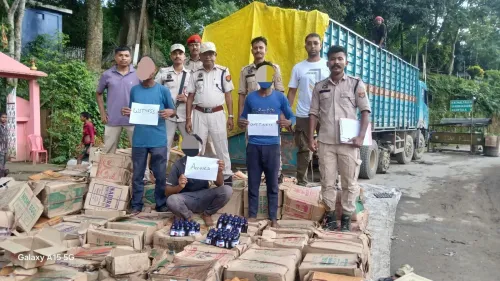
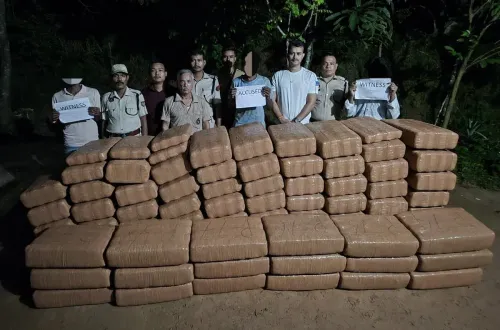
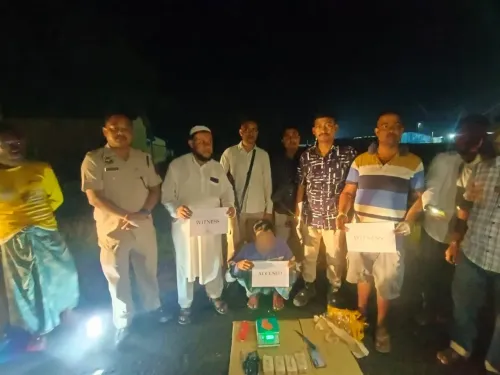
Sribhumi Police seized 11,695 bottles of an intoxicating substance valued at ₹2.34 crore and arrested three individuals .
CM Himanta Biswa Sarma personally commended the district unit on June 25, 2026 , via X under #AssamAgainstDrugs .
The operation fits Assam's sustained enforcement pattern against pharmaceutical intoxicant diversion networks active since 2021.
Cases of this scale are prosecuted under the Narcotic Drugs and Psychotropic Substances (NDPS) Act , which carries stringent sentencing provisions.
Investigators are expected to pursue the upstream supply chain to identify distributors and source networks beyond the three arrested.
The state government has signalled interest in tighter pharmaceutical retail licensing and stiffer repeat-offender penalties as legislative follow-up.
Assam Chief Minister Himanta Biswa Sarma on Thursday, June 25, 2026, publicly commended Sribhumi district police for seizing 11,695 bottles of an intoxicating substance and arresting three individuals, in an operation valued at ₹2.34 crore. The Chief Minister shared the development on X, framing it as a direct blow to an organised drug network operating in the state.
Context
Posting under the hashtag #AssamAgainstDrugs, CM Sarma credited @sribhumipolice with the bust, writing: 'Some lessons are expensive. For this drug network, the bill came to ₹2.34 crore.' The pointed language signals the state government's intent to publicise enforcement actions as a deterrent, putting traffickers on notice that Assam Police will 'always try harder.' The seized substance, described as an intoxicating liquid in bottle form, is consistent with the category of pharmaceutical intoxicants — including codeine-based cough syrups — that have been a recurring target of state enforcement drives.
Policy Backdrop
Since CM Sarma took office in 2021, Assam has maintained an aggressive and highly publicised anti-narcotics posture, conducting multiple large-volume seizures of pharmaceutical intoxicants under the Narcotic Drugs and Psychotropic Substances (NDPS) Act. Operations are routinely amplified by the Chief Minister on social media, a deliberate strategy to signal zero tolerance and build public accountability around enforcement outcomes. Sribhumi, a district in the Barak Valley region of southern Assam, has been among the areas where cross-border pharmaceutical diversion networks have been active.
The broader Northeast India region faces a distinct drug-trafficking challenge: the diversion of legally manufactured pharmaceutical products — cough syrups, sedatives, and similar substances — into illicit distribution chains targeting youth. State governments across the region have responded with district-level raids, stricter licensing for chemists, and social-media-driven awareness campaigns.
Stakeholders and Impact
Sribhumi Police, the district unit directly credited by the Chief Minister, stands to benefit institutionally from the public recognition, reinforcing a pattern where district forces are incentivised through visible praise from the top. For the three arrested individuals, the case will proceed under the NDPS Act, which carries stringent bail and sentencing provisions for commercial-quantity seizures. The network's supply chain — whether sourced from within Assam or routed through neighbouring states or international borders — will likely draw further investigative attention.
Assam's youth, identified by the state government as the primary demographic at risk from pharmaceutical intoxicant abuse, remain the stated beneficiary of these enforcement actions. Community groups and parents' associations in districts such as Sribhumi have previously welcomed high-profile crackdowns as visible evidence of state action.
What's Next
Investigators are expected to trace the supply chain behind the 11,695-bottle consignment to identify upstream distributors and manufacturers. The state government has signalled interest in supplementary legislation that would tighten pharmaceutical retail licensing and introduce harsher penalties for repeat offenders. District-level raids across Assam are likely to continue at pace, with CM Sarma using each publicised seizure to reinforce the administration's law-and-order credentials ahead of future electoral cycles. The challenge for enforcement agencies will be to move beyond seizures toward dismantling the logistics networks that replenish supply.
Point of View
Valued, and broadcast. This fits a broader pattern in which the Assam government has made anti-narcotics enforcement a cornerstone of its law-and-order identity since 2021, using each high-profile bust to sustain political momentum on the issue. The ₹2.34 crore valuation and precise bottle count lend the post a prosecutorial specificity that distinguishes it from routine congratulatory messaging. The real test, however, lies in whether district-level seizures translate into prosecutions that dismantle supply chains rather than simply remove one consignment from circulation.
NationPress
24 Sept 2026
Frequently Asked Questions
What did Sribhumi Police seize in the Assam drug bust?
Sribhumi Police seized 11,695 bottles of an intoxicating substance valued at ₹2.34 crore and arrested three individuals, as announced by CM Himanta Biswa Sarma on June 25, 2026.
What is #AssamAgainstDrugs?
#AssamAgainstDrugs is a social-media hashtag used by the Assam government and CM Himanta Biswa Sarma to publicise anti-narcotics enforcement actions across the state, part of a sustained campaign since 2021.
What law covers drug seizures of this kind in Assam?
Large-volume seizures of intoxicating substances in Assam are prosecuted under the Narcotic Drugs and Psychotropic Substances (NDPS) Act , which provides for stringent bail conditions and heavy sentences for commercial-quantity offences.
Where is Sribhumi district located in Assam?
Sribhumi is a district in the Barak Valley region of southern Assam , an area that enforcement agencies have identified as a corridor for pharmaceutical intoxicant trafficking.
Why does CM Himanta Biswa Sarma post about drug seizures on social media?
CM Sarma regularly publicises enforcement operations on social media to signal zero tolerance, incentivise district police units through public recognition, and reinforce the Assam government's law-and-order credentials with voters.