What Financial Assistance Scheme Did Assam CM Launch for Tea Garden Workers?
Click to start listening
Synopsis
Assam's Chief Minister Himanta Biswa Sarma has launched a significant financial aid initiative for over six lakh tea garden workers. The Mukhya Mantrir Eti Koli Duti Paat scheme is designed to enhance the welfare and socio-economic conditions of these vital contributors to Assam's tea industry. This move underscores the government's commitment to supporting marginalized communities.
Key Takeaways
- Financial aid: Rs 5,000 to over six lakh tea garden workers.
- Welfare initiatives: Mobile crèches and toilet services for better living conditions.
- Land rights: To be granted to tea garden labor line families.
- Educational access: Enhanced through model schools and scholarships.
- Support for women: Wage compensation for pregnant workers.
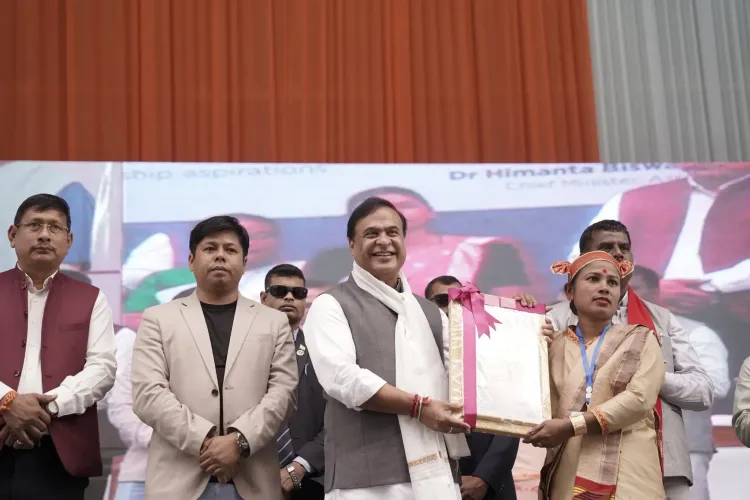
Guwahati, Jan 25 (NationPress) Emphasizing the Assam government’s commitment to the welfare of tea garden workers, Chief Minister Himanta Biswa Sarma unveiled the Mukhya Mantrir Eti Koli Duti Paat scheme on Sunday at Doomdooma in the Tinsukia district. This initiative will provide a one-time financial aid of Rs 5,000 to over six lakh workers statewide.
The scheme, which the Chief Minister described as a homage to the “invaluable contribution” of tea garden workers to Assam’s two-century-old tea industry, is expected to distribute more than Rs 300 crore to 6,03,927 permanent and casual workers from 836 tea gardens across 27 districts and 73 Assembly constituencies.
During the launch, Sarma stated that this initiative fulfilled another significant electoral promise of the current administration and emphasized its dedication to enhancing the socio-economic conditions of tea garden workers and indigenous communities.
He also mentioned that sufficient budgetary allocations had been made to guarantee the effective execution of the scheme.
“The world starts its day with a cup of Assam tea, yet the workers laboring in the fields often remain unnoticed. Just as we take pride in Assam tea, we must also honor the tea workers,” remarked the Chief Minister, noting that Assam’s tea industry is celebrating its 200th anniversary since its establishment during the British era.
As part of the event, the Chief Minister launched mobile crèches and mobile toilet services to ensure childcare, health, dignity, and safer working conditions for tea garden workers.
Pointing out a series of welfare initiatives, Sarma highlighted that the government has allocated 3 percent reservation for tea tribes and indigenous communities under the OBC category in Grade III and IV government positions.
He announced that land rights would soon be granted to families residing in tea garden labor lines, with application forms set to be distributed in early February and land pattas to be issued thereafter.
The Chief Minister also mentioned enhanced benefits under the Orunodoi scheme, improved educational access through model schools in tea garden areas, reserved seats in medical and paramedical programs, scholarships, self-employment support, mobile medical units, and wage compensation for pregnant women workers.
Commemorating 200 years of Assam’s tea industry, Sarma stated that similar events are organized across tea-growing constituencies to honor workers and encouraged beneficiaries to utilize the financial assistance for constructive purposes, particularly for their children’s education.
The ceremony concluded with a cultural performance by local youth, attended by various ministers, MLAs, senior officials, district administrators, and representatives from tea garden communities.
Point of View
The launch of the Mukhya Mantrir Eti Koli Duti Paat scheme highlights a significant commitment to social welfare by the Assam government. This initiative not only fulfills electoral promises but also addresses the pressing needs of tea garden workers, who play an essential role in Assam's economy. The distribution of financial aid and the introduction of welfare measures reflect the government's dedication to enhancing the living standards of marginalized communities.
NationPress
26/01/2026
Frequently Asked Questions
What is the Mukhya Mantrir Eti Koli Duti Paat scheme?
The Mukhya Mantrir Eti Koli Duti Paat scheme is a financial assistance program launched by Assam's Chief Minister, providing Rs 5,000 to over six lakh tea garden workers across the state.
Who will benefit from this scheme?
Over 6,03,927 permanent and casual workers employed in 836 tea gardens throughout Assam will benefit from this scheme.
What are the other welfare measures included in this scheme?
The scheme includes mobile crèches, mobile toilet services, land rights for families in tea garden labor lines, and enhanced benefits under the Orunodoi scheme.
How will the government support the implementation of this scheme?
The Assam government has made adequate budgetary provisions to ensure the successful implementation of the Mukhya Mantrir Eti Koli Duti Paat scheme.
What is the significance of this initiative?
This initiative pays tribute to the invaluable contributions of tea garden workers to Assam's tea industry and aims to improve their socio-economic conditions.