Assam CM Office: All Agencies Deployed as Cloudburst Floods Hit State

Synopsis
The Chief Minister's Office of Assam on 23 July 2026 confirmed deployment of all agencies to tackle unprecedented flooding triggered by a cloudburst in the hills. Relief operations include food, drinking water, medicines and sanitary napkins, with rescue efforts ongoing in affected areas.
Key Takeaways
The Chief Minister's Office of Assam confirmed on 23 July 2026 that all agencies are deployed on the ground for flood response.
The flooding was triggered by a cloudburst in the neighbouring hills area combined with excessive rainfall.
Relief distribution includes food, drinking water, medicines, and sanitary napkins for affected residents.
Rescue operations are actively continuing alongside relief distribution in the affected areas.
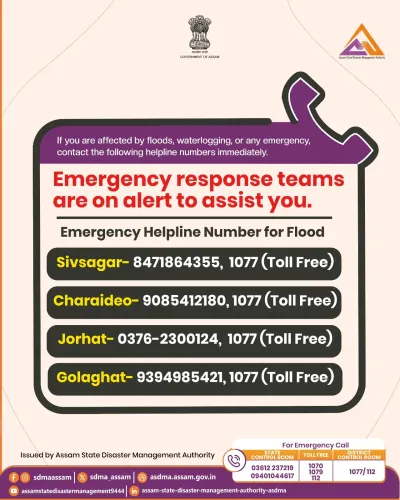
Assam's flood response operates under the Disaster Management Act, 2005 , involving the NDRF and ASDMA .
Damage assessments and potential requests for central assistance are expected as the situation develops.
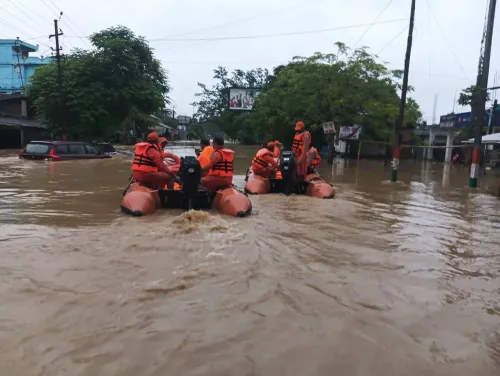
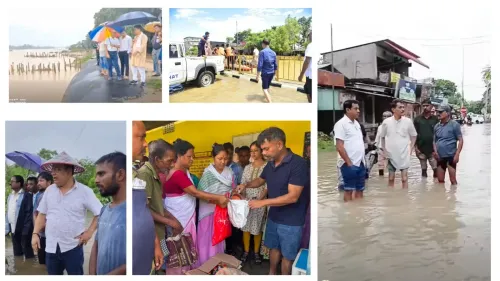
The Chief Minister's Office of Assam confirmed on Thursday, 23 July 2026 that all government agencies have been mobilised on the ground in response to an unprecedented flood situation triggered by a cloudburst in the neighbouring hills area and excessive rainfall across the state. Relief operations are actively underway, with distribution of food, drinking water, medicines, and sanitary napkins, while rescue efforts continue in the affected areas.
Context
The Chief Minister's Office of Assam stated that the flooding has been described as 'unprecedented', driven by a cloudburst in the hills bordering the affected region combined with heavy monsoon rainfall. The post, accompanied by four images, underscored the scale of the emergency and the multi-agency nature of the response. Relief materials being distributed include food packets, drinking water, medicines, and sanitary napkins — indicating attention to both immediate survival needs and hygiene requirements of flood-affected residents.
Policy Backdrop
Assam's flood response framework operates under the Disaster Management Act, 2005, which mandates coordinated deployment of state and central agencies during natural disasters. The Assam State Disaster Management Authority (ASDMA) serves as the nodal body activating multi-agency protocols, working alongside the National Disaster Response Force (NDRF), which is routinely deployed in the state during the monsoon season. Assam has historically been among India's most flood-prone states, with the Brahmaputra and Barak river systems swelling each year due to upstream rainfall and cloudbursts in the hilly terrain of neighbouring regions.
The state administration has over the years combined emergency relief operations with longer-term infrastructure projects, including embankment reinforcement and drainage improvement works, to address the recurring nature of monsoon flooding. The explicit mention of sanitary napkins in the relief package reflects an evolution in disaster response protocols that now formally account for the specific needs of women in affected communities.
Stakeholders and Impact
Residents in the flood-affected areas are the primary stakeholders, facing displacement, loss of access to food and clean water, and disruption to daily life. The coordinated deployment of 'all agencies' as cited by the Chief Minister's Office signals involvement of state police, civil administration, NDRF, ASDMA, and health department personnel. The inclusion of medicines in the relief distribution points to public health concerns — waterborne diseases and injuries are common secondary risks during prolonged flooding.
Communities in low-lying areas adjacent to the hills are typically the most vulnerable during cloudburst-triggered floods, as the speed and volume of water runoff from hilly terrain can overwhelm drainage systems rapidly, leaving residents with little warning time.
What's Next
Authorities are expected to release damage assessments covering the number of affected villages, displaced persons, and losses to crops and infrastructure as the situation stabilises. The state government may formally request additional central assistance — including additional NDRF teams or financial relief under the National Disaster Response Fund — depending on the scale of damage. Progress on ongoing flood mitigation infrastructure works, including embankment projects along vulnerable river stretches, will also be closely watched as the monsoon season continues through September 2026.
The recurrence of cloudburst-triggered flooding in Assam each monsoon season underscores the urgency of accelerating upstream watershed management and early-warning system improvements that can give communities critical lead time before floodwaters arrive.
Point of View
A shift from earlier years when such items were rarely mentioned in official statements. Assam's annual flood cycle, driven by its geography at the confluence of Himalayan river systems and hilly catchment areas, continues to test the limits of existing mitigation infrastructure, making each monsoon season a political as well as humanitarian test for the state administration. The characterisation of this event as 'unprecedented' will likely shape the scale of central assistance sought and the political narrative around long-term flood management investment in the state.
NationPress
23 Jul 2026
Frequently Asked Questions
What caused the Assam floods in July 2026?
The flooding was triggered by a cloudburst in the neighbouring hills area combined with excessive rainfall, according to the Chief Minister's Office of Assam on 23 July 2026.
What relief is being provided to flood-affected people in Assam?
Relief operations include distribution of food, drinking water, medicines, and sanitary napkins, alongside active rescue efforts in the affected areas.
Which agencies are responding to the Assam floods?
The Chief Minister's Office stated that all agencies are on the ground, which typically includes the NDRF, ASDMA, state police, civil administration, and health department personnel.
Why does Assam flood every year during monsoon?
Assam is highly vulnerable to annual monsoon flooding due to the Brahmaputra and Barak river systems, which swell from heavy rainfall and cloudbursts in the upstream hilly and Himalayan regions.
What law governs flood disaster response in Assam?
Flood and disaster response in Assam is governed by the Disaster Management Act, 2005, under which the Assam State Disaster Management Authority coordinates multi-agency operations.