Assam CM Office Highlights Railway Modernisation Push
Synopsis
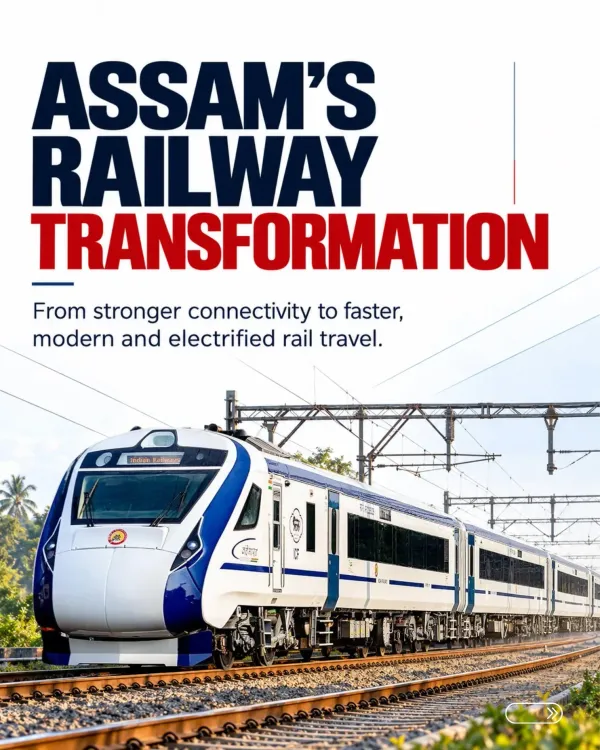
The Chief Minister's Office of Assam has highlighted the state's railway transformation, citing 100% electrification, Vande Bharat services, new bridges, broad-gauge conversion, and rail-line doubling as markers of a new connectivity era for the Northeast.
Key Takeaways
100% electrification of Assam's broad-gauge rail network is cited as a key milestone in the state's connectivity upgrade.
Vande Bharat Express services, India's semi-high-speed flagship train first launched in 2019 , now operate in Assam.
Northeast Frontier Railway completed multiple broad-gauge conversion projects in Assam between 2014 and 2024 .
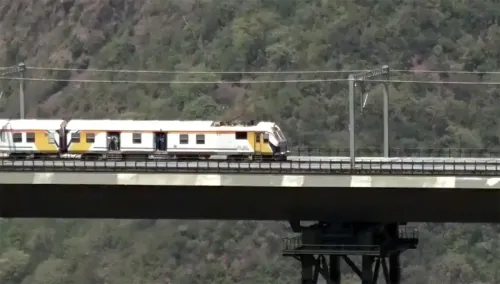
New bridges over Brahmaputra tributaries have unlocked rail routes previously blocked by engineering constraints.
Rail-line doubling on key corridors reduces freight and passenger bottlenecks, directly benefiting Assam's tea, petroleum, and agricultural sectors.
The Ministry of Railways was directly tagged in the CMO's post, signalling coordinated Centre-state messaging on infrastructure progress.
A northeastern state once defined by its connectivity gaps is now being redefined by the roar of electric locomotives and semi-high-speed rail. The Chief Minister's Office of Assam on Wednesday, 30 September 2026 spotlighted the state's sweeping railway transformation — from 100% electrification and Vande Bharat services to new bridges, broad-gauge conversion, and doubled rail lines — framing it as the arrival of a genuinely new era for the Northeast.
From Metre Gauge to Vande Bharat: What Has Changed
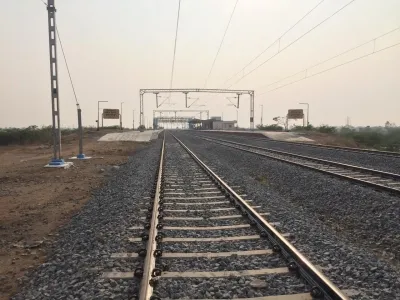
For decades, Assam and the broader Northeast sat at the margins of India's rail map — narrow gauges, missing links, and painfully slow freight corridors. That picture has shifted materially. The Northeast Frontier Railway completed multiple broad-gauge conversion projects across the state between 2014 and 2024, stitching Assam more tightly into the national network. Electrification of the broad-gauge network — a target Indian Railways set in the 2021-22 Union Budget — has been a parallel priority, cutting diesel dependence and slashing operating costs on key corridors.
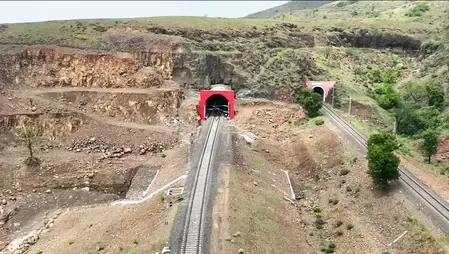
The arrival of Vande Bharat Express services is the most visible symbol of that shift. First launched nationally in 2019 as the flagship of Indian Railways' modernisation drive, the semi-high-speed trains now connect Assam to the wider country at speeds and comfort levels the region had not seen before. New bridges over the Brahmaputra and its tributaries — engineering challenges that once made rail expansion in the state a logistical nightmare — have unlocked routes that planners had mapped for years.
Why Rail Doubling Matters for Assam's Economy
Doubling of rail lines — running parallel tracks on busy single-line corridors — is the unglamorous but consequential piece of this puzzle. Single-track sections create bottlenecks that slow both passenger trains and freight, and Assam's tea, petroleum, and agricultural cargo have long paid the price. Doubled lines raise throughput, reduce delays, and make the corridor attractive for time-sensitive goods movement. For Northeast businesses and the millions of residents who depend on rail as their primary long-distance link, that is not an infrastructure statistic — it is a livelihood change.
The broader pattern here is deliberate policy: since the mid-2010s, successive Union Budgets have ring-fenced capital for the Northeast, treating connectivity as both an economic and a strategic imperative. Assam, as the region's largest state and its commercial hub, sits at the centre of that push. The Ministry of Railways — tagged directly in the CMO's post — has been the executing arm of that ambition.
What Comes Next on the Northeast Rail Map
The CMO's post is as much a progress report as it is a signal of direction. Remaining rail-doubling projects on key Assam corridors and the potential announcement of new Vande Bharat routes in upcoming railway budgets will be the next benchmarks. The question is whether the pace of execution matches the scale of the ambition — and whether the freight and passenger numbers that follow will confirm what the infrastructure now promises.
Assam is no longer waiting for connectivity. It is building the case that connectivity has arrived.
Point of View
The state government is co-branding a federal investment as a local delivery, a pattern increasingly common in India's Centre-state political economy. The emphasis on Vande Bharat — a high-visibility product — alongside the more technical wins of electrification and gauge conversion suggests an audience that spans both urban commuters and rural freight stakeholders. The real test of this narrative will be freight volume data and passenger load factors on newly electrified and doubled corridors over the next two budget cycles.
NationPress
30 Sept 2026
Frequently Asked Questions
What railway upgrades has Assam completed recently?
Assam has achieved 100% broad-gauge electrification, introduced Vande Bharat Express services, completed broad-gauge conversion projects, built new river bridges, and doubled key rail lines to increase capacity and reduce travel times.
Does Vande Bharat Express run in Assam?
Yes, Vande Bharat Express services now operate in Assam as part of Indian Railways' broader modernisation push into the Northeast, offering semi-high-speed connectivity to the rest of the country.
What is broad-gauge conversion and why does it matter for Assam?
Broad-gauge conversion replaces older, narrower metre-gauge tracks with the standard broad gauge used across most of India, allowing faster trains, heavier freight loads, and seamless national connectivity — a critical upgrade for a region historically reliant on narrow-gauge lines.
Why is rail doubling important for Assam's economy?
Doubling rail lines — adding a parallel track on single-line corridors — removes bottlenecks that slow freight and passenger movement. For Assam's tea, petroleum, and agricultural exports, faster and more reliable rail access directly reduces logistics costs.
Which railway zone covers Assam?
Assam falls under the Northeast Frontier Railway zone, which has been the primary executing agency for gauge conversion, electrification, and new bridge projects in the state over the past decade.