What Major Milestones Did Indian Railways Achieve in 2025?
Synopsis
In 2025, Indian Railways launched significant projects worth over Rs 25,000 crore aimed at revolutionizing rail travel by enhancing safety, speed, and comfort. With numerous trains and modernization efforts, the railways set a new standard in passenger services and operational efficiency, paving the way for a promising 2026.
Key Takeaways
Investment of Rs 25,000 crore in 42 projects to modernize railways.
Introduction of 15 new Vande Bharat Express trains .
Completion of the first vertical-lift rail bridge at Pamban.
Significant focus on track renewals for safer travel.
Electrification progress at 99.2 percent of the Broad Gauge network.
New Delhi, Dec 28 (NationPress) A total of 42 initiatives by Indian Railways, encompassing innovation, indigenization, track renewals, electrification efforts, and 'airport-like amenities' at revamped stations, were launched in 2025 with an investment exceeding Rs 25,000 crore. These projects aim to enhance passenger and freight train safety and speed, as stated officially on Sunday.
The upcoming year promises improved sleeper travel for long-distance trips through Vande Bharat and Amrit Bharat trains, significantly reducing journey times and providing travelers with premium food and beverage options at train stations, according to a year-end assessment by the Ministry of Railways.
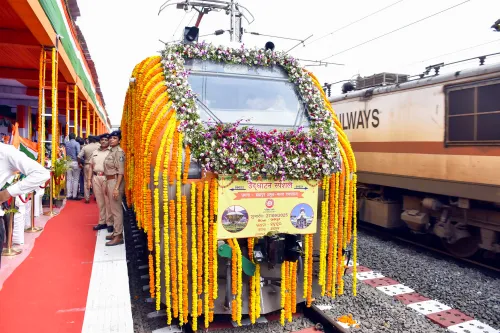
In 2025, Indian Railways launched 15 Vande Bharat Express trains. As of December 26, a total of 164 Vande Bharat services are operational across the network. The anticipated Vande Bharat Sleeper is poised to revolutionize overnight travel by merging speed, comfort, and modern conveniences for long-distance passengers.
Additionally, 13 Amrit Bharat Express trains, which are entirely non-AC, have been introduced, bringing the total to 30 Amrit Bharat train services in operation to cater to the general public.
Furthermore, Namo Bharat Rapid Rail Services are tailored for high-frequency and regional connectivity, enhancing short and medium-distance travel in high-demand corridors.
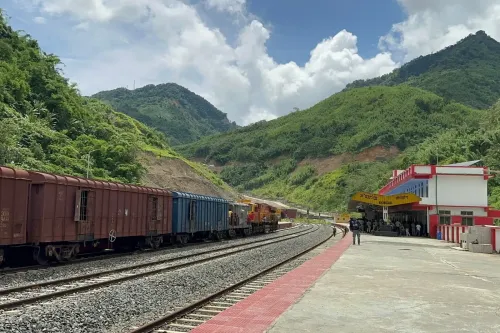
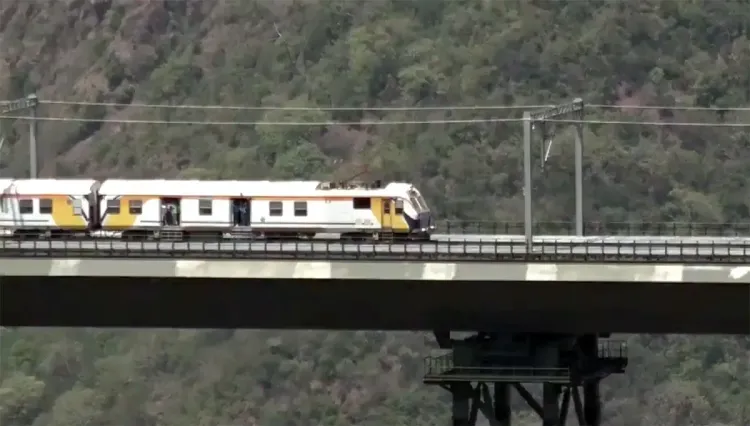
Among the landmark projects completed this year is the inauguration of the country’s first vertical-lift rail bridge at Pamban, improving connectivity to Kashmir with all-weather rail links (including the world's highest Chenab bridge), and expanding rail access to the Northeast with the new Bairabi–Sairang line.
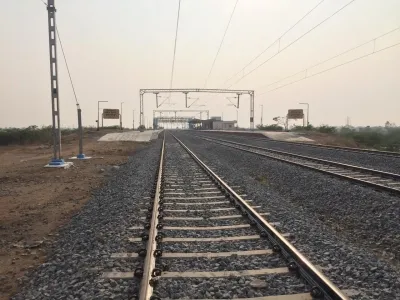
From April 1 to November 30, Indian Railways has added over 900 kilometers of new track lines. Alongside this, there has been a significant focus on renewing existing rail tracks to ensure safer, quicker, and more comfortable travel. This year, track renewal efforts have spanned 6,880 track km, with new rails laid and complete renewals achieved over 7,051 track km, according to the statement.
Between 2014 and 2025, approximately 34,428 km of new track was completed, averaging 8.57 km/day, which is more than double the average of 4.2 km/day recorded from 2009 to 2014.
These modernization initiatives are further bolstered by increasing sectional speeds to enhance train operations and passenger comfort. Sectional speeds have been raised to 130 kmph over 599 track km, including segments of the Golden Quadrilateral, Golden Diagonal, and other B routes. Additionally, speeds of 110 kmph have been attained over 4,069 track km, integrating infrastructure enhancements with advanced track machinery for faster and safer train operations.
Electrification of the railway network has been prioritized. To date, around 99.2 percent of the Broad Gauge (BG) network has been electrified. Efforts are ongoing to electrify the remaining sections. This achievement surpasses the electrification levels of the UK (39 percent), Russia (52 percent), and China (82 percent). Fourteen Railway Zones and 25 states/Union Territories have now achieved complete electrification.
In FY 2025-26 (up to November 2025), over 4,224 hi-tech LHB coaches were produced, representing an 18 percent increase compared to the previous year. Production during the 2014-25 period has risen 18-fold compared to 2004-14, resulting in safer and more comfortable journeys.
Indian Railways has made significant strides in modernization, producing over 42,600 LHB coaches in the past 11 years, known for their superior safety standards and operational efficiency.
Safety performance has also seen marked improvement. Consequential Train Accidents dropped from 1711 (an average of 171 per year) during 2004-14 to just 31 in 2024-25 and further down to 11 in 2025-26 (up to November 2025). The safety budget has nearly tripled, rising from Rs 39,463 crore in FY 2013-14 to Rs 1,16,470 crore this financial year. The number of fog safety devices has surged from 90 in 2014 to 25,939 in 2025. Over the last four months, Centralised Electronic Interlocking and Track Circuiting have been completed at 21 stations, as stated.
Kavach Version 4.0, the latest Automatic Train Protection (ATP) system developed in India, has been implemented over 738 route kilometers. This system assists the Loco Pilot in maintaining trains within prescribed speed limits by automatically applying brakes in cases of human error and enabling safe operations during adverse weather conditions.
Meanwhile, the 508 km Mumbai-Ahmedabad High Speed Rail (MAHSR) Project has achieved a physical progress rate of 55.63 percent as of November 30, with overall financial progress reaching 69.62 percent and an expenditure of Rs 85,801 crore, the statement concluded.
Point of View
It is imperative to recognize the monumental progress Indian Railways has made in 2025. The ambitious projects undertaken not only enhance connectivity but also prioritize safety and modernization, ensuring that rail travel remains a reliable option for the nation's populace. This commitment to innovation and infrastructure development reflects a robust vision for the future of rail transport in India.
NationPress
27 Sept 2026
Frequently Asked Questions
What are the key projects launched by Indian Railways in 2025?
Indian Railways commissioned 42 projects including electrification, track renewals, and the introduction of Vande Bharat and Amrit Bharat trains, aimed at enhancing safety and speed.
How many Vande Bharat trains are operational?
As of December 26, 2025, a total of 164 Vande Bharat trains are running across the Indian Railways network.
What safety measures have been implemented by Indian Railways?
Indian Railways has seen a drop in train accidents and increased spending on safety measures, including the introduction of the Kavach Version 4.0 Automatic Train Protection system.
What is the status of the Mumbai-Ahmedabad High Speed Rail Project?
As of November 30, 2025, the Mumbai-Ahmedabad High Speed Rail Project has achieved 55.63 percent physical progress and 69.62 percent financial progress.
How much of the railway network has been electrified?
Approximately 99.2 percent of the Broad Gauge network has been electrified, surpassing other countries' electrification levels.