Did the Vande Bharat Sleeper Train Achieve 180 kmph in High-Speed Trials?
Synopsis
The completion of the high-speed trial for the Vande Bharat Sleeper Train is a pivotal moment for Indian Railways, showcasing advancements in technology and safety. This train is set to revolutionize long-distance travel in India with its impressive speed and modern amenities.
Key Takeaways
The Vande Bharat Sleeper Train reached a maximum speed of 180 kmph during trials.
It is designed for long-distance travel, enhancing passenger comfort and safety.
Advanced safety features ensure a secure travel experience.
The train incorporates modern technology for improved energy efficiency.
Special facilities are available for differently-abled passengers.
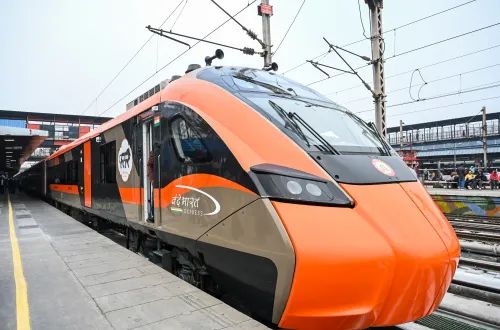
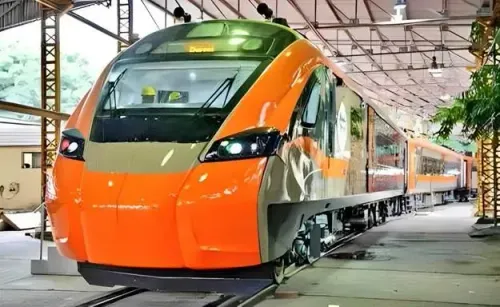
New Delhi, Dec 31 (NationPress) On Wednesday, Indian Railways successfully finalized the high-speed test of its indigenous Vande Bharat Sleeper Train, marking a significant advancement in India's ambition for modern and self-sufficient rail technology.
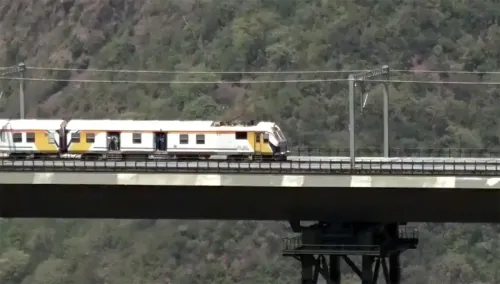
The trial, conducted under the oversight of the Commissioner of Railway Safety, took place on the Kota–Nagda section, where the train reached a remarkable speed of 180 kmph.
The ministry confirmed that the train excelled in all safety and technical assessments, leading to a successful trial declaration.
Throughout the high-speed run, extensive evaluations were performed, focusing on ride stability, vibration, oscillation behavior, braking systems, emergency braking responsiveness, and other crucial safety elements.
Remarkably, the train maintained stability and safety even at elevated speeds, achieving an essential regulatory milestone.
Union Minister for Railways, Information and Broadcasting, and Electronics and Information Technology, Ashwini Vaishnaw, shared a video of the trial on social media.
The footage showcased the Vande Bharat Sleeper Train gliding smoothly at 180 kmph, including a water-glass test demonstrating that glasses filled with water stayed steady without spilling.
This demonstration underscored the train's advanced suspension system and exceptional ride comfort.
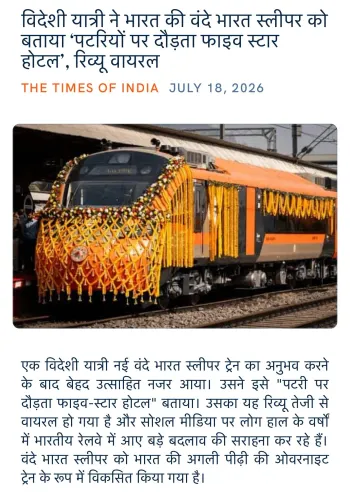
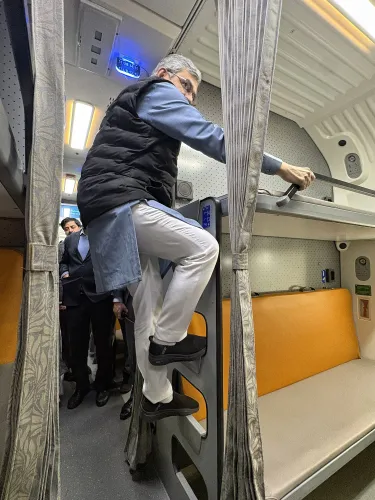
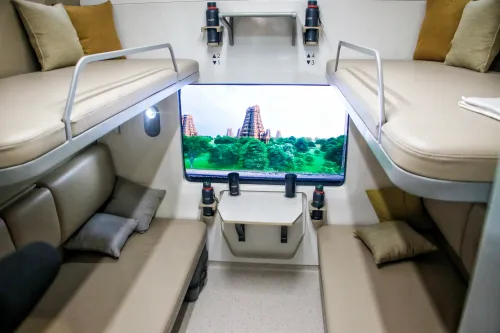
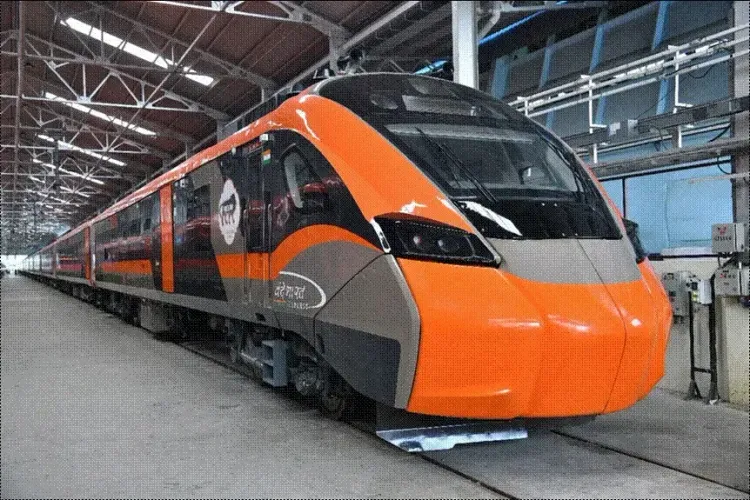
The 16-coach Vande Bharat Sleeper Train has been designed for long-distance travel, incorporating modern amenities aimed at enhancing passenger comfort and safety.
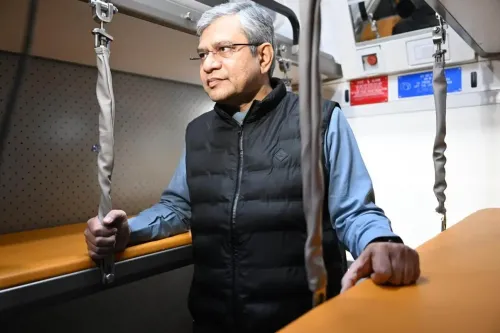
It includes comfortable sleeper berths, automatic doors, enhanced suspension, modern toilets, digital passenger information systems, and energy-efficient technologies.
Additionally, advanced fire detection, safety monitoring systems, and CCTV-based surveillance are integrated into the train.
For safety and technology, the train features the KAVACH automatic train protection system, crashworthy couplers, anti-climbers, and fire barrier doors.
It also boasts regenerative braking for improved energy efficiency, UV-C-based air disinfection in air-conditioning units, centrally controlled automatic plug doors, and wider sealed gangways.
Emergency communication systems enable passengers to connect directly with the train manager or loco pilot when necessary, alongside special provisions for Divyangjan passengers.
Point of View
The successful trial of the Vande Bharat Sleeper Train signifies an important milestone for India’s railway infrastructure and its commitment to technological advancement. This initiative not only enhances passenger experience but also aligns with the nation’s vision for self-reliance in transportation.
NationPress
1 Oct 2026
Frequently Asked Questions
What is the maximum speed achieved by the Vande Bharat Sleeper Train?
The Vande Bharat Sleeper Train achieved a top speed of 180 kmph during its final high-speed trial.
What safety features are included in the Vande Bharat Sleeper Train?
The train is equipped with the KAVACH automatic train protection system, crashworthy couplers, anti-climbers, and fire barrier doors to ensure passenger safety.
What modern amenities does the Vande Bharat Sleeper Train offer?
It offers comfortable sleeper berths, automatic doors, modern toilets, digital passenger information systems, and energy-efficient technologies.
Who supervised the high-speed trial of the train?
The trial was conducted under the supervision of the Commissioner of Railway Safety.
Are there special facilities for Divyangjan passengers?
Yes, the Vande Bharat Sleeper Train includes special provisions to accommodate the needs of Divyangjan passengers.