Sonowal keynotes India Shipbuilding Investment Conclave 2026

Synopsis
Union Minister Sarbananda Sonowal keynoted the India Shipbuilding Investment Conclave 2026 in New Delhi, spotlighting India's drive to grow domestic shipbuilding capacity under Atmanirbhar Bharat and Maritime India Vision 2030.
Key Takeaways
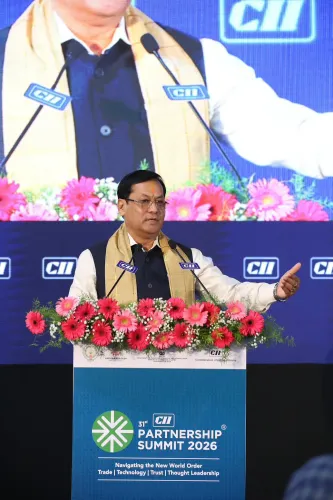
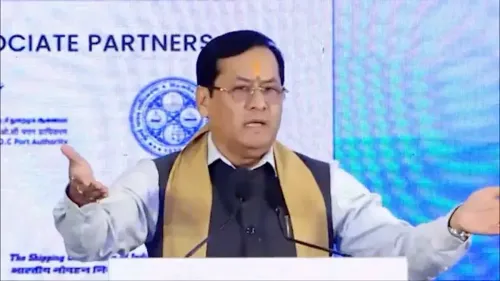
Sarbananda Sonowal delivered the keynote address at the India Shipbuilding Investment Conclave 2026 in New Delhi on November 16, 2026 .
The conclave targets private investment in domestic shipbuilding, a sector India is prioritising under Atmanirbhar Bharat .
India's maritime policy backbone includes the Sagarmala project (launched 2015 ) and Maritime India Vision 2030 (released 2021 ).
India's current share of global shipbuilding output remains limited, with policymakers aiming to close the gap against China, South Korea, and Japan .
Investment commitments and new incentive schemes from the conclave are expected to feed into future budget and maritime policy updates.
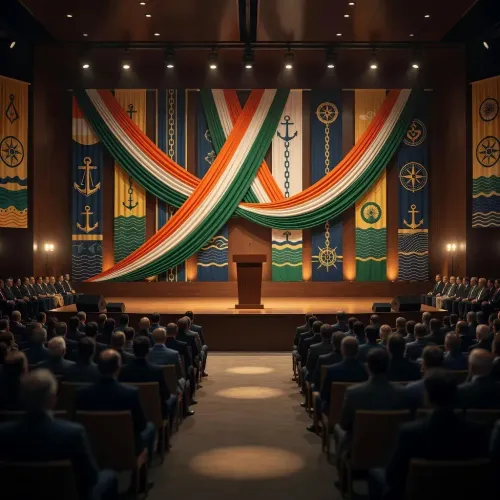
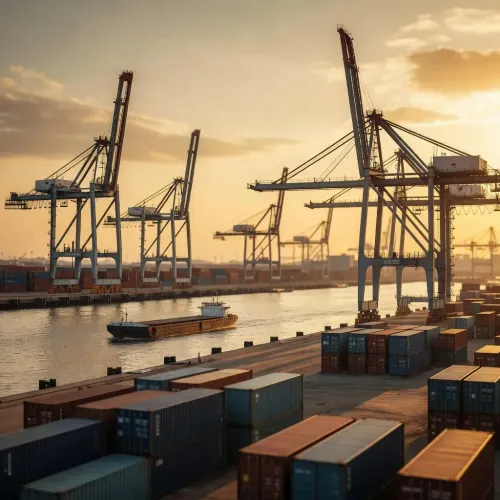
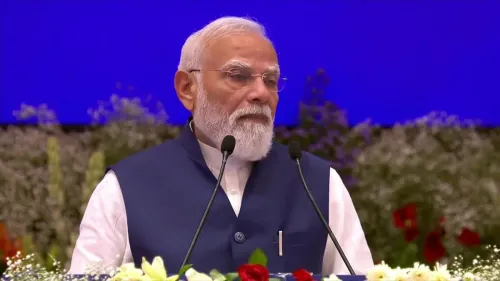
India's maritime ambitions took centre stage in New Delhi on Monday, November 16, 2026, as Union Minister of Ports, Shipping and Waterways Sarbananda Sonowal delivered the keynote address at the India Shipbuilding Investment Conclave 2026 — a high-stakes gathering designed to draw capital into one of the country's most strategically targeted industrial sectors.
Why a shipbuilding conclave matters right now
India currently accounts for a fraction of global shipbuilding output, a gap that policymakers have been determined to close. The government's Atmanirbhar Bharat push has explicitly identified domestic shipbuilding as a lever for self-reliance — reducing dependence on foreign-built vessels while creating high-skill manufacturing jobs along the coastline.
That ambition has a policy spine stretching back over a decade. The Sagarmala project, launched in 2015, laid the groundwork for port-led development and coastal shipping infrastructure. Maritime India Vision 2030, released in 2021, sharpened the target: expand domestic shipbuilding capacity and grow India's share of the global maritime manufacturing market. The conclave sits squarely within that arc.
Sonowal's role at the helm of maritime policy
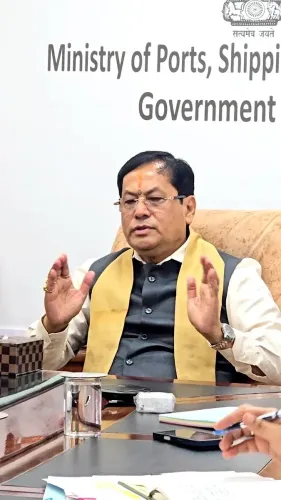
Sarbananda Sonowal, a senior BJP leader and former Chief Minister of Assam, has been the face of India's ports and waterways transformation since taking charge of the ministry. His keynote signals the Centre's intent to convert policy frameworks into live investment conversations — placing shipbuilders, financiers, and policymakers in the same room to move from vision documents to committed capital.
Shipbuilding is a long-cycle industry: a decision made in a conference hall today can take years to materialise on a dry dock. That makes conclaves like this one genuinely consequential. Investment pledges, incentive structures, and financing partnerships announced here will shape what India can actually build — and how fast.
What the industry is watching for
The conclave brings together shipbuilding industry players and maritime investors at a moment when global supply-chain realignments are creating openings for new entrants. Successive Indian maritime policies have combined infrastructure upgrades with financial incentives to attract private investment in shipyards — the question now is whether those incentives are sharp enough to compete with established shipbuilding giants in China, South Korea, and Japan.
Investment commitments or new incentive schemes emerging from today's conclave will be the number to watch — and their eventual reflection in budget allocations or updated maritime policy will tell the fuller story.
India has the coastline, the policy intent, and now a ministerial keynote anchoring the pitch. Whether the capital follows is the only question left on the table.
Point of View
However, lies in whether the incentive architecture unveiled here — financial, regulatory, or infrastructural — is competitive enough to shift the calculus for private investors eyeing cheaper or more mature alternatives abroad. How the conclave's outcomes translate into the next Union Budget's maritime allocation will be the clearest indicator of genuine momentum.
NationPress
16 Nov 2026
Frequently Asked Questions
What is the India Shipbuilding Investment Conclave 2026?
The India Shipbuilding Investment Conclave 2026 is a high-level industry and policy event held in New Delhi aimed at attracting private capital into India's domestic shipbuilding sector, with Union Minister Sarbananda Sonowal delivering the keynote address on November 16, 2026.
What is India's Maritime India Vision 2030?
Maritime India Vision 2030 is a government framework released in 2021 that sets targets for expanding India's domestic shipbuilding capacity and growing the country's share of global maritime manufacturing.
What is the Sagarmala project?
The Sagarmala project, launched in 2015, is a central government initiative to promote port-led development, modernise port infrastructure, and boost coastal shipping across India.
Why is India focusing on domestic shipbuilding?
India is pushing domestic shipbuilding as part of Atmanirbhar Bharat to reduce reliance on foreign-built vessels, grow high-skill manufacturing jobs, and compete with established shipbuilding nations like China, South Korea, and Japan.
Who is Sarbananda Sonowal?
Sarbananda Sonowal is India's Union Minister of Ports, Shipping and Waterways, a senior BJP leader, and a former Chief Minister of Assam who has been central to shaping India's maritime infrastructure policy.