Has the Vande Bharat sleeper train completed its high-speed trial on the Kota-Nagda section?
Synopsis
The Vande Bharat Sleeper Train has achieved a remarkable milestone with its successful high-speed trial on the Kota-Nagda section, reaching speeds of 180 kmph. This achievement highlights India's commitment to innovative rail technology and sets the stage for introducing advanced sleeper services.
Key Takeaways
High-speed trial reached 180 kmph.
Vande Bharat Sleeper Train designed and manufactured in India.
Comprehensive technical evaluations conducted during the trial.
Features advanced safety systems like KAVACH.
Designed for long-distance travel with modern amenities.
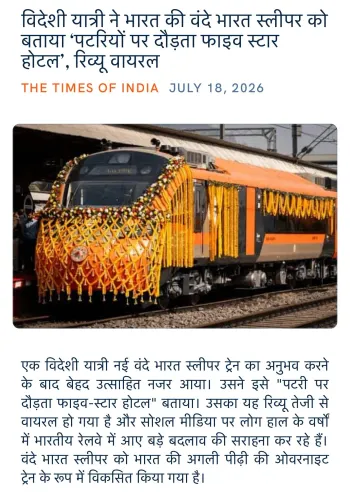
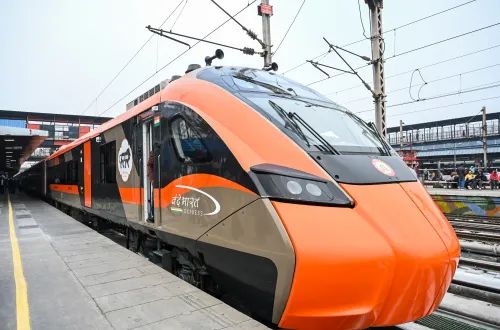
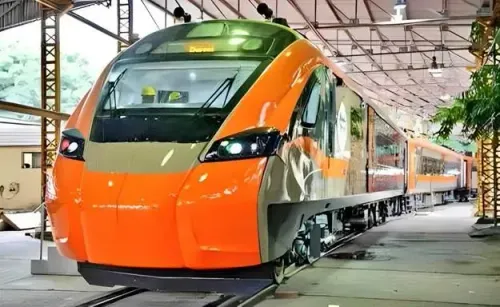
Jaipur, Dec 31 (NationPress) The final high-speed test of the Vande Bharat Sleeper Train, which has been designed and manufactured in India, has been successfully completed under the oversight of the Commissioner of Railway Safety (CRS).
This crucial trial took place on the Kota–Nagda section, where the train reached a remarkable speed of 180 kmph, representing a significant step forward in India's pursuit of advanced, self-sufficient rail technology.
During the assessment, thorough technical evaluations were performed, examining ride stability, oscillation and vibration behavior, braking performance, emergency braking systems, safety protocols, and other essential metrics.
The train's performance at high speed was deemed completely satisfactory, leading the CRS to declare the trial a success.
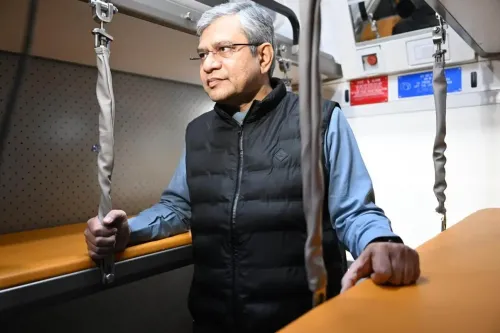
Ashwini Vaishnaw, the Union Minister for Railways, Information & Broadcasting, and Electronics & Information Technology, took to social media to share footage of the high-speed trial, underscoring the CRS certification of the Vande Bharat Sleeper Train at 180 kmph on the Kota–Nagda section.
The video also showcased a water-glass stability test, where glasses filled with water remained upright without spilling, highlighting the train's exceptional ride quality, advanced suspension, and robust technology.
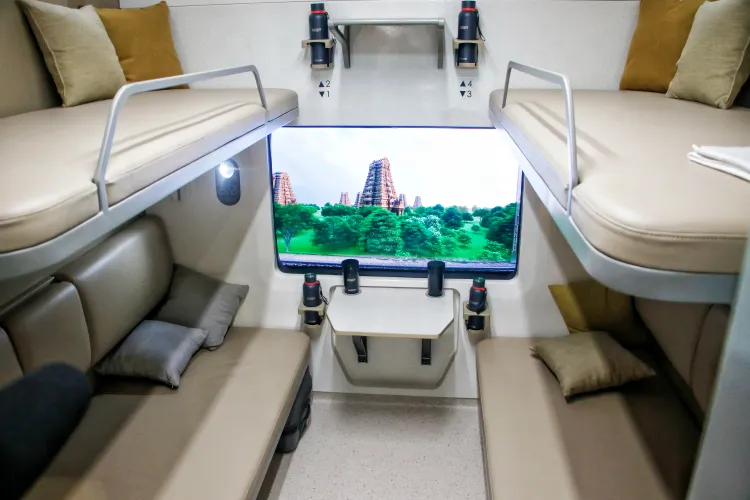
This 16-coach Vande Bharat Sleeper rake, specifically crafted for long-distance travel, boasts modern amenities including comfortable sleeper berths, advanced suspension systems, centrally controlled automatic doors, modern toilets, fire detection and safety monitoring systems, CCTV surveillance, digital passenger information systems, and energy-efficient technologies.
All these features collectively strive to provide a safe, comfortable, and world-class travel experience. There are numerous technological advancements and safety features in the Vande Bharat Sleeper Train.
Firstly, it is fitted with the KAVACH safety system. Additionally, it includes jerk-free semi-permanent couplers with anti-climbers, fire barrier doors at each coach's end, aerosol-based fire detection and suppression systems in electrical compartments and bathrooms, a regenerative braking system for enhanced energy efficiency, and air-conditioning units equipped with UV-C lamp-based disinfection systems developed locally.
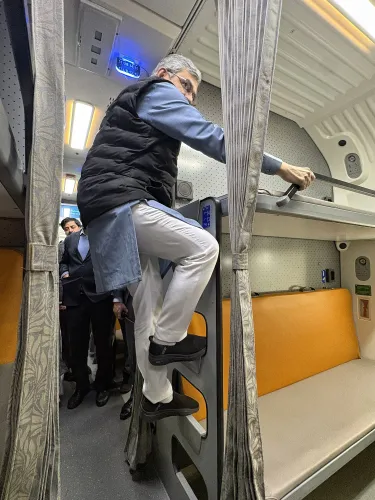
The train features centrally controlled automatic plug doors and fully sealed wider gangways, CCTV surveillance in every coach, emergency talk-back units for passenger communication with the Train Manager or Loco Pilot, specialized lavatories for Divyangjan passengers in the driving coaches at both ends, a centralized Coach Monitoring System for real-time tracking of passenger amenities, and ergonomically designed ladders for easier access to upper berths.
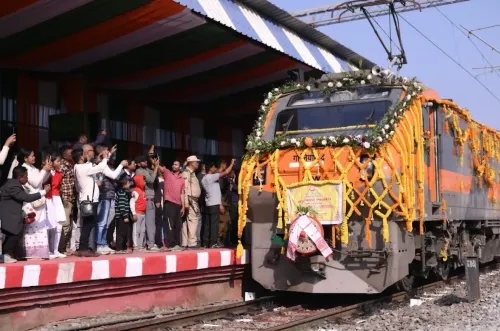
The successful completion of the CRS high-speed trial signifies a substantial technical achievement and clears the way for the launch of Vande Bharat Sleeper services.
This landmark event reinforces Indian Railways' dedication to innovation, safety, and indigenous manufacturing in line with the vision of Atmanirbhar Bharat.
Point of View
It is imperative to recognize the significance of the Vande Bharat Sleeper Train trial. This achievement not only demonstrates India's engineering prowess but also reflects a broader commitment to self-reliance and safety in transportation. The advancements in technology and safety measures are commendable and are set to enhance the travel experience for countless passengers across the nation.
NationPress
16 Sept 2026
Frequently Asked Questions
What speed did the Vande Bharat Sleeper Train achieve during the trial?
The Vande Bharat Sleeper Train reached a maximum speed of 180 kmph during its high-speed trial on the Kota-Nagda section.
What safety systems are integrated into the Vande Bharat Sleeper Train?
The Vande Bharat Sleeper Train is equipped with the KAVACH safety system, fire detection systems, and emergency communication units among other safety features.
What amenities are available in the Vande Bharat Sleeper Train?
Passengers can enjoy comfortable sleeper berths, modern toilets, automatic doors, and a centralized Coach Monitoring System, among other amenities.
Who supervised the high-speed trial of the train?
The trial was supervised by the Commissioner of Railway Safety (CRS).
What significance does this trial have for Indian Railways?
This successful trial marks a significant technical achievement and paves the way for the introduction of Vande Bharat Sleeper services, reaffirming Indian Railways' commitment to innovation.