Assam CM Office Issues Traffic Advisory for Ambubachi Mahayog
Synopsis
The Chief Minister's Office of Assam issued a traffic advisory for Ambubachi Mahayog on June 21, 2026, asking devotees and citizens to plan travel and cooperate with authorities for a safe pilgrimage to Kamakhya Temple in Guwahati.
Key Takeaways
The Chief Minister's Office of Assam issued a traffic advisory on June 21, 2026 for Ambubachi Mahayog .
The advisory urges citizens and devotees to plan travel in advance and cooperate with authorities.
Ambubachi Mahayog is an annual four-day festival at Kamakhya Temple on Nilachal Hill, Guwahati , drawing lakhs of pilgrims each June.
Kamakhya Temple is one of the 51 Shakti Peethas and a major Hindu pilgrimage site in northeastern India.
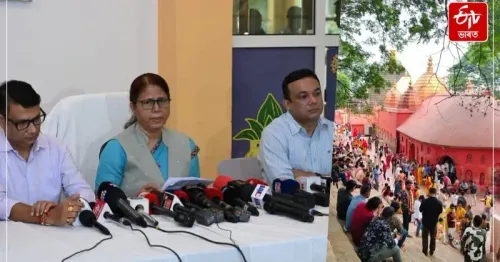
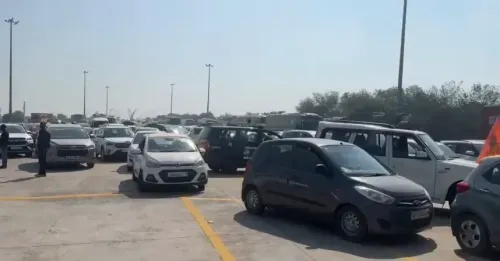
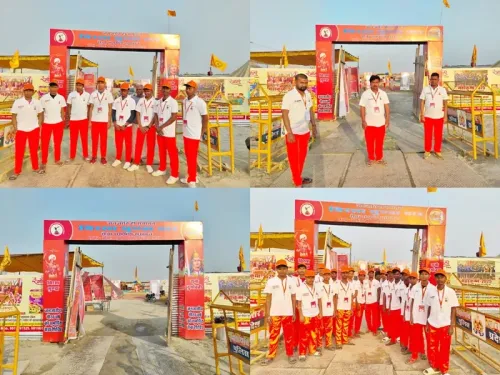
The advisory was shared with three informational images on the official CMO social media account.
Coordination involves district administration, temple management, and traffic police to ensure public safety during the festival.
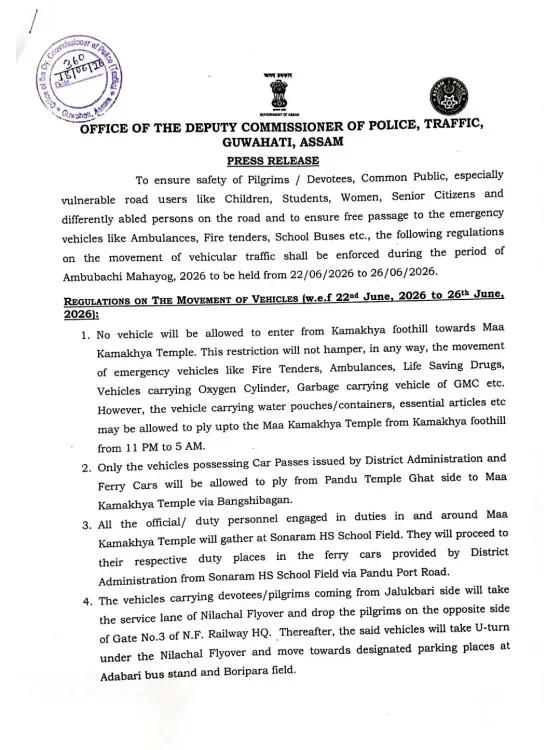
The Chief Minister's Office of Assam on Sunday, June 21, 2026, issued a traffic advisory for Ambubachi Mahayog, urging citizens and devotees to plan their travel in advance and cooperate with authorities to ensure a smooth and safe pilgrimage to Kamakhya Temple in Guwahati.
Context
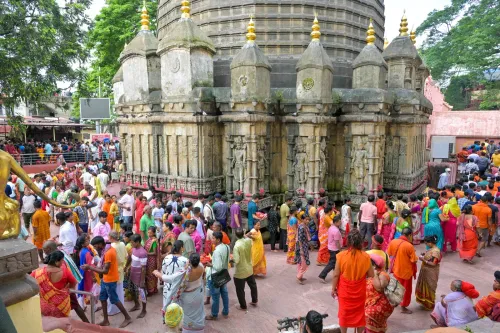
Ambubachi Mahayog is an annual four-day festival observed at the Kamakhya Temple atop Nilachal Hill in Guwahati, marking the annual menstruation of Goddess Kamakhya. The festival draws lakhs of tantric devotees and pilgrims from across India every June, making it one of the most significant religious gatherings in the country. The sheer volume of visitors places considerable pressure on the city's roads, transport networks, and public infrastructure.
The CMO's advisory, shared alongside three informational images, called on the public to 'plan their travel accordingly and cooperate with the authorities for a smooth and safe pilgrimage.' The advisory is aimed at both local Guwahati residents and out-of-station devotees converging on Nilachal Hill.
Policy Backdrop
The Government of Assam has a well-established practice of issuing annual traffic and crowd-management advisories ahead of Ambubachi Mela to manage the large pilgrim influx. Coordination typically involves the district administration, Kamakhya Temple Management Committee, and traffic police working in concert to regulate movement around the temple precinct. Kamakhya Temple is one of the 51 Shakti Peethas recognised in Hindu tradition and remains among the most visited pilgrimage sites in northeastern India.
State governments across India routinely deploy special traffic, security, and sanitation arrangements during major religious festivals. In Assam, this framework has been refined over successive annual cycles, with authorities aiming to balance facilitation of religious tourism against public-safety and order requirements in a densely visited urban precinct.
Stakeholders and Impact
The advisory directly affects pilgrims and devotees travelling to Guwahati for Ambubachi Mahayog, as well as everyday residents of the city who may face altered traffic patterns and road diversions during the festival period. Traffic police and district administration personnel are key operational stakeholders responsible for implementing the measures outlined in the advisory. Businesses and transport operators in and around Nilachal Hill are also expected to adjust schedules in accordance with the official guidance.
The festival's significance as a major religious and cultural event means that effective traffic management carries both safety and reputational weight for the state administration. A well-managed pilgrimage reinforces Assam's positioning as a destination for religious tourism in northeastern India.
What's Next
Devotees and residents are encouraged to follow updates from the Chief Minister's Office of Assam and local traffic authorities for route-specific guidance, designated parking zones, and any additional restrictions around Kamakhya Temple during the festival days. Observers will watch for detailed traffic plans and any new infrastructure measures around Nilachal Hill as the Ambubachi Mahayog cycle progresses. Effective execution of the advisory will set the benchmark for crowd and traffic management at future large-scale religious events in the state.
Point of View
The state signals institutional ownership of pilgrim safety — a reputationally significant move given the lakhs of visitors Kamakhya Temple attracts annually. The advisory also fits a national pattern where festival crowd management has become a governance benchmark following high-profile stampede incidents at religious sites elsewhere in India. How effectively the on-ground measures match the advisory's promise will determine the credibility of this communication approach for future events.
NationPress
21 Jun 2026
Frequently Asked Questions
What is Ambubachi Mahayog and when does it take place?
Ambubachi Mahayog is an annual four-day Hindu festival celebrated at Kamakhya Temple in Guwahati, Assam, every June. It marks the annual menstruation of Goddess Kamakhya and draws lakhs of tantric devotees and pilgrims from across India.
Why has the Assam CM Office issued a traffic advisory for Ambubachi Mahayog?
The Chief Minister's Office of Assam issued the advisory on June 21, 2026, to help citizens and pilgrims plan their travel in advance and cooperate with authorities, ensuring a smooth and safe pilgrimage given the large crowds expected at Kamakhya Temple.
Where is Kamakhya Temple located?
Kamakhya Temple is located on Nilachal Hill in Guwahati, Assam. It is one of the 51 Shakti Peethas in Hindu tradition and is managed by the Kamakhya Temple Management Committee.
Who is responsible for traffic management during Ambubachi Mela in Guwahati?
Traffic management during Ambubachi Mela is coordinated by the district administration, Guwahati traffic police, and the Kamakhya Temple Management Committee, working under the broader oversight of the Government of Assam.
How can devotees get updates on the Ambubachi Mahayog 2026 traffic plan?
Devotees can follow the official Chief Minister's Office of Assam social media accounts and local traffic authority announcements for route-specific guidance, parking information, and any additional restrictions during the festival period.