Assam CM Office marks Orunodoi Day, credits aid to 37 lakh women
Synopsis
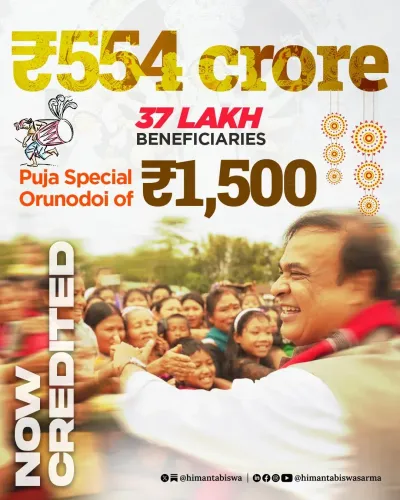
The Chief Minister's Office of Assam marked Orunodoi Day on November 10, 2026, announcing that financial assistance under the state's flagship direct benefit transfer scheme would reach 37 lakh women heads of households — reaffirming the government's women-centric welfare push.
Key Takeaways
Orunodoi Day was observed on November 10, 2026 , with the Assam government crediting financial assistance to beneficiary accounts.
The Orunodoi scheme , launched in 2020 , is a direct benefit transfer programme for women heads of households in Assam.
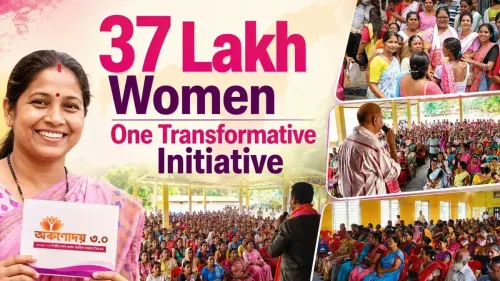
An estimated 37 lakh women across Assam are covered under the scheme's current disbursement cycle.
Funds are transferred directly to women's bank accounts, eliminating intermediaries and promoting financial autonomy.
The scheme is part of a broader state-level push for women-centric welfare delivery consistent with similar DBT programmes across India.
Future budget allocations and coverage reports will determine the scheme's long-term expansion trajectory.
On a morning designated Orunodoi Day, the Assam government moved to put money directly into the hands of 37 lakh women heads of households — a quiet but consequential act of financial transfer that speaks louder than most policy announcements. The Chief Minister's Office of Assam confirmed on Tuesday, November 10, 2026, that financial assistance under the flagship Orunodoi scheme would be credited to beneficiary bank accounts across the state.
What Orunodoi does — and who it reaches
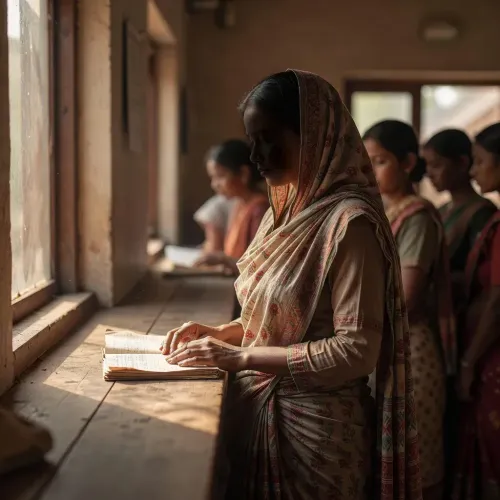
Launched in 2020, the Orunodoi scheme is a direct benefit transfer programme that channels monthly cash assistance to eligible women-headed households in Assam. The name itself signals intent: orunodoi (উৰুণোদৈ) translates roughly to 'sunrise' or 'dawn' in Assamese — a promise of a new beginning for families at the economic margins. The scheme bypasses intermediaries entirely, landing funds straight into women's bank accounts and placing spending decisions in their hands.
The government's post stated the initiative 'reaffirms the Government's commitment to empowering women financially and enabling families to move towards greater self-reliance.' At 37 lakh beneficiaries, the programme's footprint spans a substantial share of Assam's roughly 35 million population — making it one of the state's most wide-reaching welfare interventions.
Assam's bet on cash transfers for women
The Orunodoi scheme fits within a broader national pattern: state governments across India have increasingly turned to targeted, women-centric direct-benefit transfers as a lever for financial inclusion. The model is straightforward — give women liquidity, reduce dependence on informal credit, and let household decision-making shift accordingly. Assam has leaned into this approach more deliberately than most northeastern states, treating Orunodoi as a centrepiece of its welfare architecture since the programme's launch.
The designation of a dedicated Orunodoi Day each year adds a political and ceremonial dimension to what is fundamentally an administrative disbursement — a reminder to beneficiaries and voters alike that the transfer is a deliberate policy choice, not a bureaucratic routine.
What budget watchers will track next
The scale of the programme means its fiscal implications are significant. Analysts will watch subsequent state budget sessions for allocation figures, and periodic government reports on disbursement efficiency and coverage gaps will determine whether the 37 lakh target is being met with consistency. Any expansion of the beneficiary base — or revision of monthly transfer amounts — would signal the government's confidence in the scheme's political and social returns.
For now, on this November 10, the number that matters is straightforward: 37 lakh women waking up to a government transfer in their accounts. That is what Orunodoi Day looks like on the ground.
Point of View
Anchoring the scheme's identity in the public imagination. At 37 lakh beneficiaries, Orunodoi has grown into one of the Northeast's most consequential women-welfare instruments, and its longevity since 2020 suggests institutional durability beyond electoral cycles. The broader trend it reflects — states competing on women-centric direct transfers — is reshaping how welfare legitimacy is constructed in Indian politics. How the Assam government scales or refines the programme in upcoming budgets will be the real test of whether Orunodoi Day remains symbolic or deepens into structural change.
NationPress
10 Nov 2026
Frequently Asked Questions
What is the Orunodoi scheme in Assam?
The Orunodoi scheme is a flagship Assam government direct benefit transfer programme launched in 2020 that provides monthly financial assistance directly to women heads of households across the state.
How many women benefit from the Orunodoi scheme?
According to the Chief Minister's Office of Assam, approximately 37 lakh women heads of households across the state are covered under the scheme's current disbursement cycle.
What is Orunodoi Day?
Orunodoi Day is an observance designated by the Assam government — marked on November 10, 2026 — to coincide with the crediting of financial assistance to Orunodoi scheme beneficiaries, highlighting the government's commitment to women's financial empowerment.
How is the Orunodoi scheme money transferred?
Assistance under the Orunodoi scheme is credited directly to the bank accounts of eligible women heads of households, bypassing intermediaries to ensure the funds reach beneficiaries efficiently.
When was the Orunodoi scheme launched?
The Orunodoi scheme was launched by the Assam government in 2020 as a direct benefit transfer initiative aimed at financially empowering women-headed households.