CM Himanta Reviews AssamSAT, Assam's Own Satellite Plan

Synopsis
Assam CM Himanta Biswa Sarma reviewed the AssamSAT programme on November 16, 2026 — a proposed state-led satellite constellation designed to deliver high-resolution, near real-time data for governance, disaster management, and sustainable development.
Key Takeaways
Himanta Biswa Sarma reviewed the proposed AssamSAT programme on November 16, 2026 .
AssamSAT is envisioned as a state-led satellite constellation — a rare sub-national space initiative in India.
The programme targets high-resolution, near real-time satellite data for evidence-based governance , planning, disaster preparedness , and sustainable development.
Assam's chronic annual flood vulnerability makes real-time orbital data especially consequential for the state.
No formal budget allocation, timeline, or agency partnership has been officially announced yet — the initiative remains at the proposal stage.
India's liberalised private space sector since 2020 creates new routes for states to co-develop or procure constellation services.
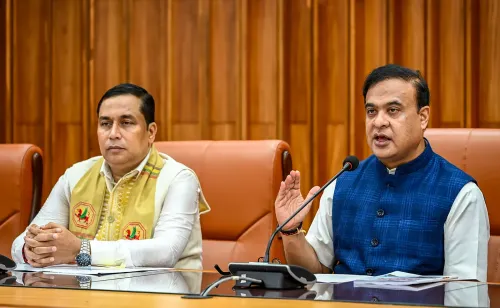
Assam is reaching for the sky — literally. Chief Minister Dr. Himanta Biswa Sarma on Monday, November 16, 2026, reviewed the proposed AssamSAT programme, a state-led satellite constellation initiative that could place Assam among the first Indian states to pursue a dedicated orbital data infrastructure for governance.
What AssamSAT is designed to do
The Chief Minister's Office described the programme as an effort to 'harness space technology for smarter governance and a more resilient future.' At its core, AssamSAT aims to supply high-resolution, near real-time satellite imagery directly to state agencies — cutting the dependency on centrally sourced data and enabling faster, sharper decisions on the ground.
The use cases are concrete: evidence-based governance, improved land-use and infrastructure planning, enhanced disaster preparedness, and support for sustainable development. For a state that sits at the confluence of the Brahmaputra and several of its tributaries — and endures some of India's most punishing annual floods — near real-time imagery is not an administrative luxury. It is a potential lifesaver.
Assam's flood risk and the satellite imperative
Year after year, floods in Assam displace millions, inundate crops, and destroy infrastructure across its lowland districts. Emergency response has historically depended on data routed through national agencies, introducing delays that compound in a fast-moving flood event. A state-owned constellation would, in principle, allow district disaster management authorities to monitor embankment breaches and inundation spread in near real time — without waiting in a national queue for satellite passes.
The broader pattern is real: several Indian states have expanded their use of satellite imagery for local planning, building on ISRO's national capabilities. What sets AssamSAT apart — if it moves to execution — is the ambition of a dedicated constellation, not merely a data-sharing agreement with an existing one.
CM Sarma's technology push since 2021
Dr. Himanta Biswa Sarma, who has led Assam since May 2021, has positioned technology adoption as a signature of his administration, from digitising land records to expanding e-governance interfaces. AssamSAT represents a step-change in that ambition — moving from using technology built elsewhere to seeding the state's own orbital infrastructure.
The programme is still at the proposal and presentation stage. No formal budget allocation, procurement tender, or partnership with ISRO or a private space firm has been announced. Those announcements — whenever they come — will be the real test of whether AssamSAT transitions from a compelling vision to a flying satellite.
India's space sector has been opening up to private players since 2020, giving state governments new commercial routes to procure or co-develop constellation services. That window, more than any other factor, may be what makes Assam's ambition plausible — and timely.
Point of View
The optics reinforce a governance-by-technology brand that has defined his tenure since 2021. The harder question is execution: satellite constellations demand capital, technical partners, and sustained political will across budget cycles. If Assam secures a credible ISRO or private-sector partnership in the near term, it could set a template that other data-hungry, disaster-prone states — Odisha, Bihar, Kerala — may quickly follow.
NationPress
16 Nov 2026
Frequently Asked Questions
What is the AssamSAT programme?
AssamSAT is a proposed state-led satellite constellation initiative by the Government of Assam, designed to provide high-resolution, near real-time satellite data for governance, disaster management, infrastructure planning, and sustainable development.
Who reviewed AssamSAT and when?
Chief Minister Dr. Himanta Biswa Sarma reviewed the AssamSAT programme and received a detailed presentation on the initiative on Monday, November 16, 2026.
How will AssamSAT help with flood management in Assam?
AssamSAT aims to deliver near real-time satellite imagery that could allow state disaster management authorities to monitor flood inundation and embankment breaches faster than through nationally routed data, potentially improving emergency response times.
Has AssamSAT been approved or funded yet?
As of November 2026, AssamSAT remains at the proposal and review stage. No formal budget allocation, official timeline, or partnership with ISRO or any private space firm has been publicly announced.
Is Assam the first Indian state to pursue its own satellite constellation?
AssamSAT would be among the most ambitious sub-national space initiatives in India if it proceeds. While several states have expanded satellite data use through ISRO, a dedicated state-owned constellation is a relatively novel concept at the sub-national level in India.