AssamSAT: India's first state-owned satellite among ₹100 crore aerospace push
Synopsis
Assam is about to do something no Indian state has done before — own and operate an Earth observation satellite. With AssamSAT and a ₹100 crore aerospace manufacturing bet, CM Himanta Biswa Sarma is positioning a flood-prone northeastern state as an unlikely frontier in India's space and technology economy.
Key Takeaways
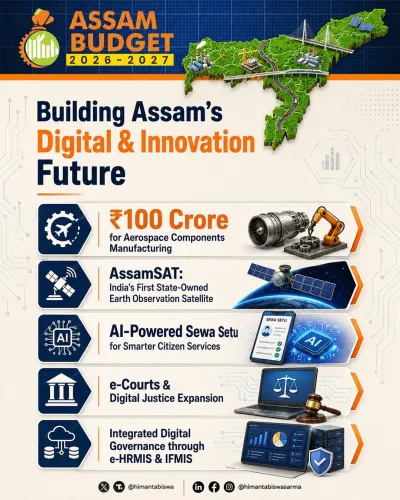
AssamSAT will be India's first state-owned Earth observation satellite , announced in the 2026-27 Assam Budget .
The satellite will support agriculture, flood monitoring, disaster management, urban planning , and forest conservation .
The Budget allocates ₹100 crore to establish an aerospace components manufacturing ecosystem in Assam.
An AI-powered version of 'Sewa Setu' will be introduced to improve citizen service delivery.
Expansion of e-Courts , e-HRMIS , and IFMIS platforms forms part of the broader digital governance push.
Finance Minister Jayanta Mallabaruah presented the budget in the Assam Assembly on 10 July .
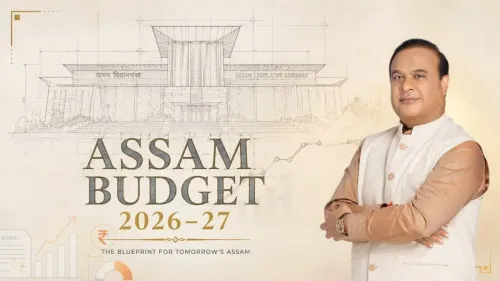
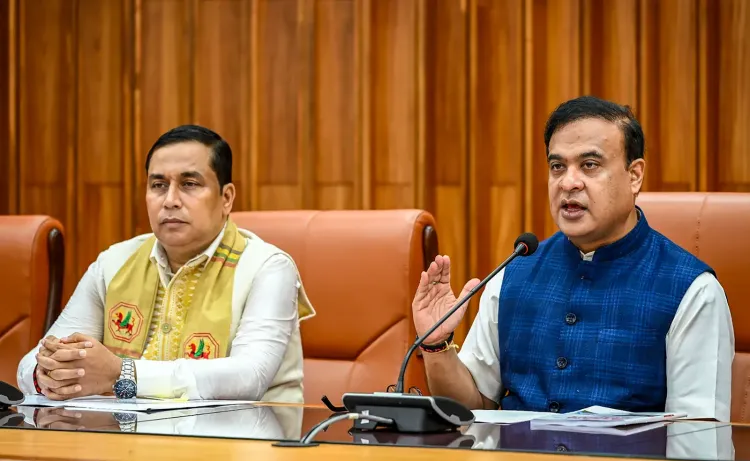
Assam Chief Minister Himanta Biswa Sarma on Friday, 10 July unveiled a sweeping package of technology and digital governance initiatives, headlined by AssamSAT — set to become India's first state-owned Earth observation satellite — and a ₹100 crore investment in aerospace component manufacturing. The announcements followed the presentation of the 2026-27 Assam Budget by Finance Minister Jayanta Mallabaruah in the state Assembly.
AssamSAT: A Historic First for Indian States
The flagship announcement, AssamSAT, is positioned as a first-of-its-kind initiative among Indian states. Once operational, the satellite is expected to deliver real-time data to support agriculture, disaster management, flood monitoring, urban planning, forest conservation, and infrastructure development. For a state like Assam — which faces annual flooding across the Brahmaputra basin — satellite-based monitoring could offer a significant operational advantage over ground-level data collection.
₹100 Crore Aerospace Manufacturing Ecosystem
The 2026-27 Budget earmarks ₹100 crore to build an aerospace components manufacturing ecosystem in Assam. The government aims to attract private investment, generate high-skilled employment, and position the state as an emerging node in India's growing aerospace supply chain. This comes amid a broader national push to localise defence and space manufacturing under programmes such as the Production-Linked Incentive (PLI) scheme for drones and aerospace.
AI-Powered Citizen Services and Digital Justice
Chief Minister Sarma said the government will introduce an artificial intelligence-powered version of the 'Sewa Setu' platform to accelerate and improve public service delivery. The AI integration is intended to make services faster, more transparent, and more accessible to citizens across the state.
The Budget also proposes expanding e-Courts and strengthening digital justice infrastructure to speed up case management. Integration of e-HRMIS and IFMIS platforms will enable better coordination of human resources and financial administration across government departments.
The Broader Vision
Sarma described the package as part of Assam's long-term ambition to become a digitally empowered, innovation-driven economy capable of attracting advanced industries while improving service delivery for citizens. Notably, this is among the most technology-forward state budgets in Northeast India in recent memory, signalling a deliberate pivot from welfare-centric spending toward infrastructure for a knowledge economy.
The full implementation timeline for AssamSAT and the aerospace manufacturing hub has not yet been disclosed; further details are expected as departmental guidelines are rolled out.
Point of View
And the practical case for Assam is stronger than it might appear elsewhere, given its chronic flood vulnerability and the governance gaps that come with poor real-time data. The ₹100 crore aerospace bet is more speculative: state-level manufacturing ecosystems in niche sectors have a patchy track record without anchor tenants and a skilled labour pipeline. The real question is whether Assam can attract credible aerospace partners or whether the allocation becomes a land-and-incentive package without the industrial depth to sustain it. The AI-Sewa Setu integration, meanwhile, is the most immediately testable initiative — and the one citizens will judge fastest.
NationPress
9 Oct 2026
Frequently Asked Questions
How much is Assam investing in aerospace manufacturing?
The 2026-27 Assam Budget earmarks ₹100 crore to build an aerospace components manufacturing ecosystem in the state. The investment aims to attract private capital, create high-skilled jobs, and position Assam as an emerging aerospace hub.
What is the AI-powered Sewa Setu platform?
Sewa Setu is an existing Assam government platform for citizen service delivery. The 2026-27 Budget proposes integrating artificial intelligence into the platform to make public services faster, more transparent, and more efficient for residents.
Who announced these initiatives and when?
Assam Chief Minister Himanta Biswa Sarma announced these initiatives on Friday, 10 July, after Finance Minister Jayanta Mallabaruah presented the 2026-27 Assam Budget in the state Assembly.
Why does AssamSAT matter for a state like Assam?
Assam faces severe annual flooding along the Brahmaputra river system, and real-time satellite data could significantly improve early warning systems, disaster response, and agricultural planning. A state-owned satellite would give Assam direct, continuous access to such data without depending on central or commercial providers.