CM Himanta Earmarks ₹100cr for Assam MRO Hub Push

Synopsis
Assam Chief Minister Himanta Biswa Sarma has earmarked ₹100 crore in the Assam Budget 2026 to build an aerospace components manufacturing ecosystem, positioning the state as a regional MRO hub by leveraging its strategic border geography and Atmanirbhar Bharat policy tailwinds.
Key Takeaways
₹100 crore has been earmarked in Assam Budget 2026 for aerospace components manufacturing and local supply-chain development.
CM Himanta Biswa Sarma aims to position Assam as an MRO hub for the broader North East region.
Assam's borders with Bhutan , Bangladesh , and Myanmar are cited as a key geographic advantage for aviation connectivity.
The move aligns with the central government's Atmanirbhar Bharat push for domestic aerospace capability and the 2020 national MRO policy framework.
The allocation is intended to diversify Assam's economy beyond its traditional pillars of oil, tea, and tourism.
Private-sector tendering and partnership announcements are the next expected milestones for the aerospace cluster.
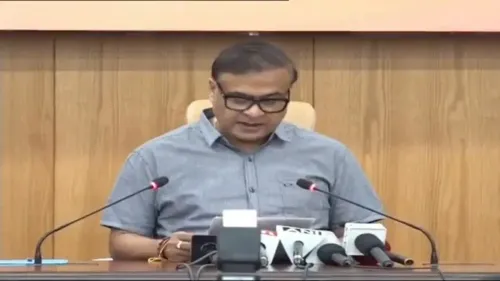
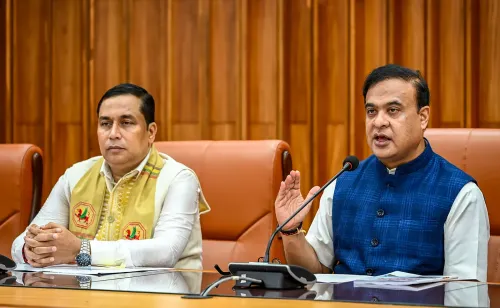
Assam Chief Minister Himanta Biswa Sarma on Wednesday, 22 July 2026, announced that the state has allocated ₹100 crore in the Assam Budget 2026 to develop an aerospace components manufacturing ecosystem and strengthen the local supply chain, as part of a broader push to establish Assam as a Maintenance, Repair and Overhaul (MRO) hub for the region.
Context
Posting on X, CM Sarma stated: 'We are taking concrete steps to develop Assam as an MRO hub of the region owing to our geographical advantage and strong policy support.' The announcement underscores the state government's intent to leverage Assam's strategic location — bordering Bhutan, Bangladesh, and Myanmar — to position itself as a gateway for aviation services connecting South Asia and Southeast Asia.
The ₹100 crore earmark is framed not merely as an infrastructure outlay but as seed capital for an entire aerospace components manufacturing cluster, signalling an ambition to build indigenous supply-chain depth rather than simply attract assembly operations.
Policy Backdrop
The announcement aligns with a trajectory that began when the Ministry of Civil Aviation issued a national MRO policy framework in 2020, aimed at positioning India as a global MRO destination through tax incentives and regulatory simplification. That central push has so far concentrated activity in established aviation corridors around Bengaluru and Delhi.
Assam's move mirrors the central government's Atmanirbhar Bharat emphasis on domestic aerospace manufacturing capability, while also serving a state-level diversification imperative. Assam's economy has historically depended on oil, tea, and tourism; attracting defence and civil aviation manufacturing represents a structural shift in the state's industrial identity.
By earmarking dedicated funds in the state budget, CM Sarma's government is signalling to private investors that policy intent is backed by fiscal commitment — a key confidence signal for capital-intensive aerospace ventures.
Stakeholders and Impact
The primary beneficiaries of the allocation would be aerospace component manufacturers and local supply-chain firms that could anchor operations in Assam under the proposed ecosystem. Smaller ancillary units — precision engineering workshops, materials suppliers, and logistics providers — stand to gain if a genuine cluster effect takes hold.
For the broader North East region, an MRO hub in Assam could reduce turnaround times and costs for airlines operating thin-margin routes to remote airports across the eight sister states. CM Sarma, who also serves as convenor of the North-East Democratic Alliance (NEDA), has consistently framed regional connectivity and economic integration as twin pillars of his political agenda.
Aviation industry observers note that Assam's relative proximity to Southeast Asian markets gives it a geographic edge over saturated MRO corridors in peninsular India, though translating that advantage into operational clusters requires sustained private-sector participation and skilled-workforce development.
What's Next
Attention will now turn to the tendering process and the identification of private-sector partners for the aerospace components cluster. Whether the state follows up with a dedicated aviation investment summit or announces a nodal agency to oversee the ₹100 crore deployment will be closely watched by industry.
Any subsequent Assam Budget session or investor conclave is likely to serve as the next milestone for firmer project timelines, site announcements, and partnership agreements that will determine whether the MRO hub ambition moves from budget line to ground reality.
Point of View
Sarma is providing the fiscal credibility that private aerospace investors typically demand before committing capital to greenfield sites. The MRO framing also serves a dual political purpose: it reinforces Sarma's NEDA leadership by projecting Assam as the economic engine of the North East, and it counters the perception that the region remains a recipient of central transfers rather than a generator of industrial value. Whether the cluster materialises will depend heavily on how quickly the state can operationalise land, skilled labour, and single-window clearances — the perennial bottlenecks that have stalled similar ambitions elsewhere.
NationPress
21 Oct 2026
Frequently Asked Questions
What is the Assam MRO hub plan announced by CM Himanta Biswa Sarma?
CM Himanta Biswa Sarma announced in Assam Budget 2026 that ₹100 crore has been earmarked to develop an aerospace components manufacturing ecosystem in Assam , with the goal of making the state a Maintenance, Repair and Overhaul (MRO) hub for the North East region.
Why is Assam being considered as an MRO hub?
Assam's geographic position — bordering Bhutan , Bangladesh , and Myanmar — gives it a strategic advantage for aviation connectivity to Southeast Asia , and the state government has backed this with dedicated budget support and policy commitments.
How much money has Assam allocated for aerospace manufacturing in Budget 2026?
The Assam Budget 2026 has earmarked ₹100 crore specifically for developing an aerospace components manufacturing ecosystem and strengthening the local aviation supply chain.
How does Assam's MRO plan relate to Atmanirbhar Bharat?
The plan mirrors the central government's Atmanirbhar Bharat initiative, which promotes domestic aerospace and defence manufacturing. It also builds on the Ministry of Civil Aviation's 2020 policy framework to develop India as a global MRO destination.
What happens next after the Assam aerospace budget announcement?
The focus will shift to the tendering process, identification of private-sector partners, and possible site announcements for the aerospace components cluster. A dedicated investment summit or follow-up budget session is likely to provide the next set of concrete details.