Assam to host semiconductor hub under CM Himanta's push
Synopsis
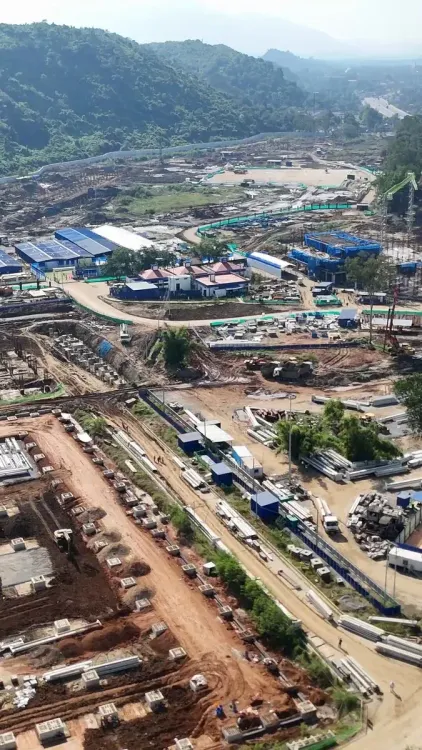
The Chief Minister's Office of Assam announced on 3 July 2026 that an upcoming semiconductor hub will drive skilling, employment and innovation for thousands of youth under CM Dr. Himanta Biswa Sarma, positioning Assam as a key contributor to India's national chip self-reliance mission.
Key Takeaways
The Chief Minister's Office of Assam announced plans for a semiconductor hub on 3 July 2026 .
The hub is framed as central to Assam's role in India's broader semiconductor self-reliance drive.
The initiative is positioned to generate skilling, employment and innovation for thousands of youth in the state.
It aligns with the central government's India Semiconductor Mission , backed by a Rs 76,000 crore outlay approved in 2021 .
Specific details — location, timeline, investment size and implementing partners — have not yet been formally announced.
The move signals Assam's pivot from traditional sectors like tea and oil toward high-technology manufacturing.
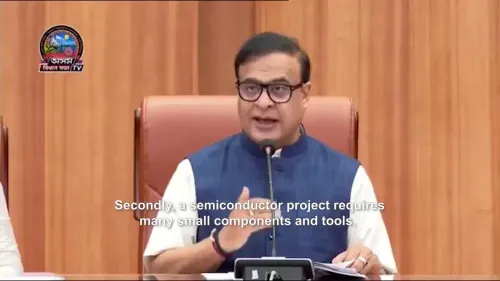
The Chief Minister's Office of Assam announced on Friday, 3 July 2026 that the northeastern state is set to become a significant contributor to India's semiconductor ecosystem, with an upcoming hub aimed at generating skilling, employment and innovation opportunities for thousands of young people under the leadership of Chief Minister Dr. Himanta Biswa Sarma.
Context
The official CMO post declared that 'Assam is set to be a major contributor to India's semiconductor landscape, driving a massive tech revolution from the front.' The announcement positions the state as an active participant in a national drive toward chip self-reliance, signalling a deliberate pivot away from Assam's traditional economic pillars of tea, oil and agriculture toward high-technology manufacturing.
Chief Minister Dr. Himanta Biswa Sarma, who has led the state since May 2021, has been steering Assam toward industrial diversification, and the semiconductor initiative is being framed as a flagship effort under his administration.
Policy Backdrop
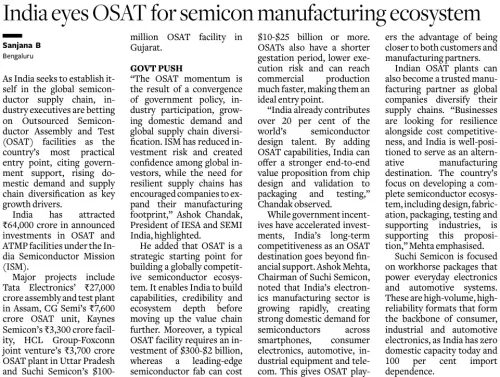
The announcement aligns with the India Semiconductor Mission, a central government programme approved in 2021 with an outlay of Rs 76,000 crore, designed to build domestic fabrication, assembly, testing, marking and packaging capabilities and reduce India's heavy dependence on imported chips.
The mission operates within the broader Production Linked Incentive framework, offering financial incentives to attract global semiconductor supply-chain investments. Geopolitical tensions over chip production — particularly between the United States and China — have accelerated India's ambition to carve out a credible role in the global semiconductor value chain, and multiple states have moved to attract related facilities and investments.
Assam's northeastern geography, improving connectivity infrastructure and a relatively young demographic profile are factors the state government has previously cited when pitching itself to investors in emerging industrial sectors.
Stakeholders and Impact
The CMO's post specifically highlighted benefits for 'thousands of youth,' pointing to skilling and employment as primary outcomes of the proposed hub. The electronics manufacturing and semiconductor assembly sectors are labour-intensive at certain stages, making workforce development a central component of any such facility.
Broader stakeholders include the state's electronics and IT ecosystem, academic and vocational training institutions that would need to align curricula with semiconductor-related skills, and investors or companies that may partner with the state government on the project. The announcement is likely to be watched closely by industry bodies and central government agencies coordinating the national semiconductor strategy.
What's Next
The CMO's statement does not specify a location, timeline, implementing partner or investment figure for the hub, and those details remain to be formally announced. Observers will look for concrete project approvals, memoranda of understanding with chip-related companies, or budget allocations in upcoming state or central government announcements that would convert this policy signal into a confirmed facility.
If realised, the initiative could mark a significant step in rebalancing Assam's economic identity and integrating the Northeast more deeply into India's emerging high-technology industrial map.
Point of View
The Himanta Biswa Sarma administration is seeking to reframe the state's economic narrative ahead of what are likely to be competitive rounds of central government approvals and private investment decisions. The timing tracks a broader pattern in which state governments use high-profile technology announcements to attract attention within the India Semiconductor Mission framework, where multiple states are vying for a limited pool of approved projects. The emphasis on youth employment and skilling is strategically astute in a state with a young population and historically limited high-skill industrial opportunities. However, the absence of specifics — no location, partner or timeline — means the announcement remains a statement of intent rather than a confirmed project, and its credibility will depend on how quickly concrete details follow.
NationPress
1 Oct 2026
Frequently Asked Questions
What is the Assam semiconductor hub announced in July 2026?
The Chief Minister's Office of Assam announced on 3 July 2026 that an upcoming semiconductor hub will be established in the state to drive skilling, employment and innovation for thousands of youth, as part of India's national semiconductor self-reliance strategy.
What is the India Semiconductor Mission and how does Assam fit in?
The India Semiconductor Mission is a central government programme approved in 2021 with a Rs 76,000 crore outlay to build domestic chip manufacturing capabilities. Assam's proposed hub is positioned to align with this mission, with the state seeking to become a contributor to the national semiconductor ecosystem.
How will the Assam semiconductor hub benefit youth?
According to the CMO's announcement, the hub is intended to unlock skilling, employment and innovation opportunities for thousands of young people in Assam, though specific programme details have not yet been released.
Where will the Assam semiconductor hub be located?
The specific location of the proposed semiconductor hub has not been officially announced. The CMO's post confirmed the initiative but did not disclose a site, timeline or implementing partner.
Which states in India are developing semiconductor facilities?
Multiple Indian states have announced or pursued semiconductor-related facilities under the India Semiconductor Mission framework. Assam's announcement on 3 July 2026 adds the northeastern state to this growing list of aspirants for chip-sector investment.