CM Himanta Eyes Local Entrepreneurs in Assam Semiconductor Push
Synopsis
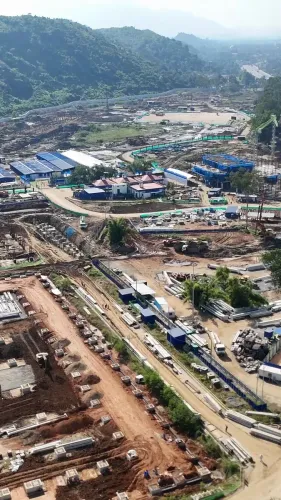
Assam Chief Minister Himanta Biswa Sarma has announced a focused effort to integrate local entrepreneurs and MSMEs into the supply chain of a semiconductor facility expected to begin operations in the coming months, aligning with India's ₹76,000 crore semiconductor self-reliance mission.
Key Takeaways
Assam CM Himanta Biswa Sarma on 19 July 2026 announced plans to integrate local entrepreneurs into an upcoming semiconductor facility's supply chain.
The facility is expected to begin operations 'in the coming months,' though its exact name, location and operator remain unspecified.
The push aligns with the India Semiconductor Mission , approved in December 2021 with an outlay of ₹76,000 crore .
Primary beneficiaries are local entrepreneurs and MSME suppliers in Assam seeking entry into electronics value chains.
State-level supplier development and skill-training programmes are expected alongside the facility's commissioning.
The move positions Assam as an emerging node in India's broader strategy to reduce semiconductor import dependence.
Assam Chief Minister Himanta Biswa Sarma on Sunday, 19 July 2026, signalled a deliberate strategy to weave local entrepreneurs into the supply chain of a semiconductor facility set to begin operations in the coming months, positioning the state as an active node in India's broader chip-manufacturing ambitions.
Context
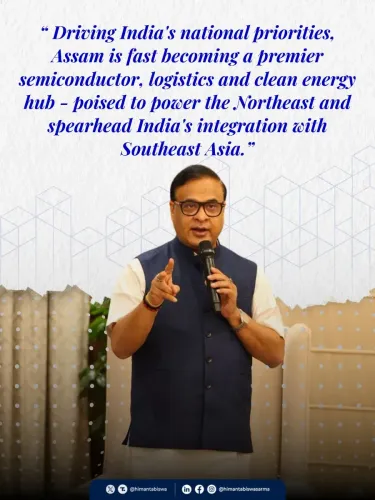
Sarma's post, tagged #AssamLeads, stated: 'As the semiconductor facility begins operations in the coming months, our focus is on integrating local entrepreneurs into its ecosystem, enabling them to become part of the broader semiconductor supply chain.' The statement marks a shift in emphasis — from simply attracting a large facility to ensuring that the economic benefits cascade downward to Assam's small and medium business community.
The Chief Minister, who also serves as convenor of the North-East Democratic Alliance (NEDA), has made industrial investment attraction a centrepiece of his administration's economic agenda, frequently positioning the Northeast as an underutilised destination for high-technology manufacturing.
Policy Backdrop
The announcement sits within the framework of the India Semiconductor Mission, approved in December 2021 with an outlay of ₹76,000 crore. The mission provides fiscal incentives for semiconductor fabrication, assembly, testing, marking and packaging units across the country, with state governments expected to develop complementary supplier ecosystems.
India's semiconductor strategy has leaned heavily on the Production Linked Incentive (PLI) scheme and state-level partnerships to reduce the country's dependence on imports and embed regional economies into global electronics value chains. Northeastern states, including Assam, have been identified as viable locations for downstream assembly and packaging activities given their improving infrastructure connectivity and available land parcels.
Stakeholders and Impact
The primary beneficiaries of Sarma's stated focus are local entrepreneurs and MSME suppliers in Assam who could secure contracts for components, logistics, packaging materials and ancillary services once the facility becomes operational. Inclusion in a semiconductor supply chain typically offers smaller businesses access to quality standards, technology transfers and long-term procurement agreements that can transform their scale.
Skill development and supplier-readiness programmes are expected to accompany the facility's commissioning, as raw entrepreneurial intent must be matched with technical capability to meet the precision requirements of semiconductor-adjacent manufacturing. The state government is anticipated to announce tie-ups with training institutions to bridge this gap.
What's Next
With the facility's operational start described as 'coming months,' the immediate policy watch is on whether Assam rolls out a formal vendor-development programme, including quality certification support and working-capital linkages for prospective MSME suppliers. A state-level semiconductor supplier council or nodal agency could be among the instruments deployed.
Sarma's framing also carries political significance ahead of the state's electoral cycle, as demonstrating tangible, ground-level economic outcomes from large investments will be critical to converting industrial wins into voter confidence. How swiftly local entrepreneurs are formally onboarded into the supply chain will be the first real test of this vision.
Point of View
Where industrial depth is thin, the success of this supplier-integration model will determine whether the semiconductor facility becomes a genuine economic multiplier or an enclave investment. The real test arrives when formal procurement pipelines open and local firms must meet the exacting quality thresholds of the semiconductor industry.
NationPress
18 Oct 2026
Frequently Asked Questions
What semiconductor facility is coming up in Assam?
Chief Minister Himanta Biswa Sarma has referenced a semiconductor facility expected to begin operations in the coming months in Assam, though its exact name, location and operator have not been officially confirmed in public records as of July 2026.
What is the India Semiconductor Mission?
The India Semiconductor Mission is a central government initiative approved in December 2021 with an outlay of ₹76,000 crore to develop domestic semiconductor fabrication, assembly, testing and packaging capabilities and reduce India's reliance on chip imports.
How will Assam's local entrepreneurs benefit from the semiconductor facility?
CM Sarma has stated that the government's focus is on integrating local entrepreneurs into the facility's supply chain, which could provide MSMEs with contracts for components, logistics and ancillary services, along with access to quality standards and long-term procurement agreements.
What is Himanta Biswa Sarma's role in Northeast India's development?
Himanta Biswa Sarma is the Chief Minister of Assam and convenor of the North-East Democratic Alliance (NEDA), and has actively promoted industrial and technology investments across the Northeast as part of his administration's economic agenda.
What skill development steps are expected alongside the Assam semiconductor facility?
State-level supplier-readiness and skill-training tie-ups with technical institutions are anticipated to accompany the facility's commissioning, helping local entrepreneurs meet the precision and quality requirements of semiconductor-adjacent manufacturing.