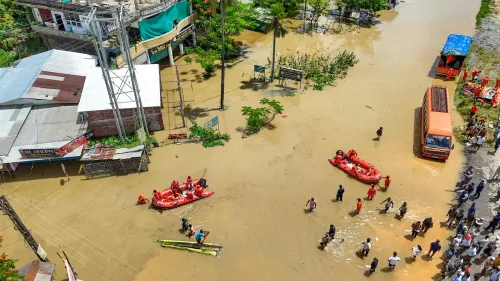
Assam floods: Khat Pathar families lose homes, livestock in Sivasagar deluge

Synopsis
Families in Assam's Khat Pathar lost homes, cattle, and savings to flash floods driven by rainfall 400% above normal — inundating villages that had never flooded before. Chief Minister Himanta Biswa Sarma called the scale unprecedented, and survivors' accounts reveal that individual courage, not official systems, provided the first line of rescue.
Key Takeaways
Flash floods struck Khat Pathar , Sivasagar district , Assam on 28 July , displacing multiple families from Namtial Darikapar .
Residents were trapped in chest-deep water for up to 8 hours ; a local resident rescued them by boat at personal risk.
One family lost 5 cows, 12 goats (10 dead) and 18 dogs swept away by floodwaters.
Displaced families are sheltering on the national highway with acute shortages of food, water, clothing, and medicines.
Assam CM Himanta Biswa Sarma said rainfall was more than 400% above normal in several areas, calling the floods unprecedented in scale and nature.
Floods inundated villages and urban areas historically outside flood-prone zones , exposing gaps in existing disaster-preparedness frameworks.
Families in Assam's Khat Pathar area of Sivasagar district have lost homes, livestock, and decades of savings after devastating flash floods — triggered by rainfall more than 400 per cent above normal — tore through villages on 28 July with little to no warning. The disaster has left hundreds displaced, stranded in chest-deep water, and struggling for food, clean water, and medicines.
How the Floods Hit
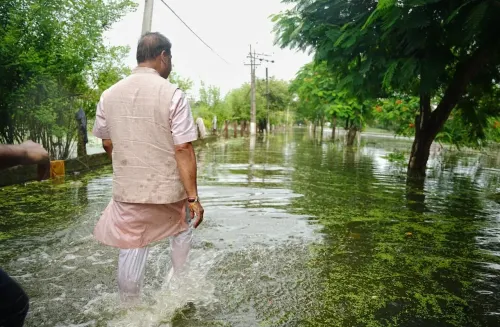
Residents of Namtial Darikapar in Khat Pathar watched helplessly as floodwaters engulfed everything they had built over decades. Even those who managed to shift belongings to higher ground found little relief — the relentless surge swallowed nearly everything in its path. According to residents, the water rose so rapidly that within one to one-and-a-half hours, entire homes were fully submerged.
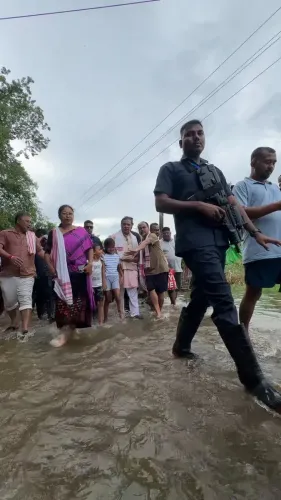
Many families remained trapped in chest-deep water for close to eight hours before rescue arrived. A local resident risked his own life, navigating dangerous currents by boat to reach those stranded — an act of individual courage that saved multiple lives in the absence of immediate official response.
Livestock Lost, Livelihoods Destroyed
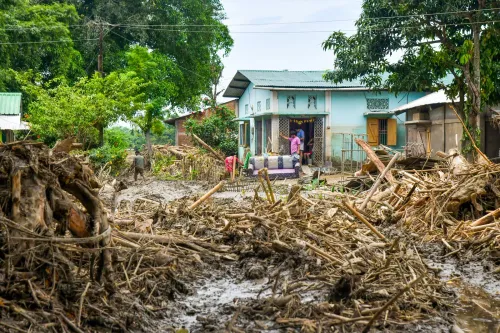
The human toll is inseparable from the economic one. One resident recounted losing five cows, 12 goats — of which 10 died — and 18 dogs, all swept away by the floodwaters. 'The water came with such force that within an hour to an hour and a half, our entire house was submerged. We could not save a single belonging,' the resident said.
Another affected family member described a week without sleep: 'Floodwaters have submerged our entire house and bedding. Due to the water level inside the house reaching waist-deep, I have not been able to sleep properly for the past week.' A third resident noted that while some local support had arrived, it was far from sufficient: 'Our house is completely flooded. We are facing severe shortages of food, drinking water, and other essential items. Some help has come from local people, but we still need much more support.'
Survivors Spending Nights on the Highway
Displaced families are now sheltering in makeshift camps set up along the national highway, their homes still submerged and the timeline for return uncertain. Food, clean drinking water, clothing, and medicines remain in critically short supply. For households with elderly or ailing members, the situation is especially dire — essential medicines are largely inaccessible.
Among the more harrowing accounts: one elderly man spent an entire night perched atop his granary as floodwaters surrounded his home, and was rescued only the following day when a neighbour reached him by boat. Elderly women who lost homes, livestock, and irreplaceable belongings broke down while recounting their ordeal to reporters.
CM Sarma: Rainfall 400% Above Normal, Unprecedented Scale
Assam Chief Minister Himanta Biswa Sarma said on 27 July that this year's floods were fundamentally different from conventional monsoon flooding. Speaking to reporters, Sarma said rainfall in several parts of the state had been more than 400 per cent above normal, inundating villages and urban pockets that had historically remained outside the flood-prone belt.
'The floodwaters did not spread primarily because of overflowing rivers, but due to intense rainfall over a short period,' Sarma said, describing the scale and nature of the disaster as unprecedented. The observation is significant: it points to a pattern of extreme precipitation events rather than the gradual river overflow that Assam's flood-management infrastructure is built to handle — raising urgent questions about preparedness for a new category of climate-driven inundation.
What Comes Next
With homes still submerged and relief supplies inadequate, the immediate priority for affected families is survival. The longer road — rebuilding homes, replacing livestock, and restoring livelihoods — will require sustained government intervention and aid. Assam has historically faced annual flooding, but the 2025 deluge's reach into non-traditional flood zones signals that existing early-warning and relief frameworks may need urgent revision.
Point of View
Not the next one. When a Chief Minister himself says the floods struck areas 'historically considered safe,' it signals that the threat model has changed — but the relief machinery has not. Rainfall at 400% above normal is not an anomaly to be absorbed; it is a data point demanding a rethink of early-warning systems, pre-positioned relief stocks, and evacuation protocols. The fact that the first rescue in Namtial Darikapar came from a single villager with a boat, not from any official agency, is the most telling detail in this story.
NationPress
27 Oct 2026
Frequently Asked Questions
Where did the Assam flash floods strike on 28 July?
The flash floods struck the Khat Pathar area of Sivasagar district in Assam, with the village of Namtial Darikapar among the worst affected. Floodwaters submerged homes, destroyed livestock, and left families stranded for hours with no immediate official rescue.
How severe was the rainfall that caused the Assam floods?
Assam Chief Minister Himanta Biswa Sarma said on 27 July that rainfall in several parts of the state was more than 400 per cent above normal. He described the floods as unlike conventional monsoon flooding, noting that the inundation was caused by intense short-duration rainfall rather than overflowing rivers.
What losses did families in Khat Pathar suffer?
Families lost homes, livestock, and possessions accumulated over decades. One resident reported losing five cows, 12 goats — of which 10 died — and 18 dogs swept away by the floodwaters. Many could not save a single belonging as water rose within one to one-and-a-half hours.
What is the current condition of flood-affected families?
Displaced families are sheltering in makeshift camps along the national highway, with their homes still submerged. They face acute shortages of food, clean drinking water, clothing, and medicines. Families with elderly or sick members are in particularly distressing conditions due to inaccessibility of essential medicines.
Why are these Assam floods considered unprecedented?
CM Sarma stated that the floods inundated villages and urban areas that have historically remained outside Assam's flood-prone belt — a pattern driven by extreme rainfall rather than river overflow. This makes existing flood-management and early-warning systems, designed for river-based flooding, inadequate for the current disaster.