Assam floods: Sarma camps in Upper Assam, ₹160 crore released to 75,000 families
Synopsis
Assam's flood response has crossed a critical threshold — Chief Minister Himanta Biswa Sarma is personally camping in the affected zone for four days as ₹160 crore in direct cash transfers reaches over 75,000 families. With 400 per cent excess upstream rainfall blamed for flooding districts that rarely inundate, the scale of this disaster — and the political weight Sarma is placing on visible ground presence — signals how serious the situation remains even as the state officially declares the emergency phase over.
Key Takeaways
Assam CM Himanta Biswa Sarma is camping in Upper Assam for four days to supervise flood relief and rehabilitation.
Over 75,000 flood-affected families have received the first tranche of financial assistance of ₹15,000 each via Direct Benefit Transfer.
The state government has disbursed approximately ₹160 crore in interim relief.
Nearly 400 per cent excess rainfall in upstream areas triggered the unprecedented flooding in Sivasagar , Jorhat , Golaghat , and Charaideo districts.
Over 1,000 relief camps are operational across the affected region.
The state has officially moved from emergency response to the rehabilitation phase , with infrastructure rebuilding to follow.
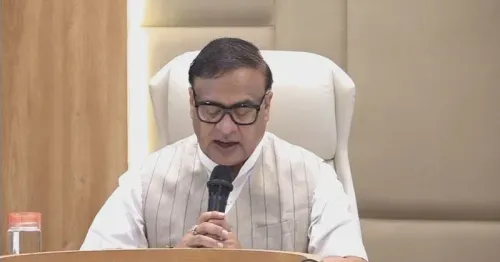
Assam Chief Minister Himanta Biswa Sarma on Monday, 3 August announced that the state has transitioned from emergency response to the rehabilitation phase in the flood-ravaged districts of Upper Assam, with over 75,000 affected families already receiving the first tranche of financial assistance. The government has transferred approximately ₹160 crore in interim relief, disbursing ₹15,000 per eligible family through the Direct Benefit Transfer (DBT) system.
On the Ground: Sarma's Four-Day Camp
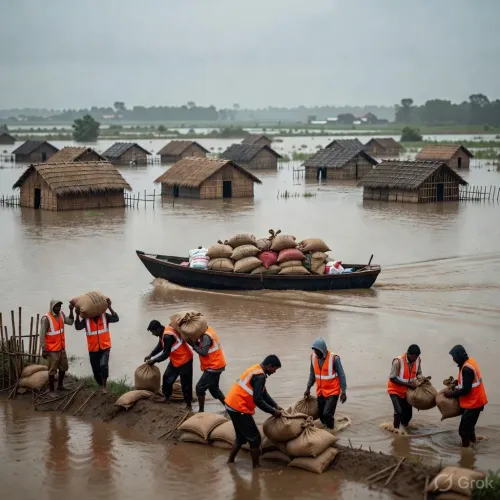
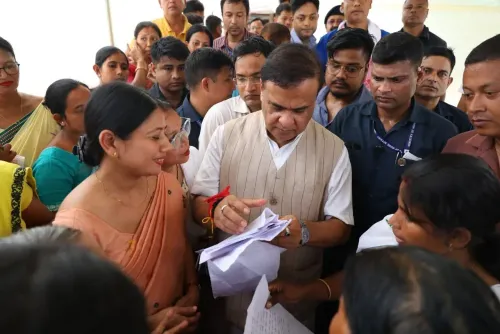
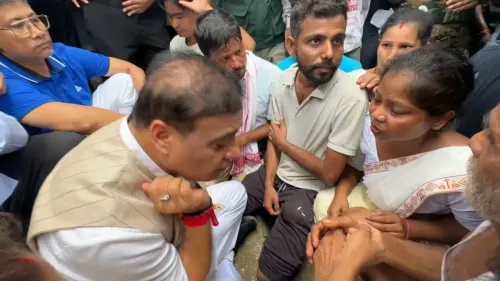
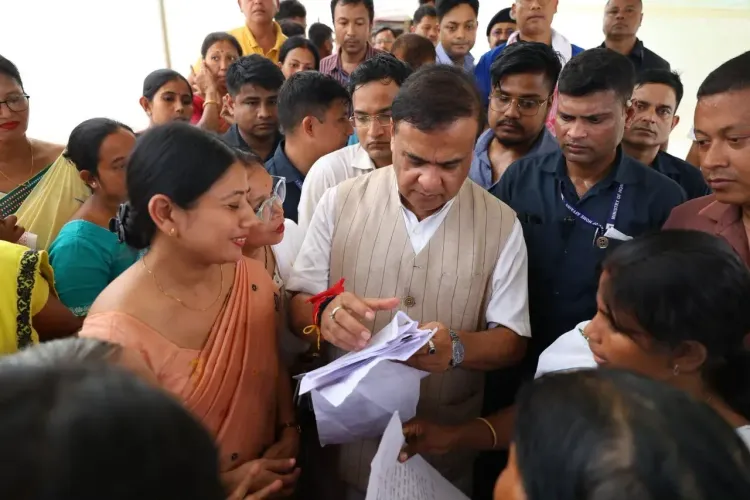
Sarma announced he would remain stationed in the flood-hit region for four days to directly supervise relief, restoration, and rehabilitation operations. His ground visits included inspections of inundated villages, boat rides through submerged areas, interactions with displaced families sheltered in relief camps, and review meetings with district officials on restoring roads, embankments, power supply, and other essential public infrastructure.
The Chief Minister personally visited affected areas across Sivasagar, Jorhat, Golaghat, and Charaideo districts, reviewing relief operations and meeting flood-hit families to understand their ground-level difficulties. He noted that three state ministers had remained continuously deployed in the affected districts since the disaster struck.
What Triggered the Unprecedented Flooding
Sarma attributed the disaster to nearly 400 per cent excess rainfall in upstream areas, which caused a sudden and severe deluge in districts that do not ordinarily experience flooding of this scale. 'The 400 per cent excess rainfall upstream led to the sudden deluge in districts which usually don't flood,' he said in a series of posts on X after completing his review.
This comes amid a broader pattern of intensifying monsoon events across Northeast India, where upstream rainfall in catchment areas — often spanning neighbouring states or international borders — can trigger flash flooding with little warning in downstream districts.
Relief Infrastructure and Assistance Released
The state government has operated a network of over 1,000 relief camps to shelter displaced residents. Sarma said the government had worked with all stakeholders over the past week to prepare a comprehensive relief and rehabilitation package, with the ₹160 crore DBT transfer representing the first step of a multi-phase response.
'I personally met affected families, shared their grief and assured them all assistance from the Government of Assam,' Sarma said, adding that alleviating suffering through the relief camp network remained the immediate priority.
Rehabilitation and Infrastructure Rebuilding Ahead
With the emergency phase now behind, the state government has signalled a shift toward systematic reconstruction of damaged public infrastructure alongside continued household support. 'Alongside relief, we will systematically rebuild damaged public infrastructure and support every family on the path to recovery,' Sarma said.
He reiterated the government's commitment to ensuring every flood-hit household receives adequate support. The next phase will focus on restoring roads, embankments, and utilities across the four worst-affected districts. How quickly reconstruction can be completed before the next monsoon cycle will be a critical test of the state's disaster recovery capacity.
Point of View
000 per family disbursement is adequate for households that have lost crops, livestock, and housing in a region where rebuilding costs can run several times that amount. The 400 per cent excess rainfall figure also deserves scrutiny: if upstream catchment mismanagement or inadequate embankment maintenance contributed to the scale of inundation in districts that 'usually don't flood,' accountability for that infrastructure gap should follow the relief cheques. Rehabilitation is a longer arc than a four-day camp visit.
NationPress
18 Sept 2026
Frequently Asked Questions
How much flood relief has the Assam government released to affected families?
The Assam government has transferred approximately ₹160 crore in interim relief, with each eligible family receiving ₹15,000 through the Direct Benefit Transfer system. Over 75,000 families have received this first tranche as of 3 August.
Which districts in Upper Assam were worst affected by the floods?
The four districts most severely impacted are Sivasagar, Jorhat, Golaghat, and Charaideo. Chief Minister Sarma personally visited and reviewed relief operations across all four districts.
What caused the unusual flooding in Upper Assam?
According to Chief Minister Sarma, nearly 400 per cent excess rainfall in upstream areas triggered a sudden and severe deluge in districts that do not ordinarily experience large-scale flooding. The scale of inundation was described as unprecedented for these regions.
How long will CM Sarma remain in the flood-affected areas?
Sarma announced he would camp in the flood-hit region for four days to directly monitor relief, restoration, and rehabilitation efforts, including inspections of inundated villages and meetings with district officials.
What is the current phase of the Assam flood response?
The state has officially moved from the emergency response stage to the rehabilitation phase. The next steps include systematic rebuilding of damaged public infrastructure — roads, embankments, and power supply — alongside continued household support for affected families.