CM Sukhu Highlights Sukh-Ashray Yojana for Parentless Children
Synopsis
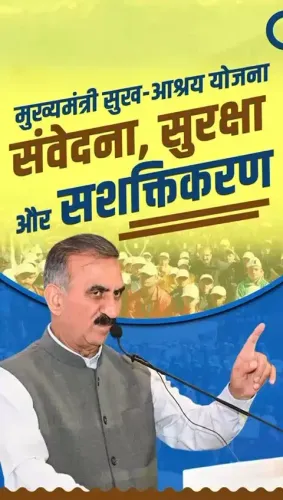
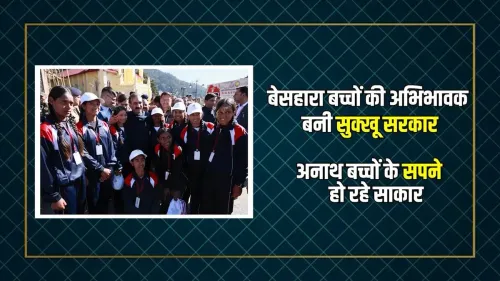
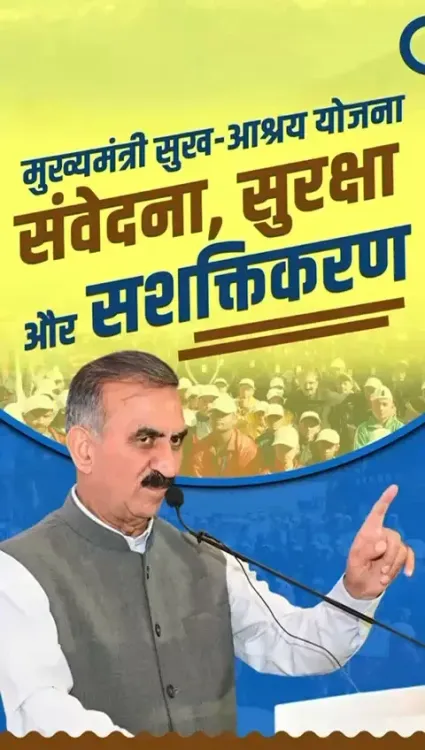
Himachal Pradesh CM Sukhvinder Singh Sukhu spotlighted a young beneficiary of the Mukhya Mantri Sukh-Ashray Yojana, which adopts parentless children as 'Children of the State' and guarantees their upbringing, education, and care until age 27 to make them self-reliant.
Key Takeaways
Himachal Pradesh CM Sukhvinder Singh Sukhu highlighted the Mukhya Mantri Sukh-Ashray Yojana through the story of an individual girl beneficiary on November 2, 2026 .
The scheme designates children deprived of parental care as 'Children of the State' , giving the government formal guardian status.
State support under the scheme covers upbringing, education, and care up to the age of 27 — well beyond standard institutional cutoffs.
The stated goal is to make every beneficiary aatmanirbhar (self-reliant) so they can realise their own aspirations.
The scheme operates within the national Juvenile Justice (Care and Protection of Children) Act framework but extends its scope significantly at the state level.
Sukhu has governed Himachal Pradesh since December 2022 and has made child welfare a visible part of the Congress government's social agenda.
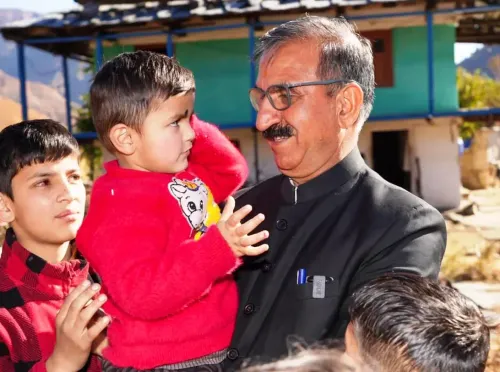
A child without parents, growing up under the guardianship of an entire state — that is the promise at the heart of Himachal Pradesh Chief Minister Sukhvinder Singh Sukhu's latest message on Monday, November 2, 2026, spotlighting a young girl whose future is being shaped under the Mukhya Mantri Sukh-Ashray Yojana.
Sukhu wrote: 'Yah beti bhi Mukhya Mantri Sukh-Ashray Yojana ke tahat rajya sarkar ke sanrakshan mein apne bhavishy ko sanwarne ki disha mein aage badh rahi hai' — 'This daughter too, under the protection of the state government through the Mukhya Mantri Sukh-Ashray Yojana, is moving forward to shape her future.' The Chief Minister added that children deprived of parental love and care have been adopted as 'Children of the State' — a formal designation that transforms the government from a distant administrator into a legal guardian.
What 'Children of the State' actually means
The title is not ceremonial. Under the scheme, the Himachal Pradesh government assumes responsibility for a child's upbringing, education, and holistic care until the age of 27 — an age band that deliberately stretches beyond school and through higher education or vocational training. The goal, as Sukhu stated, is that 'every child becomes self-reliant and realises their dreams.' That phrase — aatmanirbhar, self-reliant — is doing real policy work here: it frames the scheme not as charity but as an investment in human capital.
The scheme sits within the broader framework of India's Juvenile Justice (Care and Protection of Children) Act, which mandates state-level care for destitute children. Himachal Pradesh's extension of guardianship to age 27, however, goes significantly further than the standard institutional cutoffs, placing it among the more ambitious state-level interventions for vulnerable youth in the country.
A Congress government's social security pitch in a hill state
Sukhu, who took office in December 2022, has positioned child welfare as a visible pillar of the Congress-led Himachal Pradesh government. The Sukh-Ashray Yojana — 'sukh-ashray' translating loosely to 'shelter of happiness' — targets one of the most politically invisible demographics: children with no family advocates, no votes of their own, and historically few institutional champions. By naming the scheme after his own title and amplifying individual beneficiary stories on social media, the Chief Minister is also signalling accountability: real children, not just a budget line.
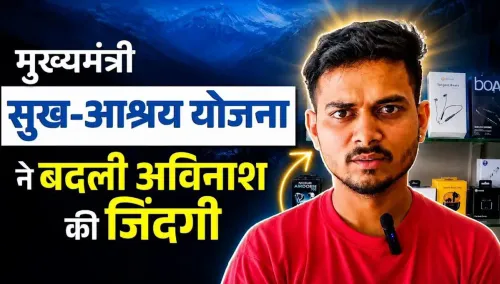
The post was accompanied by a video, adding a human face to the policy announcement and reinforcing the personal-guardian framing that the scheme's branding depends on.
Whether enrolment numbers and long-term education outcomes match the scheme's stated ambitions will ultimately be the measure of its success — but for now, Himachal Pradesh is betting that giving parentless children a state with a name on it changes everything.
Point of View
Sukhu is attempting a durable social contract rather than a single-term welfare gesture — a politically savvy move in a hill state where Congress governs on thin margins and welfare optics carry electoral weight. The human-story format of the post, anchored to an individual girl, is a deliberate departure from statistics-led policy communication, designed to build emotional ownership among voters. At a broader level, Himachal Pradesh is quietly testing whether extending post-institutional care deep into early adulthood can shift long-term outcomes for the most marginalised youth — a model other states may watch closely. The scheme's real test, however, lies in enrolment scale, budgetary continuity beyond election cycles, and verifiable education or employment outcomes.
NationPress
2 Nov 2026
Frequently Asked Questions
What is Mukhya Mantri Sukh-Ashray Yojana in Himachal Pradesh?
The Mukhya Mantri Sukh-Ashray Yojana is a Himachal Pradesh government welfare scheme that designates children deprived of parental care as 'Children of the State,' providing them with upbringing, education, and full support until they turn 27.
Who are 'Children of the State' in Himachal Pradesh?
'Children of the State' is the formal designation given under the Sukh-Ashray Yojana to children without parental care in Himachal Pradesh, making the state government their legal guardian responsible for their welfare and education.
Until what age does Himachal Pradesh support children under Sukh-Ashray Yojana?
The Himachal Pradesh government supports beneficiaries of the Mukhya Mantri Sukh-Ashray Yojana until the age of 27, covering upbringing, education, and care to ensure they become self-reliant.
When did Sukhvinder Singh Sukhu become Chief Minister of Himachal Pradesh?
Sukhvinder Singh Sukhu became Chief Minister of Himachal Pradesh in December 2022 after the Indian National Congress won the state assembly elections.
How does Sukh-Ashray Yojana relate to the Juvenile Justice Act?
The scheme operates within the framework of India's Juvenile Justice (Care and Protection of Children) Act, but extends state guardianship significantly further — up to age 27 — going beyond standard institutional care cutoffs under the national law.