Nadda Praises Vishwa Gayatri Parivar's Youth-Led Social Work
Synopsis
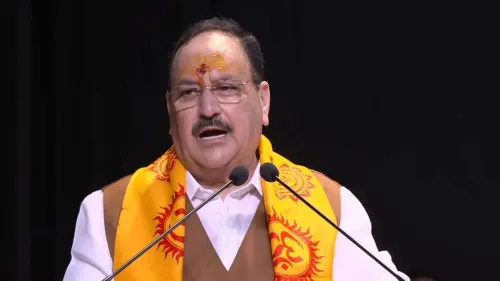
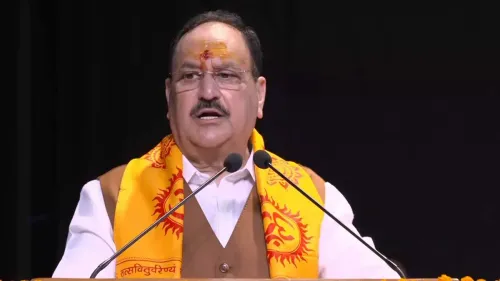
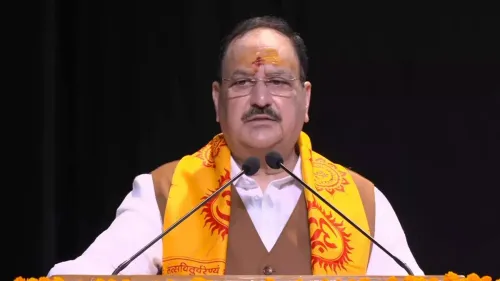
Union Health Minister J. P. Nadda publicly commended Vishwa Gayatri Parivar on 2 November 2026 for extending its mission beyond worship into youth-led de-addiction, environmental conservation, and social-awareness drives — causes that align closely with the government's Nasha Mukt Bharat Abhiyan.
Key Takeaways
Nadda praised Vishwa Gayatri Parivar on 2 November 2026 for linking cultural values to community service.
The minister specifically highlighted youth-led work on de-addiction, environmental conservation, and social awareness .
Vishwa Gayatri Parivar is a Gayatri-mantra-based spiritual organisation with active community welfare programmes.
The appreciation aligns with the government's Nasha Mukt Bharat Abhiyan , launched in 2020 to engage civil society in substance-abuse prevention.
Nadda holds dual roles as Union Health Minister and BJP national president , giving his endorsement both policy and political weight.
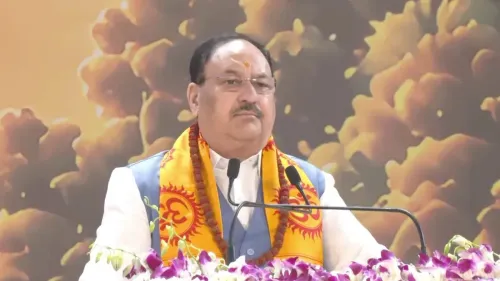
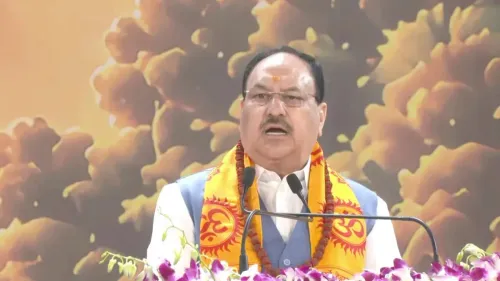
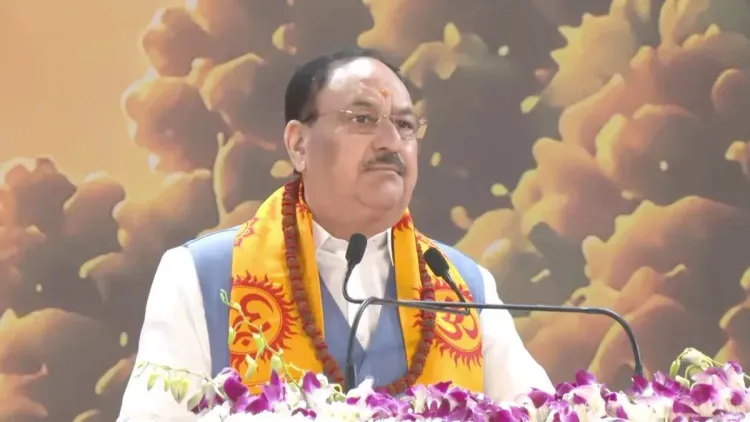
Going well beyond ritual and prayer, Vishwa Gayatri Parivar has earned a public salute from Union Health Minister J. P. Nadda for weaving cultural values into frontline social service — and on Monday, 2 November 2026, the minister made that appreciation official on X.
Translating from Hindi, Nadda wrote: 'Vishwa Gayatri Parivar kewal pooja-paddhati tak seemit na rahkar sanskaron ko samajseva se jodne ka sarhaniya kary kar raha hai' — 'Vishwa Gayatri Parivar is doing commendable work by not limiting itself to worship practices alone, but linking cultural values to community service.' He specifically applauded efforts by youth volunteers on de-addiction, environmental conservation, and social awareness, calling them 'praiseworthy.' The minister closed with a special felicitation to the organisation for its efforts to translate positive values into social action.A Spiritual Network Turned Social-Service Engine
Vishwa Gayatri Parivar is a spiritual organisation rooted in the traditions of the Gayatri mantra, but it has steadily expanded its footprint into community welfare. Its youth wings run campaigns on substance-abuse prevention and tree-planting drives, positioning the group at the intersection of faith and civil-society activism. That combination — a volunteer base energised by cultural identity and directed toward measurable social outcomes — is precisely what Nadda's appreciation highlights.
Where Government Policy Meets Civil Society
Nadda's ministry has a direct stake in at least one of these causes. The Nasha Mukt Bharat Abhiyan, launched in 2020, was designed specifically to mobilise youth and civil-society groups in the fight against substance abuse. When an organisation like Gayatri Parivar independently runs de-addiction awareness among young people, it functions as an unpaid extension of that national effort. Indian ministers regularly acknowledge such groups publicly — it signals both appreciation and an implicit invitation for deeper collaboration.
Environmental conservation adds a second dimension that stretches beyond the Health Ministry's mandate, suggesting Nadda is speaking as a senior BJP national president as much as a cabinet minister — recognising a broad cultural organisation whose values align with several government priorities at once.
For Gayatri Parivar, the ministerial nod is more than courtesy. In a landscape where voluntary organisations compete for visibility and official partnership opportunities, a public endorsement from a cabinet minister can open doors to government awareness campaigns and resource networks. The next question: whether this exchange translates into a formal joint programme between the Health Ministry and Gayatri Parivar-affiliated groups — turning warm words into coordinated action on the ground.
Point of View
Nadda implicitly frames Gayatri Parivar as a civil-society partner in flagship government campaigns, particularly the Nasha Mukt Bharat Abhiyan. As BJP national president, he also signals to a cultural constituency that the party values organisations bridging spiritual identity and social action. The post is ceremonial in tone but carries quiet strategic intent: positioning the government as a natural ally of organisations that already do the welfare work it champions.
NationPress
2 Nov 2026
Frequently Asked Questions
What is Vishwa Gayatri Parivar?
Vishwa Gayatri Parivar is a spiritual organisation rooted in Gayatri mantra traditions that has expanded into community welfare, running youth programmes on de-addiction, environmental conservation, and social awareness across India.
Why did J. P. Nadda praise Vishwa Gayatri Parivar?
Nadda praised the organisation on 2 November 2026 for going beyond religious practice to engage youth in de-addiction campaigns, environmental protection, and social-awareness drives, calling the efforts 'commendable.'
What is the Nasha Mukt Bharat Abhiyan?
The Nasha Mukt Bharat Abhiyan is a government initiative launched in 2020 aimed at making India drug-free by mobilising youth and civil-society groups in substance-abuse prevention — an area where Gayatri Parivar is also active.
What are J. P. Nadda's current roles in government?
J. P. Nadda serves as Union Minister of Health and Family Welfare and Minister of Chemicals and Fertilizers , and also holds the position of BJP national president .
Will the Health Ministry partner with Gayatri Parivar on awareness programmes?
No formal partnership has been announced yet, but Nadda's public appreciation is seen as a signal of openness to deeper collaboration on de-addiction and environmental campaigns in the future.