Nadda invokes Gayatri Parivar's vision of self-transformation
Synopsis
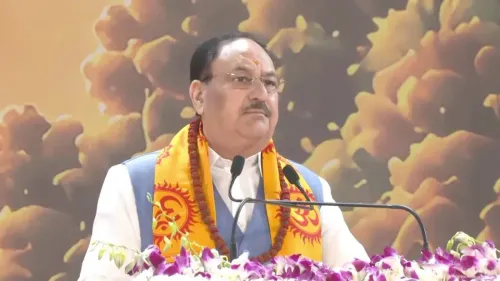
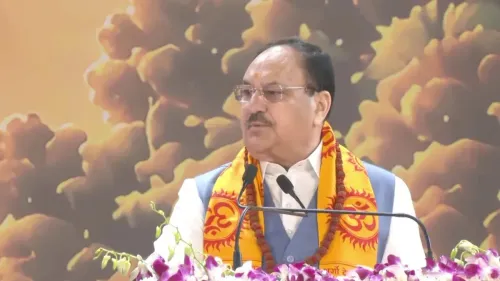
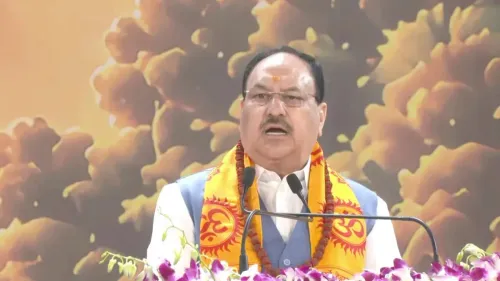
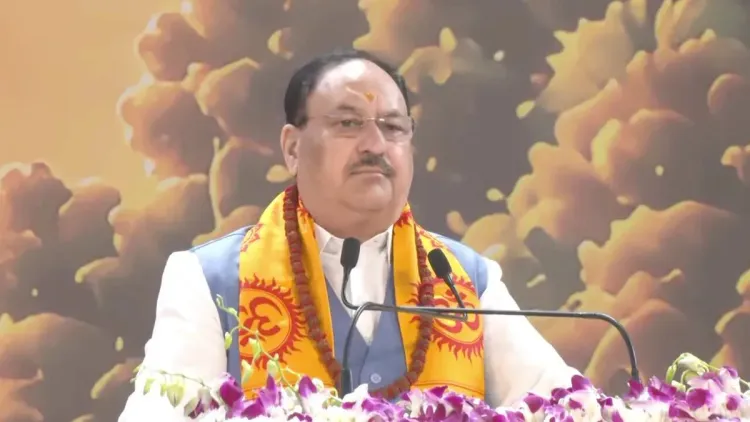
Union Health Minister and BJP national president J. P. Nadda invoked the Gayatri Parivar's guiding philosophy of self-transformation and inward reflection on November 2, 2026, calling on individuals to better themselves and dedicate their strength to family and societal welfare.
Key Takeaways
Union Health Minister J.
Nadda posted on November 2, 2026 referencing the Gayatri Parivar 's core philosophy.
His message emphasised self-transformation ( atma vikas ), self-reflection ( atma chintan ), and dedicating one's strength to family and societal welfare.
The Gayatri Parivar is a major Indian spiritual reform movement centred on the Gayatri mantra and ethical self-development.
Nadda's engagement reflects an established pattern of Indian political leaders connecting with reformist spiritual organisations.
The post signals institutional respect for movements that link personal growth with grassroots community service.
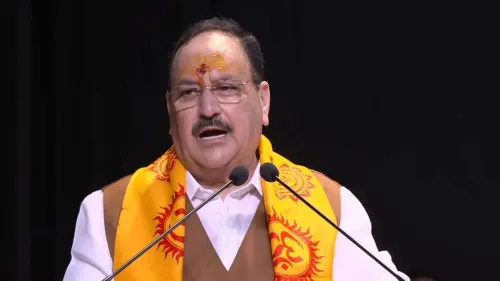
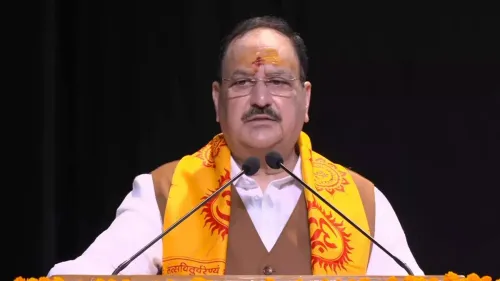
Union Health Minister J. P. Nadda on Monday, November 2, 2026, drew on the philosophy of the Gayatri Parivar to underscore a message of inward reflection and social service — urging citizens to look within, grow as individuals, and direct that strength toward the welfare of family and society.
In his post, Nadda wrote in Hindi: 'गायत्री परिवार की दृष्टि और दिशा स्वयं में परिवर्तन, आत्मचिंतन और आत्मविकास की रही है।' ('The vision and direction of the Gayatri Parivar has always been self-transformation, self-reflection, and self-development.') He added that individuals must look inward to better themselves and dedicate their inner strength to the welfare of family and society.
What the Gayatri Parivar stands for
The Gayatri Parivar is one of India's most prominent spiritual reform movements, built around the practices of the Gayatri mantra and anchored in the principle that lasting social good flows from personal ethical transformation. Its foundational idea — that outer change is hollow without inner discipline — maps closely onto the message Nadda chose to amplify.
For a minister who simultaneously holds charge of public health and the chemicals and fertilizers portfolio, the invocation of self-development as a social force carries a quiet policy resonance: healthy communities, the argument runs, begin with individuals who are reflective, responsible, and purposeful.
Political leaders and India's reformist spiritual movements
Nadda's engagement with Gayatri Parivar is part of an established pattern in Indian public life, where elected leaders — across parties and tenures — have periodically spoken to audiences rooted in reformist spiritual traditions. These interactions reinforce values of ethical self-development and community service that cut across political lines, lending the exchange a cultural rather than partisan character.
The BJP national president's choice to voice this message publicly signals continued institutional respect for organisations that translate spiritual practice into grassroots social welfare work across India.
Point of View
Framing civic virtue as an extension of inner discipline. For a leader who heads both a public-health ministry and the country's ruling party, the language of self-development as social service quietly reinforces a broader governance narrative — that community wellness starts with individual responsibility. It also keeps institutional ties warm with an organisation that has deep volunteer networks across India. The statement carries no policy commitment, but its cultural signalling is deliberate and well-practised.
NationPress
2 Nov 2026
Frequently Asked Questions
What is the Gayatri Parivar?
The Gayatri Parivar is one of India's largest spiritual reform organisations, founded around the practice of the Gayatri mantra and the principle that ethical self-transformation is the foundation of social good.
What did J. P. Nadda say about the Gayatri Parivar?
Nadda stated that the Gayatri Parivar's vision has always been self-transformation, self-reflection, and self-development, and urged people to look inward, improve themselves, and dedicate their strength to family and societal welfare.
Why do Indian politicians engage with organisations like the Gayatri Parivar?
Indian political leaders across parties engage with reformist spiritual movements because these organisations command large volunteer networks and articulate values — ethical self-development, community service — that have broad public resonance.
What portfolios does J. P. Nadda currently hold?
J. P. Nadda serves as Union Minister of Health and Family Welfare, Minister of Chemicals and Fertilizers, and is the national president of the Bharatiya Janata Party (BJP).
What does 'atma chintan' mean in Nadda's post?
'Atma chintan' translates from Hindi as 'self-reflection' or 'introspection' — a core practice in the Gayatri Parivar's philosophy of personal and spiritual growth.