Nadda backs organ donation, Gayatri Parivar de-addiction drive
Synopsis
Union Health Minister J. P. Nadda on 27 June 2026 commended Akhil Vishwa Gayatri Parivar's drug-free society campaign and stressed the spiritual, social, and scientific significance of organ donation, signalling continued government-civil society collaboration on public health outreach.
Key Takeaways
Nadda publicly praised Akhil Vishwa Gayatri Parivar for its de-addiction awareness campaign on 27 June 2026 .
The minister stressed that organ donation carries equal spiritual, social, and scientific importance.
NOTTO , established in 2014 , remains the nodal body for organ transplant coordination and registry in India.
The Transplantation of Human Organs and Tissues Act was amended in 2011 to broaden India's donor pool.
The National Action Plan for Drug Demand Reduction has since 2014 supported NGO-led de-addiction efforts across India.
Ministerial endorsement of spiritual organisations for health outreach reflects an established government strategy to reach grassroots audiences.
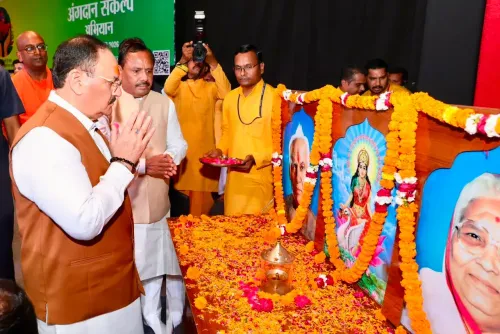
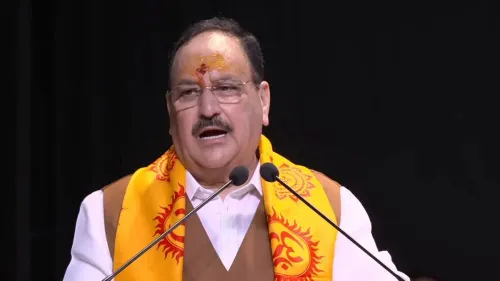
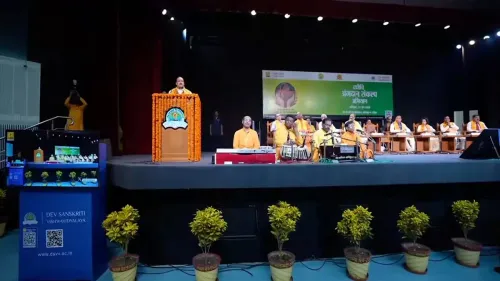
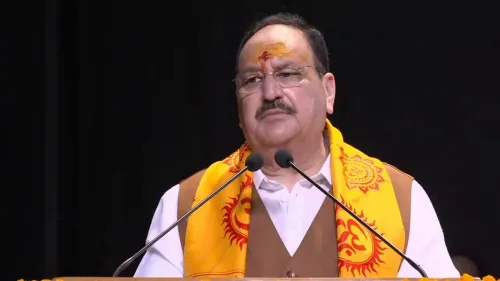
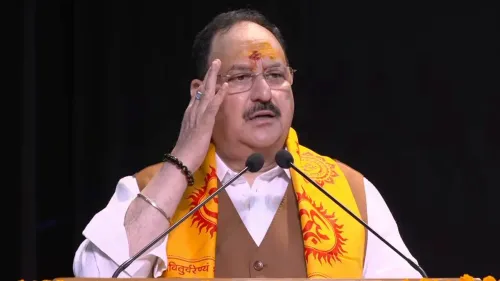
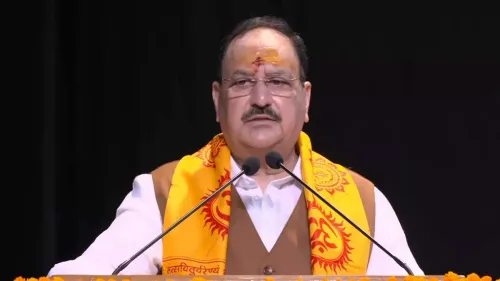
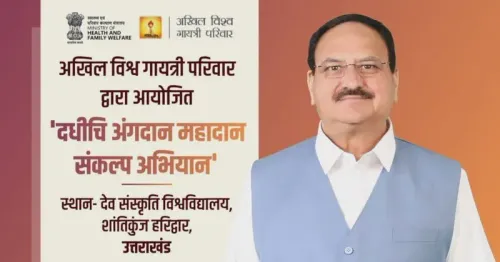
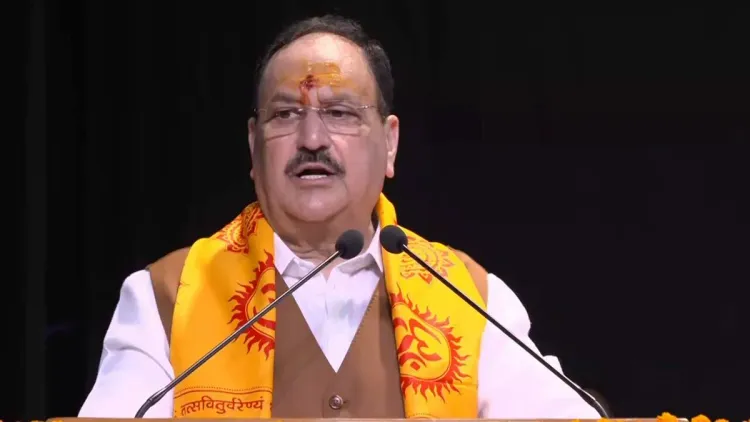
Union Health Minister J. P. Nadda on Saturday, 27 June 2026, praised the Akhil Vishwa Gayatri Parivar for its ongoing awareness campaign aimed at building a drug-free society, while also underlining the spiritual, social, and scientific importance of organ donation.
In his post on X, Nadda wrote: 'Angdaan ka jitna zyada aadhyatmik mahatva hai utna hi samajik aur vaigyanik roop se iska apna mahatva hai.' ('Organ donation holds as much spiritual significance as it does social and scientific importance.') He added that the de-addiction awareness campaign run by Akhil Vishwa Gayatri Parivar deserves commendation.
Context
The post links two distinct but complementary public health themes — organ donation and substance abuse prevention — through the lens of one civil-society organisation. Akhil Vishwa Gayatri Parivar, founded on the teachings of Pandit Shriram Sharma Acharya, has long been active in community-level awareness drives on ethical living and de-addiction. Nadda's endorsement signals the Union Health Ministry's continued engagement with spiritual and cultural organisations to amplify health messaging.
Policy Backdrop
India's organ donation ecosystem is anchored by the National Organ and Tissue Transplant Organisation (NOTTO), established in 2014 to maintain a national registry and coordinate deceased donor procurement across states. The Transplantation of Human Organs and Tissues Act was amended in 2011 to widen the donor pool and tighten regulatory oversight. Despite these institutional frameworks, India's deceased donor rate remains significantly below global benchmarks, making civil-society outreach a critical lever.
On the de-addiction front, the National Action Plan for Drug Demand Reduction, implemented from 2014 onwards by the Ministry of Social Justice and Empowerment, has channelled resources through NGOs and community organisations. Ministerial recognition of campaigns like Gayatri Parivar's fits within this established model of government-civil society collaboration on substance abuse.
Stakeholders and Impact
The twin themes touch a wide stakeholder base. Thousands of patients on organ transplant waiting lists stand to benefit from any uptick in donation awareness, while communities vulnerable to substance abuse — particularly youth in semi-urban and rural areas — are the primary audience for de-addiction drives. Spiritual organisations like Akhil Vishwa Gayatri Parivar, with their extensive grassroots networks, can reach demographics that formal health infrastructure often misses.
For NOTTO and state transplant coordinators, high-profile ministerial endorsements translate into legitimacy for field campaigns. Similarly, NGOs working on de-addiction gain visibility and, potentially, policy support when a cabinet minister publicly commends their work.
What's Next
Attention will now turn to whether the Health Ministry formalises any partnership with Akhil Vishwa Gayatri Parivar or integrates its outreach into NOTTO's national awareness calendar. Parliamentary questions on the Health Ministry's collaboration with civil-society groups on organ donation and de-addiction are also likely to follow. Nadda's post reflects a broader pattern of using cultural and spiritual platforms to mainstream public health conversations — a strategy that could be scaled ahead of key health observance days.
Point of View
He broadens the Health Ministry's public health footprint without announcing new expenditure. Endorsing Akhil Vishwa Gayatri Parivar — a spiritually rooted organisation with a vast volunteer base — is consistent with the ruling dispensation's preference for leveraging cultural institutions to deliver welfare messaging. The move also keeps the BJP's social-sector narrative active at the grassroots level ahead of any state electoral cycles. Longer term, such endorsements could pave the way for formal MoUs between the Health Ministry and civil-society groups, deepening the NOTTO outreach network at minimal fiscal cost.
NationPress
26 Sept 2026
Frequently Asked Questions
What did JP Nadda say about organ donation?
J. P. Nadda stated that organ donation holds equal spiritual, social, and scientific importance, urging greater public awareness on the issue through his post on X on 27 June 2026.
What is Akhil Vishwa Gayatri Parivar?
Akhil Vishwa Gayatri Parivar is a spiritual and social organisation founded on the teachings of Pandit Shriram Sharma Acharya. It runs community awareness drives on de-addiction, ethical living, and social welfare across India.
What is NOTTO and what does it do?
NOTTO, the National Organ and Tissue Transplant Organisation, was established in 2014 under the Union Health Ministry to maintain a national registry of donors and recipients and to coordinate deceased organ donation across Indian states.
How does India's government promote organ donation?
India promotes organ donation through NOTTO, awareness campaigns, amendments to the Transplantation of Human Organs and Tissues Act (last amended in 2011), and by partnering with civil-society and spiritual organisations to reach wider audiences.
What is India's National Action Plan for Drug Demand Reduction?
It is a programme implemented from 2014 by the Ministry of Social Justice and Empowerment that funds NGOs and community groups to run de-addiction awareness and rehabilitation activities across India.